



Online has become the go-to option for shopping, learning, and connecting but it comes with a challenge. Without face-to-face interaction, it’s harder to know how interested your audience is in your brand or whether they’re ready to take action.
For example, in ecommerce, you can’t see reactions to products on the shelf. And in B2B or not-for-profit, you miss the cues you’d get in meetings. A website visit takes far less commitment than a physical interaction, so understanding interest and intent is key to turning casual visitors into engaged customers.

In this guide, we’ll show you how to measure customer interest, spot high-intent behavior, and engage your audience effectively, so you can use smarter targeting in your campaigns smarter and boost conversions.
Contact scoring
Contact scoring let’s you score and rank your contacts with two key metrics (scored between 0-100):
- Engagement: scored on contacts’ interaction and behaviors (such as campaign opens, link clicks, and visits to your website)
- Suitability: scored on a contacts’ profile (such as their job title, industry sector, and location)
These metrics combine to produce a third metric – an overall contact score. As a result, you and your brand can manage and prioritize your most promising prospects.
The level of contact scoring allows you to understand who each customer is, and how interested they are in your brand and products. It’s possible to tell:
- How many emails and social posts they’ve engaged with
- How long they’ve spent on your site
- What they’ve bought from you
- How much they’ve spent
- If they engage with your content on multiple channels
You can then use this information to work out how you should connect with your audience next.
Using contact scoring
Once you know who your high and low-interest contacts are, you can use these insights to connect with them more effectively:
1. Map messages to each segment:
High-scoring contacts might receive loyalty offers or exclusive updates, while lower-scoring contacts could enter a re-engagement program or nurture workflow.
2. Automate workflows based on scores:
Use your platform to trigger automations when contacts reach certain scores. For example, send a welcome email series when someone’s engagement score hits a threshold, or alert your team to follow up with high-potential leads.
3. Monitor, adjust, and refine:
Review how each segment responds. If high-score contacts aren’t converting, revisit your scoring criteria or messaging. Scores should evolve with your data and customer behavior.
Modern signals to include
In addition to using traditional metrics like email opens and clicks, you should also consider first-party signals from across your channels, such as:
- Website interactions (time on key pages, product views, downloads)
- Mobile app engagement
- SMS or push notification responses
- Webinar attendance or form submissions
Tracking these signals ensures your scoring reflects real intent, even as privacy rules reduce the reliability of third-party tracking.
eRFM
If you’re in the ecommerce space, eRFM (Recency, Frequency, and Monetary) is another great tool available to you. eRFM is an ecommerce behavioral model designed to help you better understand the potential of your contacts. It’s a combination of the RFM model that looks at a contact’s purchasing behavior, and our engagement model that looks at the engagement of a contact. For example, their:
- Email opens and clicks
- Web sessions
- Abandoned carts
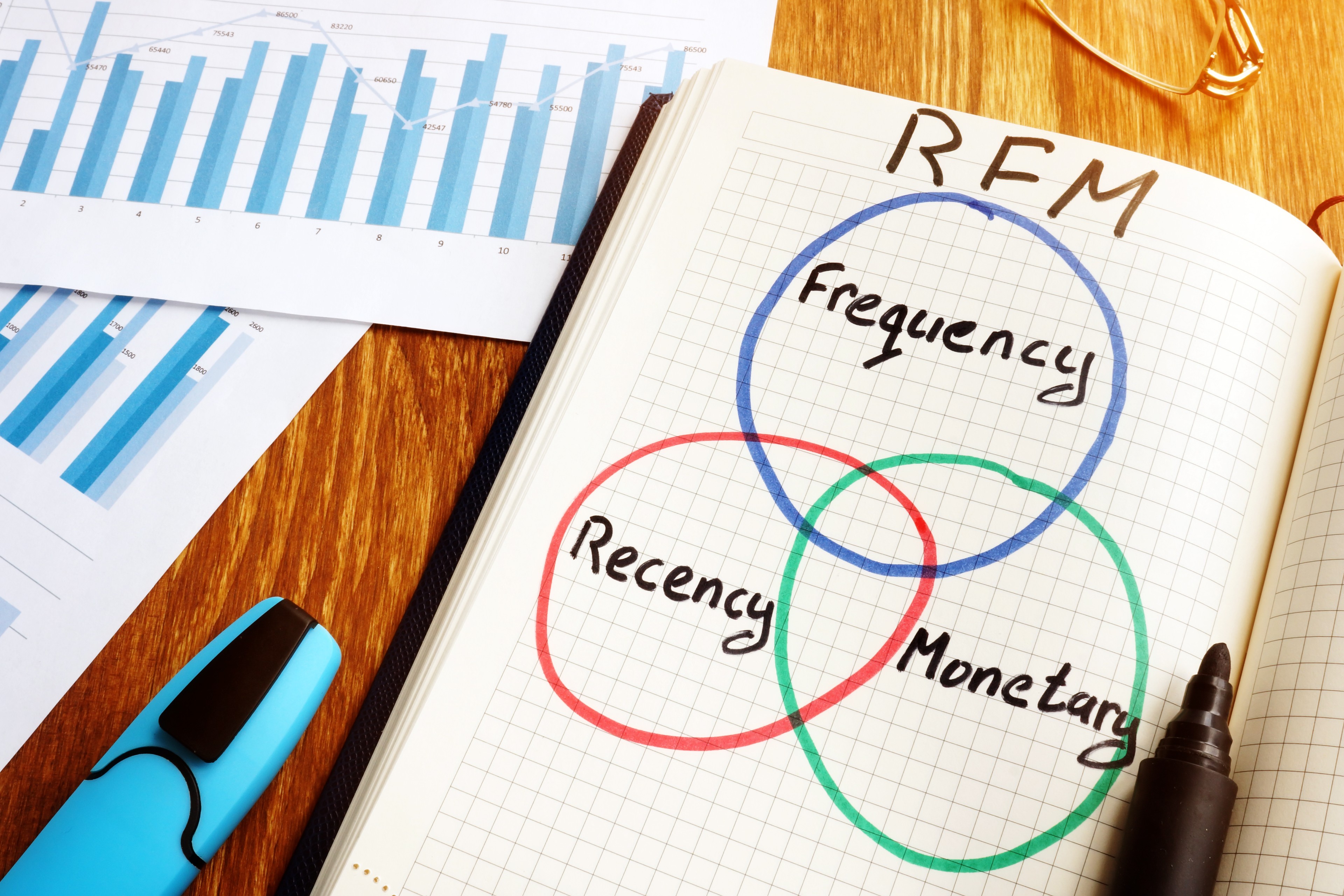
Dotdigital combines these models, to help you better understand and detect purchase intent across various customer types – from inactive contacts to champions.
You can use eRFM groups within your audience segment building stages to make highly accurate segments based on the customer’s likelihood to purchase. You can then continue the use through your marketing automation programs to target customers with the right message, at the right time.
What content should you consider for your customer engagement strategy?
To score your customers’ engagements effectively, as well as your website and product pages, you need content to track against. This is especially useful for new customers that haven’t made a purchase yet, or if your product or service is something people tend to think about for a while before committing.
Here’s five types of content to consider for your strategy and why:
Blog posts:
Blog articles are liked by most audiences because they’re topical, digestible, and consistent. Many brands will post blogs at least a couple of times a week, typically to distribute via multiple channels to drive engagement.
This type of content is a great way to measure someone’s level of interest in your company. For example, if they’re frequently reading your posts and clicking through to your site, then you’ll want to consider allocating a good proportion of points to these actions.
Emails:
Marketing emails are a great way to measure your customers’ interest in your brand. You can see when they’ve clicked through and converted, or haven’t, as the case may be. Each time they do or don’t engage with your emails, the more points you’ll reward or deduct.
Webpages:
You want customers to get to your site but you want them to spend time there, navigating through it, and not just bouncing after viewing one page. The more pages a customer views on your site (and the longer they spend on it), the more points you should give them.
Landing pages with forms:
Customers who’ve landed on your page and completed a form are making contact. They’ve taken the time to complete the fields, which means they’re interested in your brand. You should therefore consider giving this type of engagement a sizable weighting in your overall score, and follow up while they’re still warm.
Social media:
Prospects and customers who follow you on social media are likely to be engaged with your brand. By recording this information, you can use it to target customers on a platform they already use, with content they’ve shown interest in.
How to implement customer interest scoring (step-by-step)
If you’re new to measuring customer engagement, here’s a simple way to get started:
1. Decide what“interest”actually looks like for your business:
Start by listing the actions that signal intent. That might be email clicks, product views, form submissions, checkout activity, or time spent on key pages. Pick the signals that matter most to your goals.
2. Group actions by level of intent:
Categorize each signal as low, medium, or high interest. For example, opening an email might be low, while viewing a pricing page or adding an item to cart is high.
3. Assign weights to each action:
Turn those groups into a scoring model. Give high-intent actions more points and low-intent actions fewer. This doesn’t need to be complex — even a simple model will give you a clearer picture of engaged vs passive contacts.
4. Connect your data sources:
Make sure engagement signals from your CRM, ecommerce platform, website, and email tools feed into one place. The more complete your picture, the more accurate your scoring.
5. Create segments based on score ranges:
Build dynamic segments like “high-intent customers,” “warm leads,” or “at-risk contacts.” These help you tailor your messaging based on where someone is in their journey.
6. Test and refine your model:
Monitor how people move between segments. If your “high-intent” group isn’t converting as expected, revisit your weights and criteria. These models are meant to evolve with your data.
What to watch-out for when measuring customer engagement and interest
Even the strongest scoring model has blind spots. Here’s some of these points to keep in mind:
Not all engagement signals mean intent:
A click doesn’t always equal interest. Sometimes people are curious, distracted, or mis-clicking.
Scores decay over time:
Someone who was hot last quarter may be cold today. Make sure your model includes time-based decay so scores stay relevant.
Don’t over-score single-channel behaviour:
If a customer only engages on email or only browses your site, you might be missing the bigger picture. Multi-channel data gives you a more balanced view.
Watch for data gaps:
Missing ecommerce or CRM data can lead to inaccurate scoring. Make sure the foundational data is clean, synced, and complete.
Keeping these in check helps prevent overestimating or underestimating customers’ true interest.
The impact of privacy changes and new engagement signals
Customer behavior is shifting and so is what you’re able to track. With cookie restrictions, increased privacy controls, and changes from platforms like Apple and Google, traditional signals (such as email opens or third-party cookies) aren’t as reliable as they used to be.

- In-app behavior
- Event attendance
- Onsite search
- Mobile app interactions
- Zero-party data customers willingly share
- Product views and browsing patterns
- Preferences captured through forms or surveys
These signals give you a clearer, privacy-friendly view of customer interest. They also help you build trust because customers know how their data is being used.
Final thoughts
When selling and building relationships online, brands need to work harder to gauge the interest of browsers and customers. Luckily, technology allows you to track this reliably, perhaps even more accurately than in person, as someone behind a screen feels no societal pressure to be polite.
Make sure you’re tracking your customers and potential customers, and have segmentation and automation set up to react to changes. When you’re acting on customer engagement and activity, you’ll be offering super reactive, relevant customer service, at scale.
