



If you work in email marketing, opt-out campaigns around sensitive dates are probably already on your calendar. But as more brands adopt them, it is worth asking whether they are still helping customers or whether they are starting to do more harm than good.
In this post, we’ll help you assess whether opt-out emails are still working for your audience, and what to do next if they are not.
Originally popularised by online florist Bloom & Wild in 2019, opt-out campaigns were widely praised as a thoughtful response to potentially sensitive occasions. They offered customers control and showed emotional awareness at a time when inbox marketing often felt one-size-fits-all.
Several years on, opt-out campaigns are now a near-standard fixture in inboxes. Holiday and occasion marketing continues to drive strong engagement, and many brands plan campaigns well in advance. For occasions like Mother’s Day or Father’s Day, there’s a whole other timing element to contend with: opt-out email campaigns.
The challenge is that when every brand adopts the same approach, the gesture can lose its impact. What once felt personal can begin to feel repetitive, and even performative.
What is an opt-out email campaign?
An opt-out campaign is an email sent ahead of a potentially sensitive occasion that allows recipients to opt out of future marketing related to that day. Most commonly, these campaigns focus on Mother’s Day and Father’s Day, though Valentine’s Day opt-outs are increasingly common.
From a best practice perspective, this aligns well with preference-based marketing. Encouraging customers to share their communication preferences enables more relevant and respectful messaging.
An opt-out email campaign is typically simple in design, uses an empathetic and kind message, and includes a clear CTA that allows readers to opt out of future sends related to the occasion.
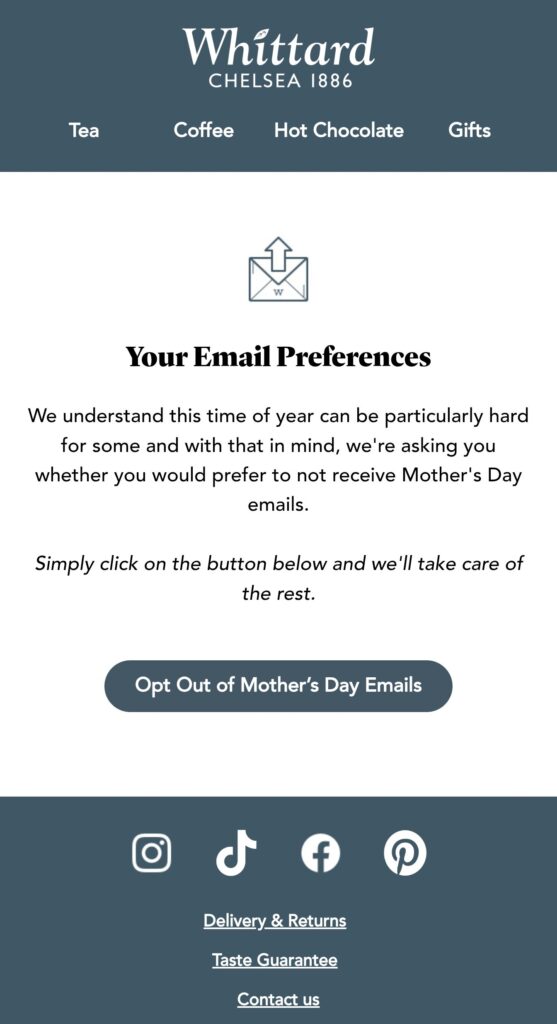
However, while the intention is positive, the sheer volume of these emails means they can unintentionally draw attention to the very occasion a customer may be trying to avoid. In some cases, they act as repeated reminders rather than a single moment of choice.
Have opt-out emails become overkill?
We first asked our LinkedIn audience for their views on opt-out campaigns in 2022, with opinions evenly split. This year, we asked again, and 61% of people voted that these campaigns are overdone. So it seems like these campaigns are getting more prevalent, and people are getting frustrated.
Beyond sentiment, timing has become a significant issue. As marketing calendars expand, opt-out campaigns can arrive weeks or even months before the relevant date.
In theory, customers who find an occasion difficult can simply step away from promotional emails closer to the time. In practice, early opt-out campaigns make that harder. Instead of avoiding reminders, customers may receive daily prompts about a sensitive occasion long before they are prepared for it.
This year, the first Mother’s Day opt-out email I received arrived more than a month before the day itself. It was unexpected, and I feel unnecessary to be sent so early on, and it set the tone for weeks of similar messages to follow.
7 ways to deliver sensitive opt-out marketing
You want to deliver relevant, personalized campaigns while still being emotionally sensitive to your audience. At the same time, many customers are clearly fatigued by opt-out emails.
The solution is not to abandon empathy, but to apply it more thoughtfully. Below are seven best practices for creating effective and empathetic opt-out marketing.
Consider whether an opt-out campaign is necessary
Before sending an opt-out email campaign, consider how much communication you are actually planning around the occasion.
If you are only sending one promotional email, an opt-out campaign may be unnecessary and may simply add to inbox noise. Opt-out emails are most valuable when customers are likely to receive multiple reminders from your brand across a short period.
Use your preference centre year-round
One of the most effective alternatives to repeated opt-out campaigns is a well-designed preference centre.
By including options for sensitive occasions as part of your standard preference management, you allow customers to make these choices on their own terms. For many people, selecting preferences during signup or via an account area feels far less emotionally charged than receiving a standalone opt-out email later.
Preference centres mean you can store these preferences permanently and apply them automatically across campaigns, reducing the need for repeated opt-out messaging year after year.
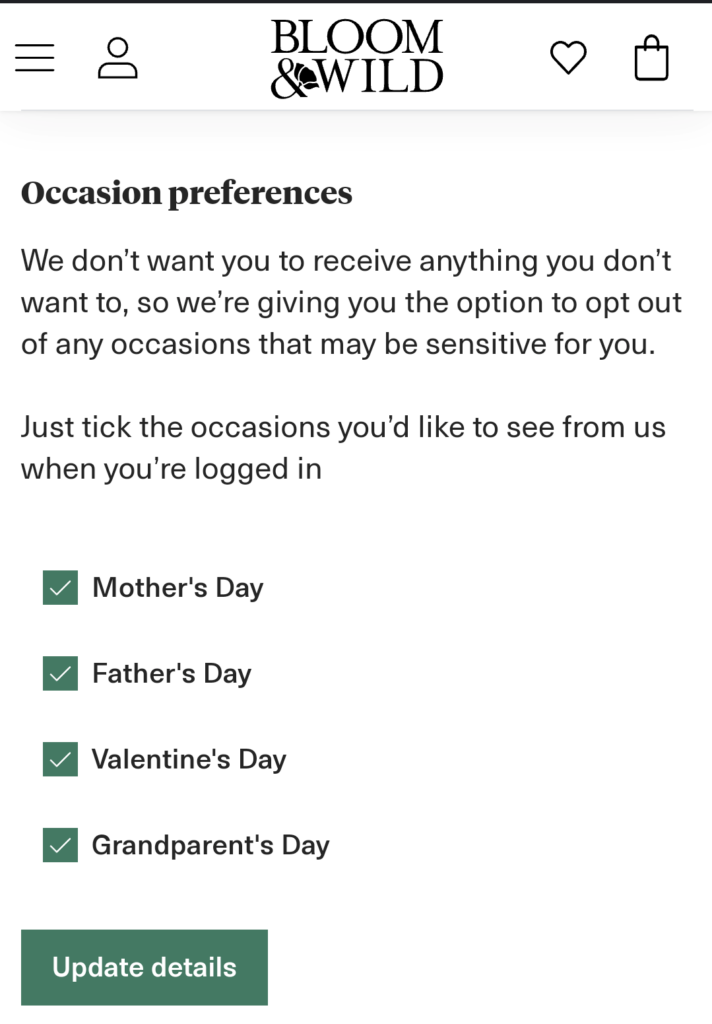
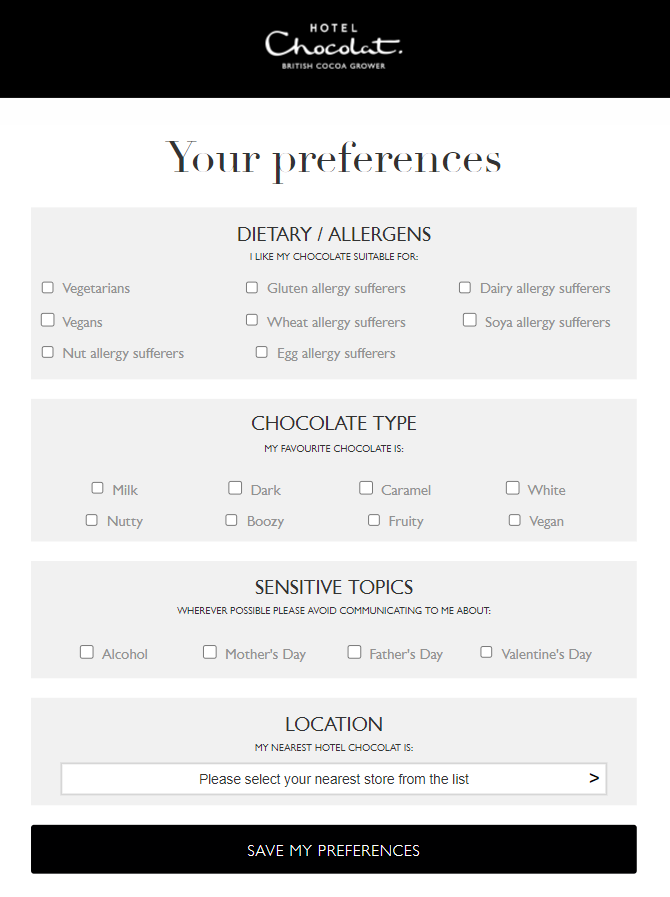
Bloom & Wild and Hotel Chocolat provide strong examples of how preference centres can be used to manage sensitive communications and topics clearly and respectfully.
How your preference center can boost deliverability
Giving your audience the chance to opt out of campaigns around certain occasions can also improve your email deliverability. When subscribers repeatedly get email campaigns they don’t find relevant, they’re more likely to mark your email as spam.
By giving your audience a clear place to let you know exactly what they do and don’t want to hear about, you’re protecting yourself from unnecessary unsubscribes and even spam complaints.
Remember these preferences
Many opt-out email campaigns link only to a single opt-out button rather than a full preference centre.
In theory, this should still capture a customer’s choice. In practice, many people find themselves opting out of the same brands year after year, suggesting those preferences are not always stored or reused effectively.
This creates unnecessary effort for your customers and introduces friction that you can easily avoid. Linking opt-out campaigns to a preference centre allows customers to manage all sensitive occasions in one place, one time, and ensures brands retain and respect those choices long term.
Include the opt-out in a broader email campaign
If you do choose to send opt-out emails, consider making them a secondary element within another email rather than the sole purpose of the message.
Emails entirely focused on opting out can feel heavier than necessary, particularly when their design closely mirrors the promotional campaigns that follow. A small block or banner can provide the same control without making the email itself emotionally charged.
Use banners thoughtfully
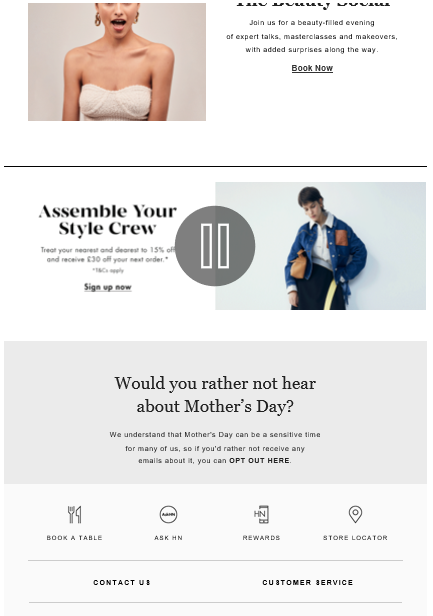
This approach works particularly well when integrated into broader campaigns. This example from Harvey Nichols shows how a discreet Mother’s Day opt-out banner can sit within a regular email.
The opt-out option is clearly available, but it is not the central message. This strikes a balance between visibility and restraint.
Use segmentation to deliver relevant email campaigns
For those who do opt out, use segmentation to send an alternative campaign on the day itself, with no mention of the occasion at all. Segmentation means you can make sure that any opted-out customers get a positive and relevant email campaign on the day in question and aren’t excluded.
Create inclusive campaigns for sensitive occasions
Sensitivity should not stop once an opt-out option is offered. When creating campaigns for these occasions, inclusive language can make a meaningful difference. References to mother figures, step-parents, grandparents, chosen family, or those who fill a parental role help soften the impact without detracting from the message for those without sensitivities around the day.
It is also important to remember that email is only one touchpoint. Customers cannot opt out of social media, television advertising, or in-store messaging, and not everyone who finds an occasion difficult will have opted out.
This creates an opportunity for email marketing to act as a safe space within a broader commercial environment.
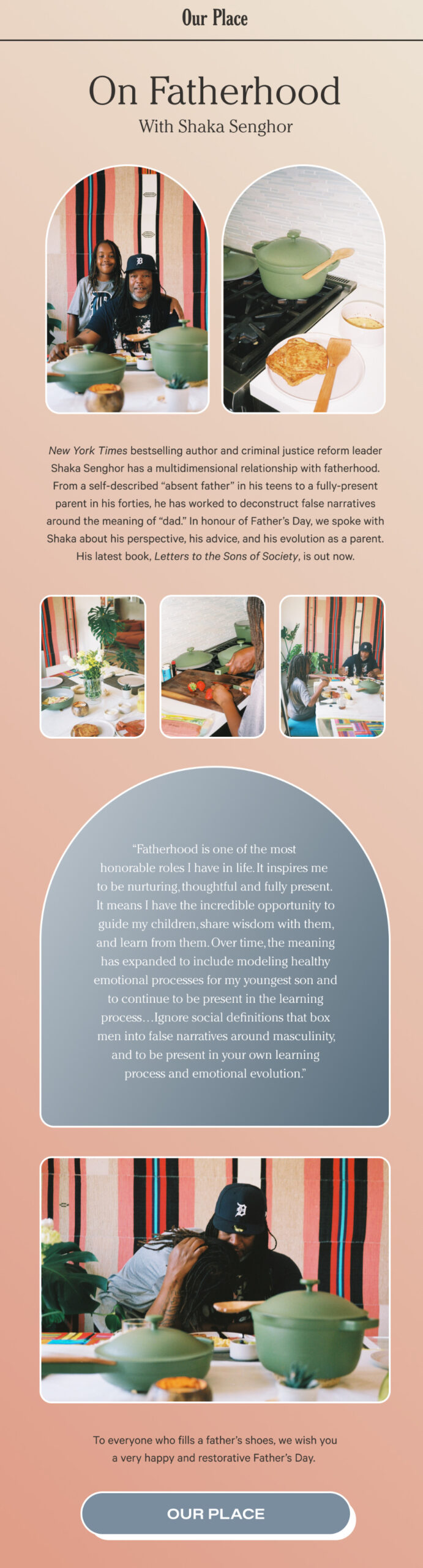
A strong example comes from cookware brand Our Place, which handled Father’s Day with honesty and empathy. The campaign acknowledged the complexity of the day and included inclusive copy aimed at those who may not celebrate in traditional ways. I wouldn’t expect a huge Father’s Day focus from a cookware brand, but the leaning into the occasion and the many ways it can look for different people added a real layer of intention and stops the campaign from feeling like using a familial holiday for commercial gain.
The next stage of empathetic marketing
Seasonal and Hallmark holidays remain important commercial moments, but they are also opportunities for your brand to demonstrate empathy and emotional intelligence.
With a bit of forward planning and a considerate preference center, you can deliver sensitive campaigns (or not) without asking your customers each year. Delivering a positive experience and making your customers feel cared for has never been more important. Luckily, we do have the tools to do just that.
By moving beyond performative opt-outs and investing in smarter preference-led marketing, brands can create experiences that feel genuinely respectful and customer-first. With the right tools in place, it is entirely possible to balance commercial goals with care and consideration.
