


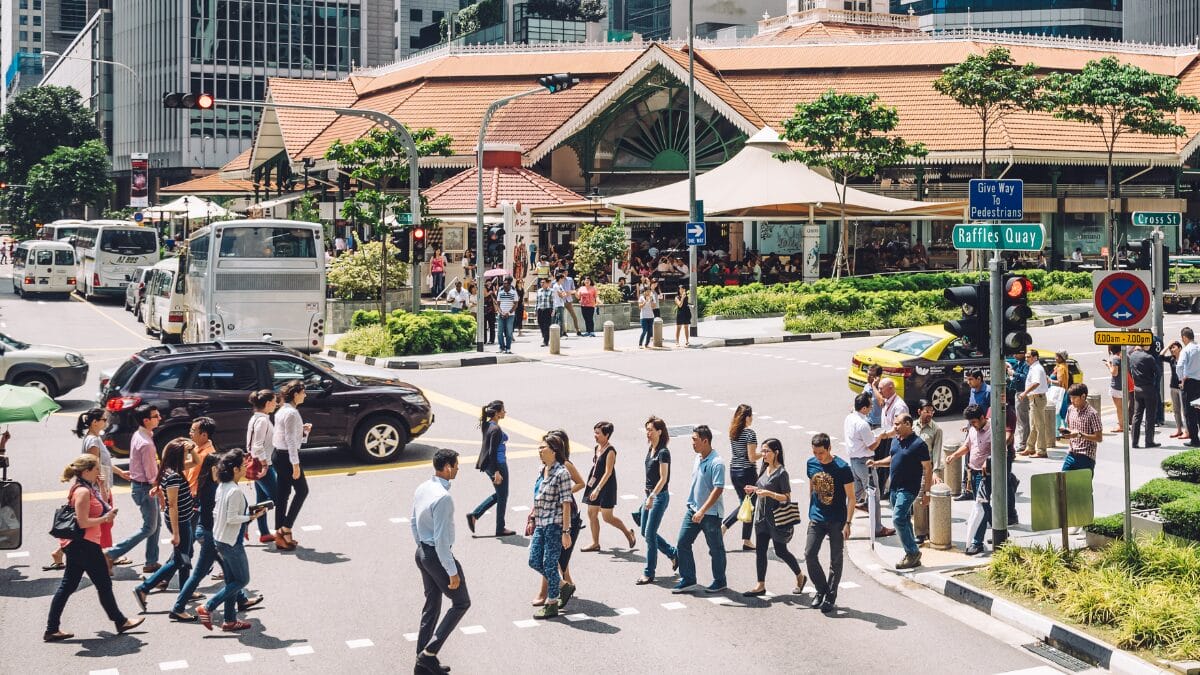
For the Customer trend index, we surveyed 1,000 Singapore consumers to find out how they discover new brands, which channels they actually want to use, what tips them into buying, and what keeps them loyal. One of the most interesting insights in the whole report was just how advanced the customers in Singapore are. Singaporean shoppers are digitally fluent, AI-curious, and swayed by influencers.
They stand out in a league of their own, painting an entirely different picture of consumer habits and preferences compared to the Western markets. We’ve broken down the findings across four areas:
- How they find you
- How they want to hear from you
- What gets them to buy
- What keeps them coming back
How they find you
1. Five channels battle it out to be Singaporean shoppers’ top brand discovery sources
In-store browsing leads at 51%, followed by friends and family at 49%, search engines at 49%, and brand advertising at 47%. Online marketplaces (like Amazon and Lazada) follow at 42%.
Nine percentage points is all that separates these five channels. More than any other market where two or three channels dominate discovery, Singapore shoppers favor a cross-channel experience that meets their needs in the moment. To show up when and where it matters, your brand experience (from tone of voice to visuals) needs to be consistent across all of them. In a market this connected, having a disjointed experience can cost you sales.
2. Singapore shoppers are discovering brands through AI at twice the rate of the UK
In the last six months alone, 64% of Singapore consumers discovered a new brand through AI search. That’s 23 percentage points higher than American shoppers at 41%, double the number of UK shoppers using AI at 32% and over double the rate of Australian shoppers at 31%.
Singapore shoppers aren’t necessarily turning to AI to find new brands, but they’re finding them there anyway. Which makes it worth asking whether your brand shows up well when they do. Getting your SEO and GEO foundations right now means you’re positioned well for when AI adoption grows further.
3. Influencer content reaches more than two-thirds of the market
68% of Singapore consumers discovered a new brand through influencer content in the last six months. That’s 25 percentage points ahead of the US at 43%, and more than double the UK and Australia, both sitting at 32%.
What also sets Singapore apart from the other regions is how evenly that influence spreads across age groups. In the US, influencer discovery drops from 64% among Gen Z all the way down to 19% for Baby Boomers. In Singapore, it runs from 83% for Gen Z shoppers to 40% fo shoppers aged 60+.
Creator partnerships here have real reach across the whole market, so picking influencers who align with your audience matters more than follower count. A creator who genuinely connects with your target demographic will do more for your brand than one with a bigger but less relevant audience.
How they want to hear from you
4. Singapore consumers rank mobile apps as their #1 brand engagement channel
45% of Singapore consumers prefer mobile apps for interacting with brands they follow. In the UK, that number is 27%, in Australia, 25%. Even the US, often held up as a mobile-first market, sits at 37%.
Singapore shoppers are always-on consumers: they’re discovering, researching and engaging with brands through their phones in a way that outpaces most Western markets. Email follows closely as Singaporeans’ second-favorite channel at 43%, and brand websites at 41%, but it’s worth noting that in-store comes fourth at 35%. Even for a channel as established as physical retail, digital has pulled ahead. WhatsApp and messaging apps sit at 31% too, higher than in most other markets, reflecting a broader comfort with brands showing up in more personal digital spaces.
In a market this engaged, consistent digital experiences across app, email, and messaging are how you build the kind of familiarity that turns browsers into buyers.
5. Monthly contact is the preference for most shoppers (40%) but Gen Z wants to hear from you weekly
40% of Singapore consumers prefer monthly contact from brands they follow. 33% prefer weekly, and the appetite for daily communication is low at just 6%. Younger shoppers prefer more regular communication, with 36% of Millennials and 31% of Gen Z preferring weekly.
This is most useful for shaping the cadence of your broadcast communications, such as newsletters, roundups, and new launches. Between these, audience engagement should be sustained through timely, behavior-led automations triggered by customer actions. This creates a predictable rhythm of regular updates, alongside relevant interventions that appear exactly when they’re needed.
6. 25% of Singapore consumers feel brand communications aren’t personalized enough
Only 15% find communications too personalized; one of the lowest figures across all markets surveyed, but 25% consider marketing “not personalized enough”. Among Gen Z, the appetite for more personalization rises to 34%, and among Millennials to 28%.
Younger Singaporean consumers are actively looking for more relevant communication from the brands they follow, and they’re not getting it. With concerns about over-personalization sitting this low in this market, there’s clear permission to invest more in timely and relevant marketing.
7. Only 11% of customers find their marketing messages “very relevant”
Look closer at how Singapore shoppers feel about personalization, and only 11% say the messages they receive are “very relevant” to them in the moment. Read alongside the personalization data above, a picture starts to form. Brands are reaching customers, but the harder part is delivering something that actually resonates.
Relevancy means messages that reflect where a customer actually is: responding to their actions, speaking to their needs in the moment, and connecting with their stage in the journey. That’s what separates a message that lands from one that just arrives.
What gets them to buy
8. Singapore consumers are the happiest to share their email addresses
43% of Singapore consumers are happy to share their email address with a brand, ahead of Australia (36%), the US (35%), and the UK (33%). But they’re also cautious about the data they’re willing to share. 30% will hand over contact data for the right rewards like discounts, loyalty points, or exclusive sale access.
Email is the natural starting point for a customer relationship here. Lead with that, then earn the rest over time through demonstrated value, or a well-timed incentive that makes sharing phone numbers or other data feel worth it.
9. Decision timelines are getting longer for a 33% of Singapore consumers
33% of Singapore consumers say their purchase decisions are taking longer, while 23% say decisions are getting shorter. For Gen Z, that rises to 35% and further still for Millennials, to 38%.
People are researching more, comparing more, and taking longer to commit, but they are still making the purchase. Offering indecisive shoppers content that supports the research phase matters more as decisions stretch out. Having detailed product information, comparison content, and customer reviews is helping to drive conversions over this longer window.
10. Word of mouth (49%) and timely emails (47%) are the top triggers for impulse purchases
When Singapore consumers make an unplanned purchase, the thing that pushes them over the line is almost as likely to be a brand email as a recommendation from someone they know. Coming in first place is word of mouth, at 49%, and timely emails (like back-in-stock notifications) follow closely at 47%.
Across every generation, from Gen Z to Baby Boomers, timely brand emails are a consistent impulse driver. These are triggered, behavior-based emails, like back-in-stock alerts, abandoned browse reminders and flash sale notifications. And with performance relatively even across age groups, you don’t need to segment your trigger logic by generation for it to be effective.
11. Free returns top the conversion driver list for undecided shoppers (47%)
When someone’s not sure about an online purchase, 47% of Singapore consumers say free and easy returns would push them to convert. Discounts and free delivery follow at 44%, and customer reviews at 33%. Where Singapore particularly stands out is product recommendations: 27% say these help them make a decision, compared to just 16% in the UK.
That split tells you something useful. Reducing the risk of a wrong decision matters, but so does helping shoppers find the right one in the first place. Recommendation logic on product pages and in abandoned cart emails is a strong feature that helps to actively close sales.
What keeps them coming back
12. 58% of Singapore consumers say a loyalty program keeps them coming back
The top loyalty drivers in the region are:
- Having the best products (73%)
- Family & friends rate the products (61%)
- I rate the brand’s customer service (60%)
- The brand has a loyalty program (58%)
- The brand has the cheapest products (58%)
In a market this competitive, a well-built loyalty program can retain just as many customers as a lower price, and gives you a reason to keep them coming back that doesn’t eat into your margins.
13. 47% of Singapore shoppers want personalized discounts from loyalty programs
Singaporeans’ desire for personalized experiences extends all the way to the kind of rewards they want from loyalty programs. 47% want personalized offers as a reward from loyalty schemes — well above the US at 36% and the UK at 33%, and stronger than almost anywhere else we surveyed.
A loyalty program that delivers individual offers based on purchase history and preferences will outperform one that sends the same promotion to everyone.
14. 56% of Singapore consumers have spent more because of a loyalty program
More than half the market (56%) has increased their spending to reach their next reward tier. That makes Singapore one of the most loyalty-responsive markets in the survey. Gen Z leads at 62%, but even Gen X comes in at 45%.
If your program is built around what individual customers actually want, you have a real opportunity to turn one-time buyers into repeat customers who spend more every time they come back. Personalized offers, incentives that reflect purchase history, and rewards that feel earned rather than generic really deliver results in this region.
What this means for your marketing strategy
Singapore stands out in several ways across all areas of the data:
- AI and influencer discovery are further along here than almost anywhere else
- Mobile-first, messaging-friendly channels are a strong preference
- Personalization is wanted, with younger audiences actively looking for more
- Loyalty programs convert into real spending
The thread running through all of it is relevance. Singapore shoppers are engaged, digitally native, and highly receptive, but they notice when brands aren’t keeping up. Brands that show up in the right channels, with the right message, at the right moment are the ones earning repeat customers, and those customers are bringing their friends along to help spread the love for your brand.
For a deeper dive into global customer trends, check out our full report, the Customer trend index 2026/27.
