

The state of search in 2026 – a discussion with Rand Fishkin
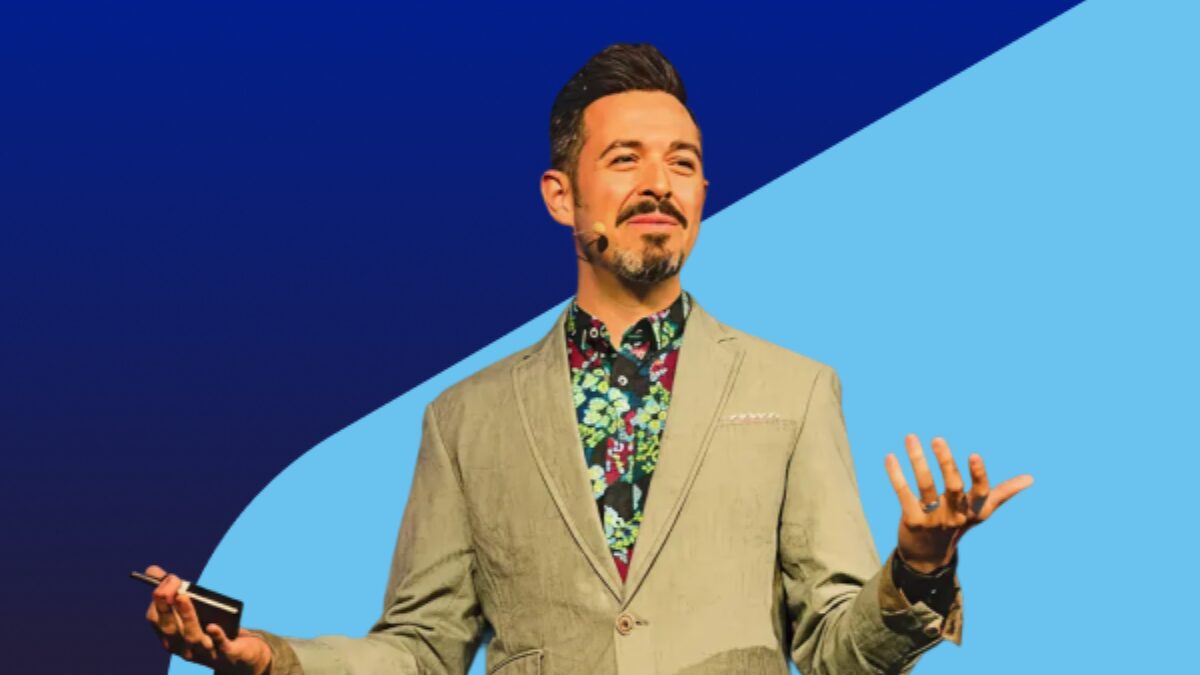
Rand Fishkin, CEO and Co-founder of SparkToro, and all around marketing-data wizard, recently joined us to share his latest research on what the heck is actually happening with audience search behavior. We know it’s changing, we know it’s getting harder to drive clicks, but the reality of where and how audiences are searching has been really complex to figure out. Until now!
Watch the full recording of the session and see the data being presented in real time, or scroll on for a quick summary of the key findings and links to download the full reports.
So what did we discuss?
Rand presented findings from a new study on search behavior and market trends that he worked on with Datos. The study analyzes website visit patterns and platform usage across traditional search engines, AI tools, and e-commerce platforms. The data revealed that while Google maintains significant market share in traditional search, search behavior is increasingly happening across multiple platforms including social networks, e-commerce sites, and AI tools, with Amazon being the top search platform in the US.
The discussion also dug into new insights about the relationship between AI tools and traditional search, emphasizing that both remain important for optimization strategies and overall marketing that supports commerce and economies.
Search trends in 2026
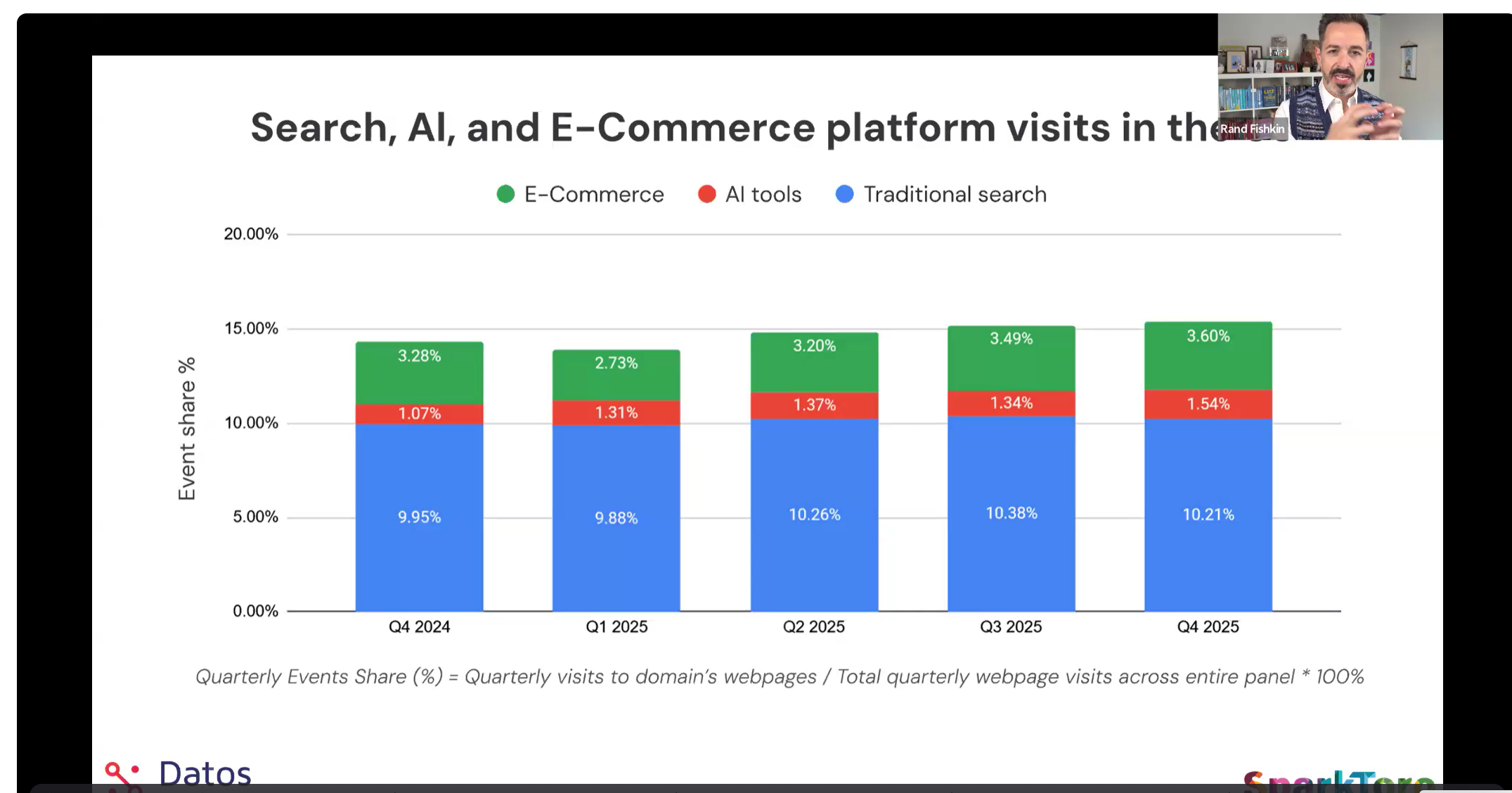
A recent research project with Datos on clickstream data, analyzed website visit patterns, revealing that traditional search engines accounted for 10% of visits, AI tools 1%, and e-commerce 3.28% in Q4. Confirming that Google’s market share remains stable, despite some reports of decline, and that AI mode adoption is currently low, but increasing as Google becomes more aggressive with its promotion of AI mode and AI overview search results.
AI search behavior research
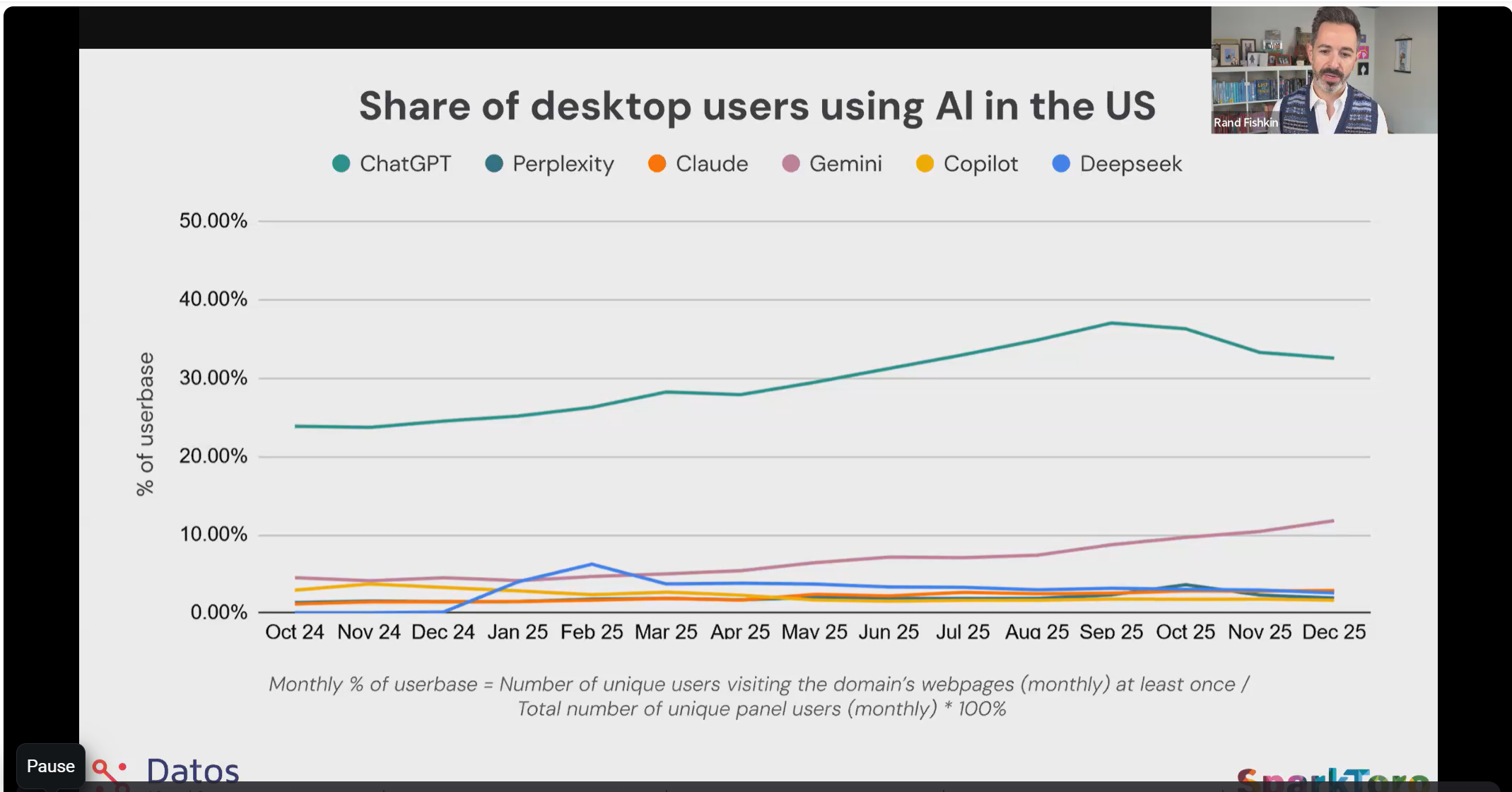
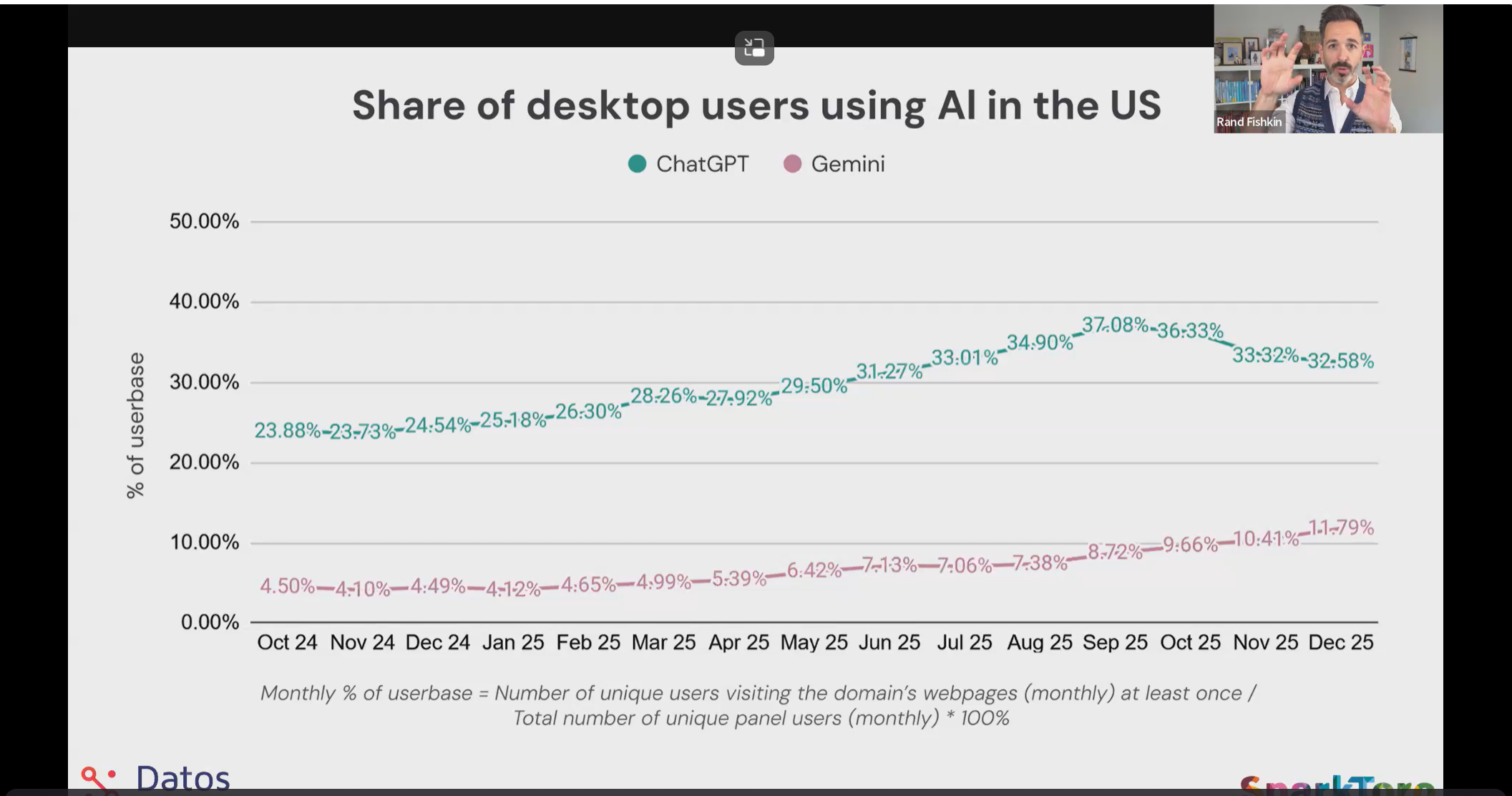
With Google still dominating traditional search, AI tools like ChatGPT are starting to show declining usage, as Google’s Gemini gains market share. The research found that audiences are searching across many domains beyond traditional search engines. 14 out of 41 domains that were looked at received visits from over 20% of US desktop devices and 15 domains reached similar stats in the EU. Rand emphasized the importance of focusing on the channels and search engines your specific audience and customers are already engaging with, rather than jumping on general trends. This is particular important if you have an audience that uses social media networks and e-commerce sites.
Search platform market share analysis
Rand presented data on search behavior across different platforms, revealing that while Google maintains a significant market share, other platforms like Amazon, YouTube, and Bing are also major search destinations. The analysis showed that search outside traditional engines represents about 20% of total searches, with e-commerce and social networks accounting for additional shares. Rand noted that Google’s dominance appears to be shrinking slightly when compared to overall web search activity, but is still clearly demonstrating its staining power in the ranks of traditional search platforms.
Cross-platform search behavior data
The data shows that search behavior is happening across multiple platforms beyond traditional search engines. Key findings included Amazon being the top search platform in the US, YouTube* having lower search rates than expected despite its popularity, and ChatGPT showing flattened growth in search activity. The discussion addressed questions about the definition of search across different platforms and the impact of social media on search behavior, with Rand emphasizing that while platforms like YouTube and Instagram may not show high search rates, they still represent significant opportunities for content optimization.
*A point to note here is that many search results that end with YouTube content consumption, don’t necessarily start on YouTube. They are likely to start on Google, with YouTube videos being surfaced as search results.
AI and search optimization
Rand discussed how AI tools are additive rather than replacing traditional search right now, noting that while AI visibility in Google is important, with 16% of searches now showing AI overviews, the focus should remain on both traditional and AI search optimization.
Bonus content – marketing is a superpower
With it being noted throughout the session that politics and economical uncertainty play a huge role in how audiences, particularly consumers, adapt their behavior, we finished the discussion by getting a little deep and thinking about the part that marketing plays in the world right now. When asked about marketing’s relevance during challenging times, Rand emphasized that marketing has, and has always had, a positive impact on the world by enabling commerce and free market economies. It allows marketers to build a career around something that they’re truly passionate about, and it allows audiences to find items, hobbies, interests, information and tools (for work or leisure) that help them embrace what makes them happy and brings fulfillment. Letting us all lead better, happier and more interesting lives. So make sure you follow the data that helps your audience find your marketing.
The session concluded with Rand sharing links to the research reports that were discussed, which can see visuals from in the session recording, or downloads for yourself: