



We surveyed 1,500 marketers for our report, The Secret Lives of Marketers, and they named email and CRM marketing as their best channels for ROI. When we asked the same marketers which channels and tactics they’re focusing on, email came ninth, with just 22% prioritizing it over the coming year.
The report also revealed that marketing teams are getting smaller. 38% of respondents now work as sole marketers, up from 21% last year, and 34% work with a 1-4-person team, even though 82% saw their budgets increase. With fewer people covering more channels, the channels that already pay back on investment are the easiest to take for granted.
Customers make the same case from the other side. In the Customer Trend Index, 45% of consumers named email as their preferred channel for hearing from their favorite brands. It’s personal, permission-based, and customers control how they interact with it.
An email address is the start of a relationship. It’s your most reliable way to reach customers again, without relying on them choosing to visit your store or on your latest post showing up in their social media feeds. Once you’ve earned that spot in their inbox, you can retarget and nurture over time to keep your brand front of mind. So, understanding the value a single email address can generate reveals the real opportunities being missed when it is deprioritized as a marketing channel.
What the data says about email
- 20% of marketers name email and CRM marketing (email, automation, and lifecycle marketing) as their number one channel for ROI, ahead of organic content marketing (16%), mobile marketing (16%), and paid social (15%), according to The Secret Lives of Marketers
- Email ranks ninth for prioritization at 22%, behind website personalization (33%), content marketing (31%), and organic search (26%)
- Around 1% of marketers say they lack the tools to track ROI by channel, so the return on email is visible to almost every marketer surveyed
- 27% of marketers are prioritizing marketing database growth, the same share as those prioritizing customer retention and loyalty – both of which rely strongly on email experiences
- For every $1 spent on email marketing, 35% of marketers see $10–$36 in return, 30% see $36–$50, and 5% earn more than $50
- Global email marketing revenue is projected to reach $14.5 billion by the end of 2026, proving that the channel still generates big business
- Around 24% of marketers say Tuesday is their go-to day for sending campaigns, with Thursday close behind at 20%
Why email lists matter
An email list is an audience you build and keep. Paid media charges you every time you want to reach someone, and the platform sets the price. Social media channels have their own version of this, with trends and algorithm changes deciding who sees your content. A subscriber costs you once to win, then they’re reachable for as long as they want to hear from you, meaning an email address keeps earning long after sign-up.
How to calculate the value of an email address
You can work out what a single email address is worth from two numbers you already have:
- Your total email-attributed revenue from the past 12 months
- The number of active subscribers you have (people who open, click, or convert, not your total list size)
Step 1: The monthly value of one email address
Monthly value per email address = (total email revenue ÷ 12) ÷ active subscribers
Example: $240,000 ÷ 12 = $20,000 a month. $20,000 ÷ 10,000 active subscribers = $2 per address per month.
Step 2: The lifetime value of one email address
If you lose around 5% of your active list each month, your average subscriber lifespan is roughly 20 months (1 ÷0.05)
Lifetime value = monthly value per address x average lifespan in months
Example: $2 × 20 months = $40 lifetime value per subscriber
Step 3: The value of your entire list
List value = lifetime value x active subscribers
Example: $40 × 10,000 active subscribers = $400,000 total list value
These figures are examples, so swap in your own. To track the real numbers, download our ROI calculator worksheet.
What small gains do to the value of your list
Two things raise the value of a customer’s email address: how much the customer spends and how long they stay active. Growing your mailing list multiplies both. Here’s what small changes can add up to:
| Scenario | Monthly value per email address | Average lifespan | Lifetime value | List value (10,000 active subscribers) |
|---|---|---|---|---|
| Baseline | $2.00 | 20 months | $40 | $400,000 |
| Monthly churn grows to 6% | $2.00 | About 17 months | About $33 | About $333,000 |
| Monthly churn drops to 4% | $2.00 | 25 months | $50 | $500,000 |
| Revenue per address rises 10% | $2.20 | 20 months | $44 | $440,000 |
| Both changes (revenue up, churn down) | $2.20 | 25 months | $55 | $550,000 |
In this example, a one-point drop in monthly churn adds $100,000 to list value, more than a 10% revenue lift. A 1-point rise in churn reduces your total list value by about $67,000. Here are some quick tips you can implement today to increase your overall list value.
Raising what an email address earns
Revenue per email address rises when a message matches what the subscribers’ most recent actions. To boost the relevancy of your messages, focus on using behavioral data:
- Segment by behavior: Recency and frequency of purchases are a good place to start, and these insights are easy to access with customer modeling tools like eRFM. Using dynamic content in your emails lets you reach these segments with specific messages from a single email send.
- Trigger journeys from customer actions: Abandoned browse and cart recovery flows are a great place to start. Set the trigger based on the action itself, such as a cart left or a product viewed, and set the delay by buying cycle: shorter for impulse purchases, longer for considered ones. Also consider the blockers to conversion, such as shipping costs and return policies, to nudge the customer through checkout.
Extend how long an email address stays active
Two things can slow churn: sending targeted messages and noticing early when their interest drops. Here’s how you can do both:
- Use the welcome journey to set expectations: Explain what subscribers will get and deliver any incentive (like a personalized discount code) straightaway. You should also use this automation to learn about customers so you can deliver the content they’re looking for from the relationship. Asking subscribers to share preferences or take a quiz is a great way to get this data firsthand.
- Define what “lapsing” means for your buying cycle: If customers typically buy every 60 days, a subscriber wih no clicks or purchases in 90 days is a candidate. Opens alone can be misleading, so count clicks and purchases as well.
- Re-engage before you suppress: A short sequence of two or three emails that acknowledge a subscriber’s inactivity and gives them a reason to re-engage catches them before they go quiet for good. Suppressing the ones that don’t respond protects deliverability and helps you calculate your active subscribers for the calculation above.
How to grow your email list with engaged subscribers
Once you know what an email address is worth, you can better judge what it’s worth spending to win one. A 25% discount looks different when you weigh it against lifetime value rather than a single first order.
The benefits of a strong email list growth strategy
- Increase CLV: Engaged subscribers buy more often, spend more per purchase, and stay loyal longer, directly improving customer lifetime value
- Capture zero- and first-party data: Easily gather the insights you need to personalize campaigns, segment audiences, and even inform your broader marketing strategy
- Build trust and transparency: Set expectations from the first interaction by being clear about data use, consent, and the value exchange
- Enable smarter automation: Trigger personalized journeys that welcome, nurture, and convert new subscribers automatically
- Improve engagement rates: Deliver tailored content that feels relevant and timely, boosting open, click, and conversion rates
- Strengthen retention and loyalty: Turn new sign-ups into long-term brand advocates through consistent, value-driven communication
These are five tactics to attract people who will stay for the long haul. For more ideas, see our guide to email list building strategies.
1. Put your sign-up where visitors are
Your sign-up form’s placement can make or break your list-growth efforts. If your only option to subscribe lives in the footer of your website, then you’re relying on visitors to scroll all the way down, which most won’t.
Think about where people are most engaged; every touchpoint is an opportunity to grow the email list. With 54% of consumers discovering new brands on mobile, the experience has to be quick and easy to act on. Popovers can work well, but they’re not the only way to get noticed. Try adding multiple touchpoints on your website, like banners, sticky headers, or embedded sign-up forms, to make subscribing feel seamless.
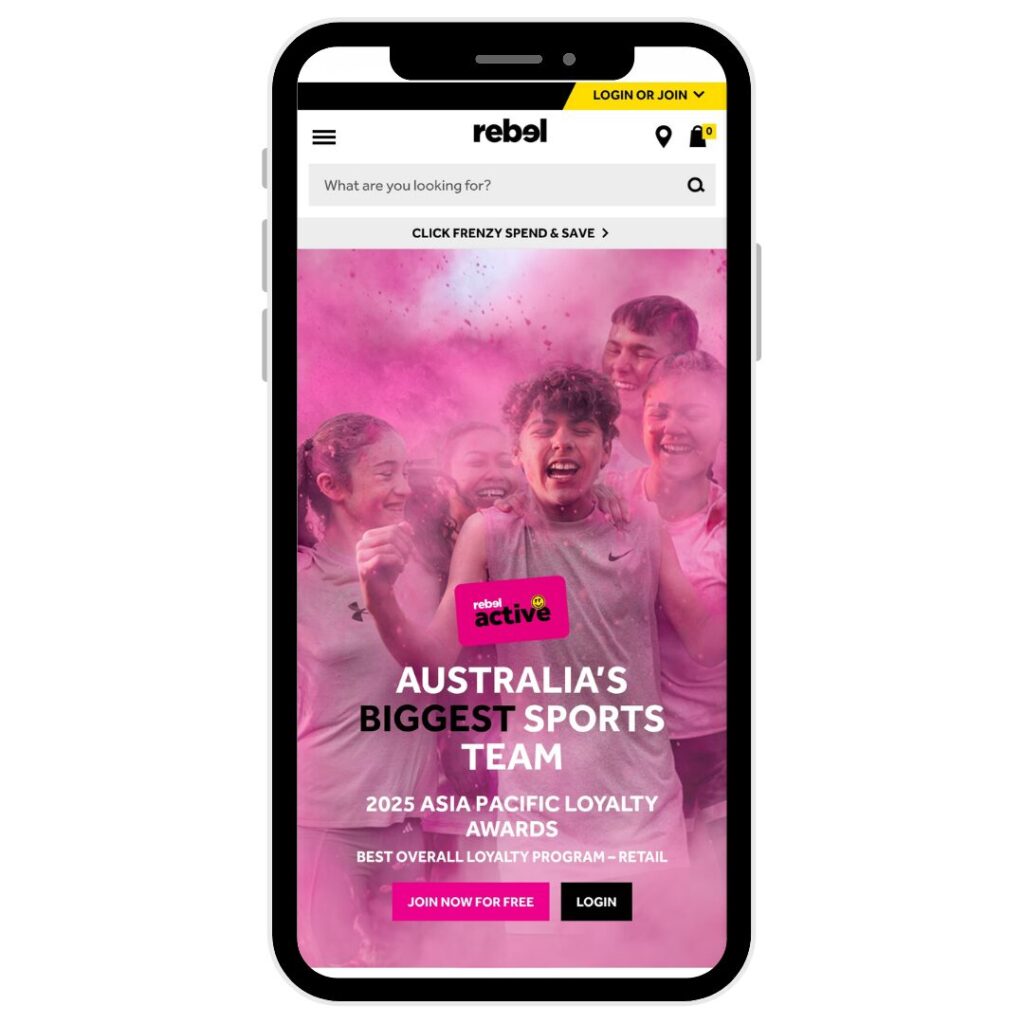
Activewear brand Rebel Active keeps a permanent sign-up CTA in its website header, making it easy to subscribe anytime. The homepage also promotes its loyalty program, giving visitors an extra reason to join.
2. Be clear about consent and privacy
Trust starts the moment someone shares their email with you, and it’s key to sustainable list growth. Yet in Hitting the Mark, 32% of brands didn’t communicate their privacy policy or collect proper consent.
That’s not just risky; it’s a missed opportunity to build trust and confidence in your brand. Being upfront about how you’ll use a customer’s data and linking to your privacy policy shows transparency and respect.
Beyond being a legal must-have (in compliance with GDPR, CAN-SPAM, and various US state laws), this shows customers you value their data and won’t abuse their trust. With consumer confidence in data security at an all-time low due to recent and ongoing data breaches, this reassurance goes a long way toward building relationships based on trust.
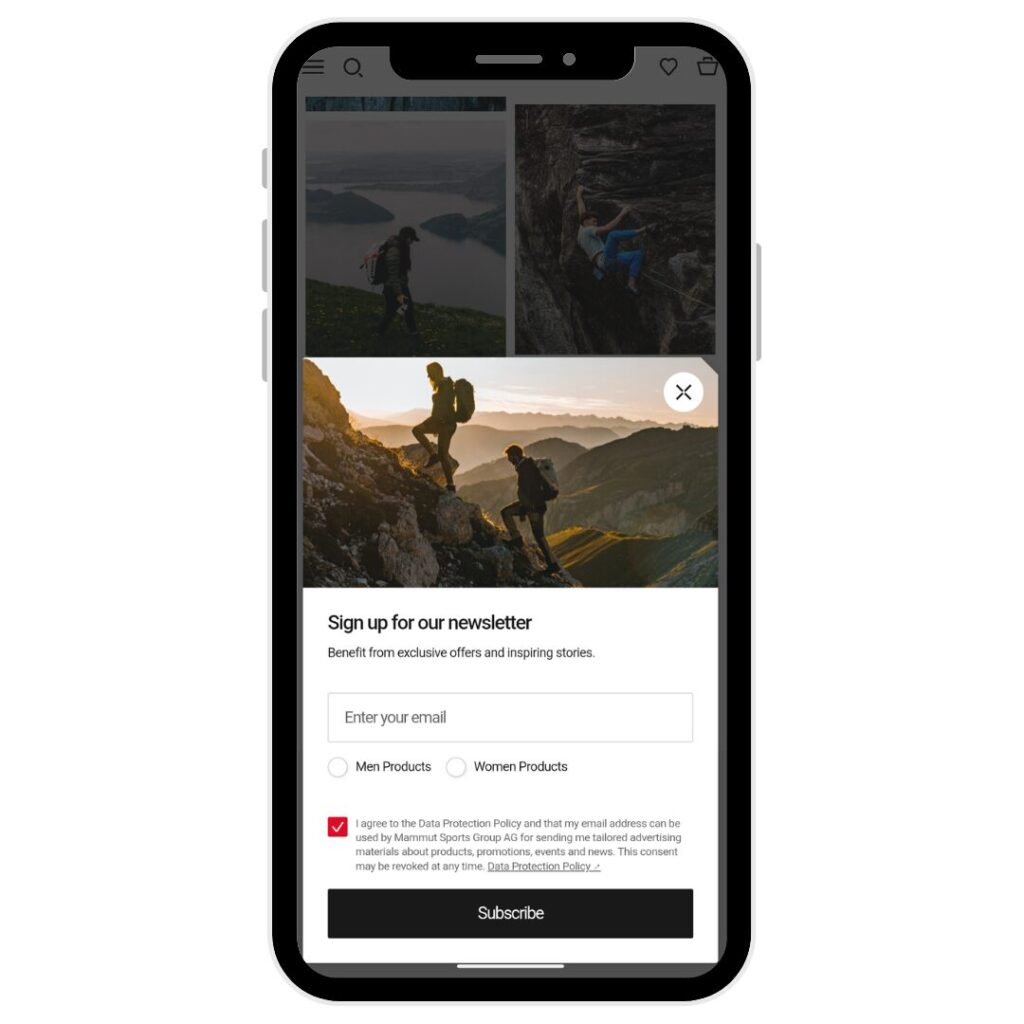
Mammut keeps its privacy and consent messaging short, clear, and customer-friendly. A simple tick box at the end of the form lets subscribers know exactly what they’re opting into, while a link to more details keeps things transparent without overwhelming the experience.
3. Match the prompt to the visitor
Sign-up opportunities should adapt to where the visitor is in their journey. If you’re using popovers, make them contextual.
A few popover tactics you can try are:
- Delayed scroll popovers: Let visitors explore your homepage or landing page first, then invite them to subscribe halfway down the page
- Timed triggers: Show popovers after a set time period, like 45 seconds, to reach visitors who’ve clearly engaged or haven’t bounced
- Exit-intent prompts: Offer a light-touch “stay in touch” message before someone leaves your site
- Save your basket messages: Convert browsers who aren’t ready to buy yet but want to keep in touch
Just make sure you’re not overdoing it. Use conditions to avoid showing popovers to existing contacts, to avoid turning your helpful prompt into an annoyance.
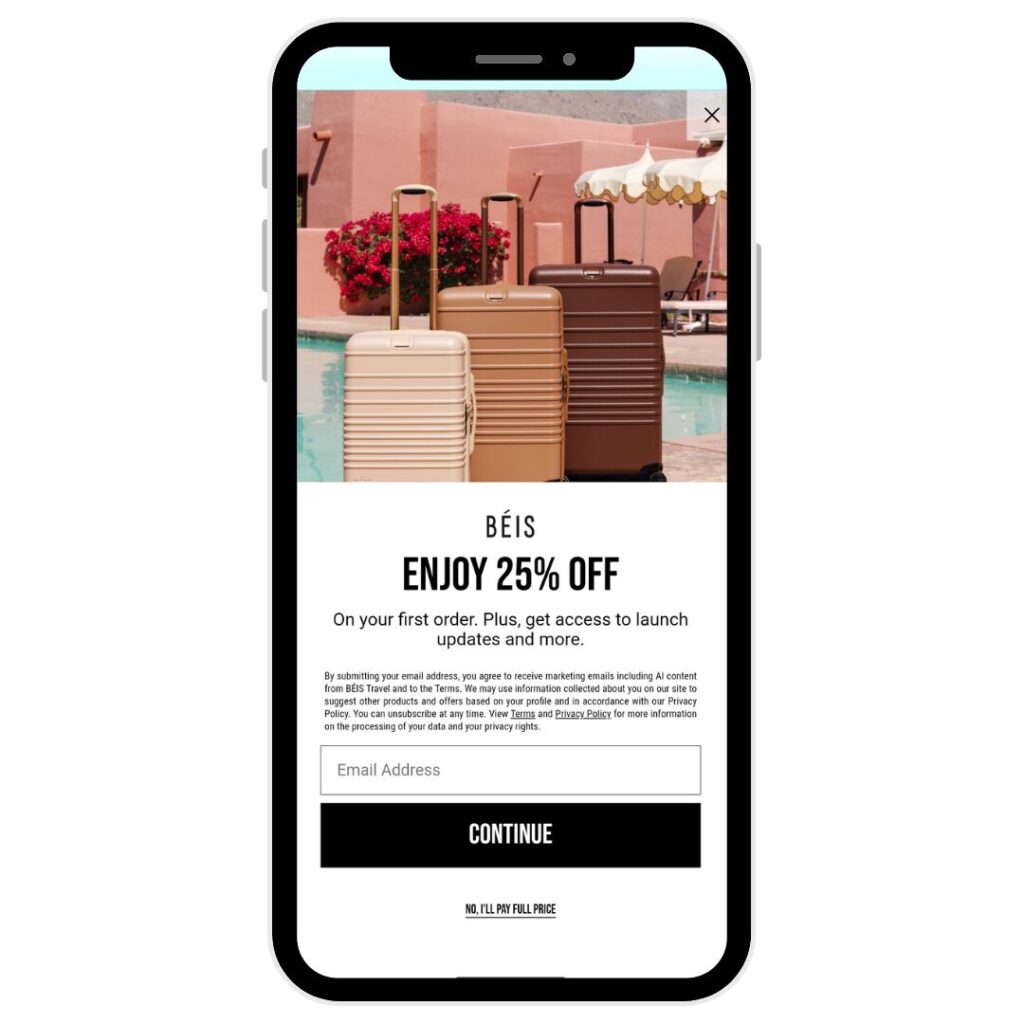
BÉIS uses a delayed popover to invite visitors to subscribe and sweetens the deal with a 25% discount. It’s a smart example of value exchange done well.
And remember, attention-grabbing doesn’t have to mean adding a popover to your site. If your website visits happen predominantly over mobile, popovers might not be ideal. Try using interactive tools like quizzes or style finders that collect valuable data in a fun, opt-in way. It’s engagement that doubles as insight.
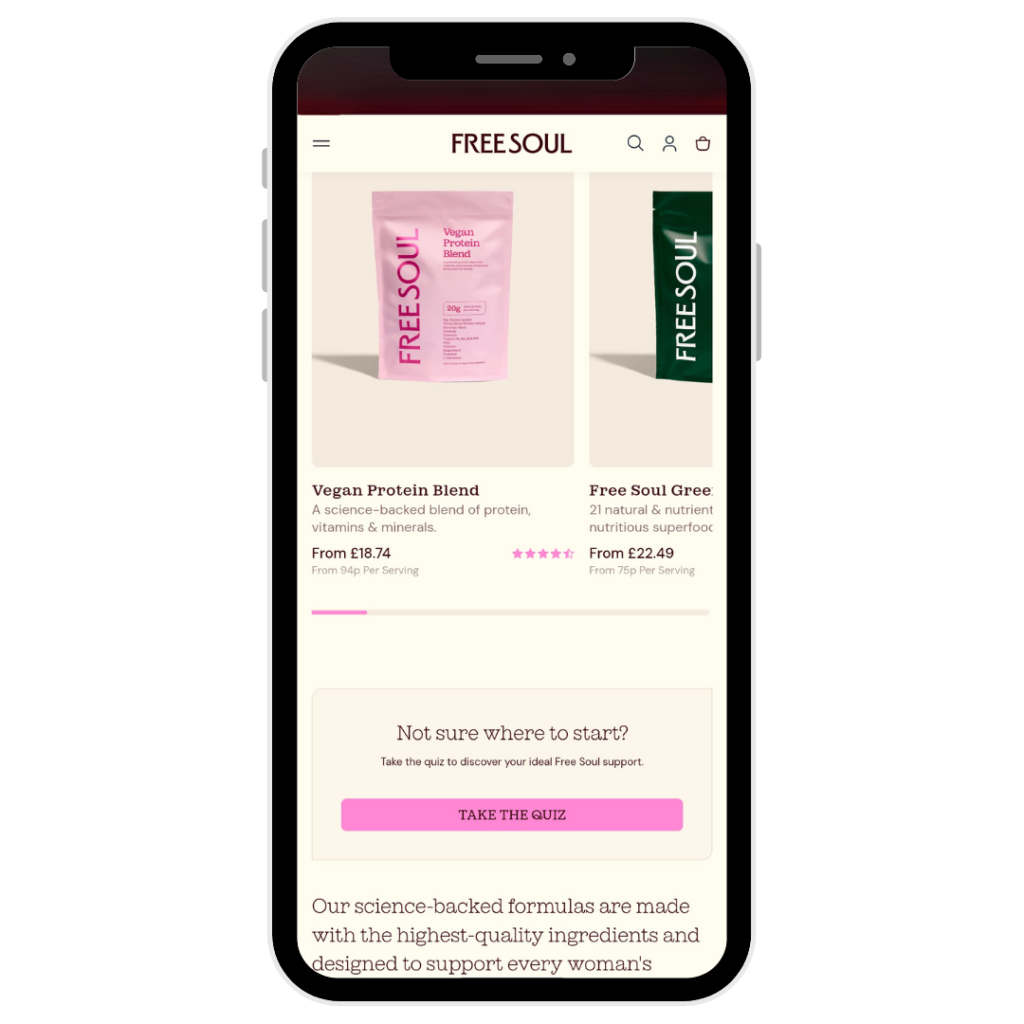
Health and nutrition brand Free Soul knows that choosing supplements can be confusing. To help, it offers an interactive quiz that delivers personalized product recommendations and collects valuable subscriber data in a natural, engaging way.
4. Make the value exchange obvious
The best-performing sign-ups are built on honesty. Tell customers what you’re collecting and why you’re collecting it.
Instead of saying “Tell us your birthday,” flip it to “Get a birthday treat from us.” Make the value exchange obvious to the subscriber. For every piece of data they share, they should feel like they’re getting something better in return. This small shift builds trust, reinforces transparency, and positions your brand as one that gives more than it takes.
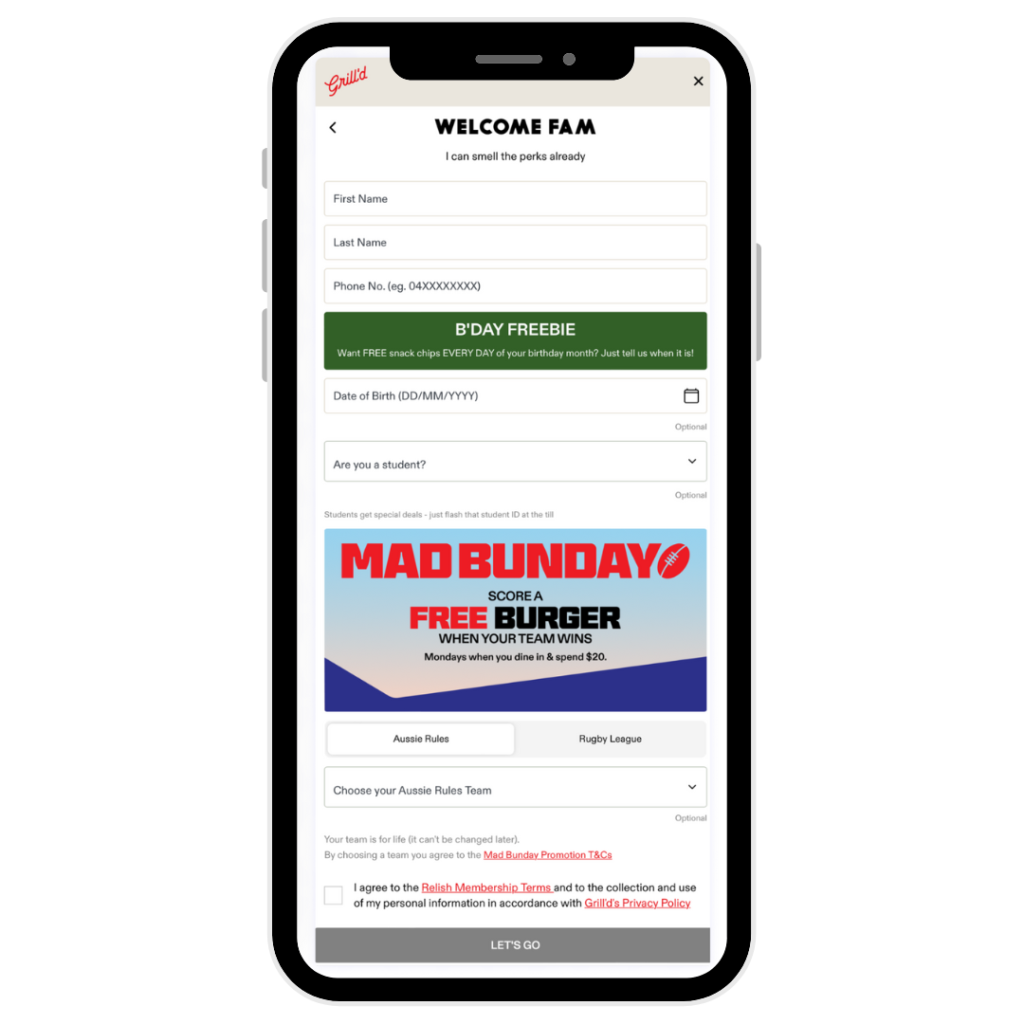
Grill’d makes data sharing irresistible by clearly explaining why they collect information like birthdays and favorite Aussie Rules teams, and what subscribers get in return. It’s transparent, relevant, and builds trust from the start of the relationship.
5. Make loyalty a reason to join
Loyalty isn’t the final stage of the customer journey; it should be your brand’s mindset that shows up right from the first interaction. Shoppers today expect to get something back for their engagement, and loyalty programs are a big part of that.
But according to Hitting the Mark, only 22% of brands integrated loyalty or advocacy into welcome and onboarding messages, and just 9% had a fully integrated loyalty program across the entire customer journey.
If you have one, make it a feature of your sign-up experience. Position your loyalty or rewards program as a reason why visitors should subscribe. This shifts the mindset from “giving your email away” to “joining something valuable.”
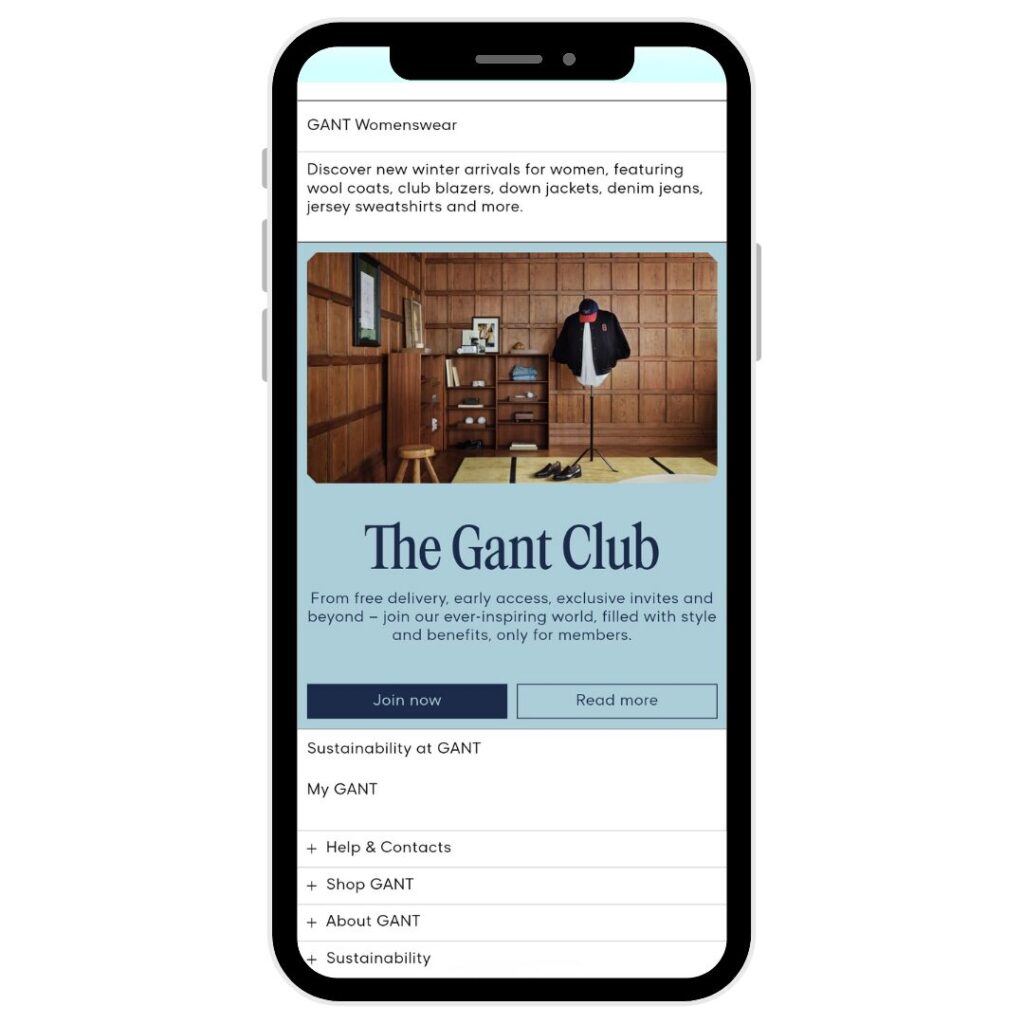
GANT takes a loyalty-first approach to list growth, shifting the message from “Sign up to our emails” to “Join the club.” This subtle change makes subscribing feel like joining an exclusive community, which sparks instant engagement and long-term loyalty.
Treat email like the asset it is
Email is easy to deprioritize when there are new channels and platforms to learn, and more demands on smaller teams. But the numbers make a strong case for keeping it at the center of your strategy.
Every subscriber has a value. That value grows when you give people a reason to stay, make your messages more relevant, and keep building the relationship after sign-up. It also grows when you bring in more people who genuinely want to hear from you.
So don’t measure your email list by its size alone. Look at what each address contributes, how long people stay engaged, and what you can do to increase both. When you treat your list as an asset rather than a database, every sign-up, send, journey, and interaction becomes an opportunity to build its value.
