


Marketing in the higher education industry represents a unique challenge, unlike those experienced by your fellow marketers in other fields. No matter the shape or size of your institution, marketers for higher education brands face many different challenges daily. Increased accessibility to education means competition is strong. The channels and strategies you use to attract new learners are constantly shifting.
To make an impact with your marketing, you need to stay on top of the latest trends and technology. In this ultimate marketing strategy guide, we’ll explore the challenges you’re currently facing in the higher education industry, upcoming trends, and what technology you need to stand out in a crowded market.
What is higher education marketing?
Higher education marketing isn’t just about using flashy marketing tactics to lure students in. It’s about promoting your educational institution and the programs you offer to attract prospective students, engage with alumni, and build your reputation. It’s about positioning the university in a way that attracts the right students, answers their questions, and showcases your programs, facilities, faculty, and unique offerings to prospective students.
You can use many strategies, methods, and tactics to engage with your audiences, get across the unique selling proposition of your institution, and reinforce your brand image in a competitive environment. Ultimately, your goal is to create a friendly and welcoming atmosphere that inspires learners to reach their full potential.
Types of higher education institutions
The higher education sector consists of institutions that offer different programs and degrees. These institutions can be categorized into five major types:
- Universities mainly focus on research and offer degrees at the undergraduate, graduate, and postgraduate levels
- Colleges offer undergraduate education and award associate and/or bachelor’s degrees
- Further education colleges provide programs that lead to diplomas, certificates, or foundation degrees. Here, learners develop practical skills and industry-relevant knowledge, preparing them for university or the workforce
- Technical and vocational institutions specialize in providing instruction in specific trades and professions
- Online learning offers diverse programs through distance learning or online platforms, helping learners to study from anywhere
Why is marketing important for your higher education institution?
Marketing is of great importance for higher education institutions for many reasons, but here are the highlights:
- Build awareness: Make your higher education institution stand out from the competition and reach a larger audience
- Attract prospective students: Show your unique attributes, attract high-quality applicants, and increase enrollment rates, which contribute to the financial sustainability of your institute
- Promote programs, degrees, and courses: Highlight specific academic programs and generate interest among potential students to join these programs
- Alumni relations: Maintain connections with alumni, who are valuable sources of donations, mentorship, and professional networks
- Improve institutional reputation: Highlighting the achievements, research, and expertise of your faculty members, as well as the success stories of students and alumni, helps you build a strong reputation that will keep you top of their minds when applications roll in
Challenges facing the higher education industry
Here are the key challenges that marketers face in the higher education industry:
- Competition: Growing competition among higher education institutions creates a difficult environment for marketers to differentiate their offerings
- Diverse audiences: Marketers must connect with diverse audiences, such as high school students, parents, working professionals, and international students, each with its own needs and expectations
- Demonstrating ROI: Marketing budgets are highly scrutinized, and marketers must track, analyze, and demonstrate the effectiveness of their efforts
- Rapidly changing landscape: The higher education industry is always changing, driven by technological advancements, new methods of learning, and shifts in market demand for specific programs
- Regulations and restrictions: Compliance with regulations can limit marketing activities, which can hinder the ability to quickly capitalize on opportunities
These challenges mean you need to stay current with the latest marketing trends and strategies, and be creative in your approaches to reach and engage with your target audience.
Top 10 higher education marketing trends
A large proportion of people entering higher education are in their late teens and early twenties, an audience that’s grown up with social media, instant messaging, and an expectation of personal, relevant communication. Reaching them means showing up on the channels they actually use and with messaging that feels like it was meant for them.
1. Adding AI into your marketing stack
From generative AI (writing assistance, image creation, and video production) to predictive analytics and note-taking, there are more ways than ever that you can include AI in your day-to-day marketing.
It’s all very exciting. AI is touted to be the answer to easier and quicker processes, but it’s important to consider the finer details. Multiple stakeholders, not just those in marketing, should be involved to avoid potential issues with copyright and privacy policy infringements and make sure all teams have access to the resources they need.
2. Using zero-party and first-party data
Unlike third-party data, zero- and first-party data is unique to your brand and owned by you. It’s collected with explicit consent from your website visitors, through direct interaction, text communications, or other marketing campaigns.
Personalizing your marketing efforts has never been easier. By collecting first-party data, you can segment prospective students based on their academic interests and program preferences. This approach helps you to target students who are most likely to enroll in your university.
3. Personalized messaging
Gen Z is highly skilled at spotting marketing that feels inauthentic. As a result, marketing to all audiences all the time is too broad and doesn’t create the genuine, personalized feeling that Gen Z is searching for.
Fortunately, with the help of AI and big data, you can now understand what each student is looking for, letting you reach them at the right time and with the right message. Through email, SMS, and web personalization, as well as segmentation, you can create memorable marketing experiences that connect with prospective students.
4. SMS communication
Did you know that most members of Gen Z prefer to use text messages over emails for communication? This means that SMS is becoming a more popular way to communicate. Gen Z members are three times more likely to open a text message than an email.
Universities and colleges can use SMS to reach out to prospective students and establish trust by providing important information such as enrollment deadlines, inviting students to information sessions, or welcoming new students with exclusive discounts.
Alumni can also benefit from text messages by getting job placement alerts, reunion invites, and donation drive messages, which can help them stay connected with their alma mater.
Whether they’re a student or an alum, SMS is a communication tool that should not be overlooked. By using simple and familiar language, organizing the information logically, and keeping sentences short and direct, you can make sure that everyone can understand what you mean.
5. Authentic content
Many members of Gen Z prefer to see real people in marketing campaigns, with 67% being more interested in content that features realistic depictions of people. While influencers and brands aim to create visually stunning content on social media platforms like Instagram, this generation has resisted the trend, preferring raw, less polished content.
According to data from GWI, Gen Z cares most about content that is funny/lighthearted (58%), inspirational (52%), and helpful (51%) when it comes to brands. They value authentic content and expect it to align with the context of the platform. Content that appears too polished, sleek, or heavily branded is less likely to perform well on their preferred platforms like TikTok.
6. TikTok marketing
TikTok can be used to showcase campus tours, highlight the new programs, and share student-generated content, including alumni success stories.
Gen Z enjoys keeping up with the latest TikTok songs and trends, which is why higher education institutes need to stay on top of content creation. In fact, TikTok’s algorithm prioritizes such content. However, TikTok trends have a short lifespan of about 3 to 5 days, so it’s worth posting your content regularly; otherwise, it will become irrelevant.
7. Conversational marketing
Conversational marketing is a growing trend centered around having open chats with your audience or anyone who comes to your website. Using a variety of channels, including WhatsApp, live chat, and social media messages, you can connect with both potential learners and students who have already enrolled with you.
8. Learners turned content creators
The latest generation of learners wants to be a part of the brands they interact with. Gen Z loves creating content far beyond viral TikTok dances. Today, young people from around the world are collaborating to create authentic content that represents them.
Prospective students are searching for genuine content that accurately portrays “a day in the life” or career opportunities they’ll encounter after enrolling in your institution. To get great marketing results, you need to tap your Gen Z content creators and turn them into brand ambassadors.
9. Multi-form video content
Video content is brilliant for capturing attention, providing in-depth explanations, and entertaining your audience. Uploading these to YouTube can help boost brand awareness and improve your SEO ranking.
However, the attention span of your average Gen Z-er peaks at eight seconds, so short-form videos (under 90 seconds) have become their preferred length. So, when creating video content, think about how it can be used, the alternative forms it may take, and how it can be repurposed across your channels.
10. Lookalike audiences
Lookalike audiences are another way AI can speed up your marketing strategy. Lookalike audiences help you prioritize resources on individuals more likely to engage with your institution and enroll, instead of targeting a broad audience that may include less interested individuals.
Using customer insight tools like single customer view (SCV), you can easily spot your ideal customer profiles. Whether that’s someone who was super engaged throughout the whole enrollment process or someone who converted after a prolonged nurture series, you can use their profiles to inspire bespoke customer journeys.
Key higher education marketing strategies for impressive results
Student loan interest rates are at a high. Online and hybrid learning is on the rise. Focused, vocational courses are more in demand. Workplaces are investing more in upskilling their employees. Competition is at an all-time high.
To address these changes, modern marketing strategies need to focus on expanding higher education marketing channels, using data, and building communities based on experiences.
In this section, we’ll explore ten effective higher education marketing strategies that will grow your institution’s reach, reputation, and results. By using creativity, new ideas, and targeted marketing efforts, you can change your institution’s future and make sure its long-term success.
1. Higher education email marketing strategy and best practice tips
Email marketing has dominated the world of digital marketing for a long time – and for good reason. Email generates a whopping $48 (£38) for every $1 spent.
The flexibility of email – its visual, video hosting capabilities, and adaptability to both long and short-form content – makes it the perfect communication channel for marketers looking to build long-lasting relationships with their audience.
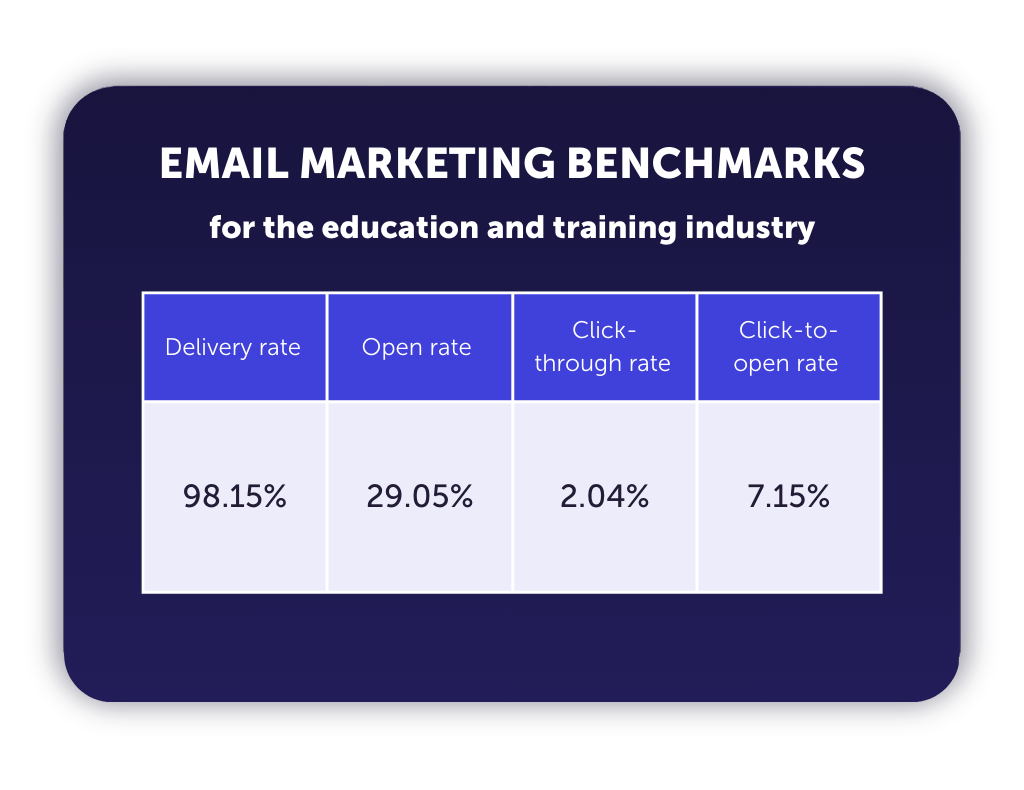
6 essential benefits of email marketing for higher education
Here are six benefits of email marketing for higher education marketers:
1. Cost-effectiveness
Email marketing is a cost-effective way for higher education marketers to communicate with prospective and existing students, especially compared to traditional marketing methods like print materials or direct mail.
2. Targeted communications
Email marketing lets you segment audiences based on factors such as academic interests, course preferences, location, or demographics. This helps you deliver highly targeted and relevant messages that connect and convert.
3. Improved personalization
Email marketing easily integrates customer data and personal details like the recipient’s name, location, or program of interest to create a more personalized and engaging experience for prospective students.
4. Timely communication
Email marketing lets higher education institutions send time-sensitive information, such as application deadlines or course updates, directly to students’ inboxes. This helps make sure important news reaches them on time.
5. Clear reporting and analytics
You can easily develop future email communications and make data-driven decisions by tracking and analyzing the engagement metrics of your email campaigns via your marketing automation platform.
6. Building long-term relationships
Email marketing lets you maintain consistent and ongoing communication with students before, during, and after their academic journey. This creates long-term relationships and improves overall student satisfaction.
Email marketing best practices for higher education marketers
When it comes to email marketing in the higher education industry, there are certain best practices that you need to keep in mind. By following these best practices, you can improve your email open rates, click-through rates, and conversions.
Know your audience
Segment your email list based on factors like prospective students’ year in school, interests, or program of choice. This lets you do targeted messaging that resonates more with each group.
Personalize the experience
Use students’ names and tailor content to their interests. This can be done by including relevant program information, scholarship opportunities, or upcoming events.
Craft compelling subject lines
Keep subject lines short, action-oriented, and pique the reader’s curiosity. Consider personalizing them with the student’s name or program of interest.
Mobile-friendly design
Make sure your emails are responsive and render well on all devices, especially smartphones, which students are likely to use most.
Visuals are key
Add high-quality images and videos to break up text and make your emails more visually appealing.
Calls to action (CTAs)
Tell students what you want them to do next. Use clear and concise CTAs that direct them to a specific landing page, event registration, or application form.
Strategic timing
There are optimal times to send emails to students. Consider sending emails during evenings or weekends when they’re more likely to check their inboxes.
Test and develop
Don’t be afraid to experiment with different subject lines, content formats, and CTAs. Use A/B testing to see what resonates best with your audience and continually improve your campaigns.
Permission-based marketing
Only send emails to those who have opted in to receive communications from your institution. This can be done through clear opt-in forms on your website, during registration processes, or at events.
Clear unsubscribe options
Make it easy for subscribers to unsubscribe from your emails. Include a prominent unsubscribe link in every email footer, and check it works properly.
Accurate and up-to-date contact lists
Regularly clean your email lists to remove inactive subscribers or invalid email addresses. This helps maintain good deliverability rates and avoids complaints.
Align across departments
Collaborate with other departments, like admissions or financial aid, to make sure your messaging is consistent and provides a good experience for students.
Respect student data privacy
Be transparent about how you collect, use, and store student data. This aligns with regulations like the Family Educational Rights and Privacy Act (FERPA) in the US or the General Data Protection Regulation (GDPR) in the EU.
Combine with social media
Promote your email campaigns on social media platforms to reach a wider audience and encourage further engagement.
By following these best practices, you can build trust with students and create effective email marketing campaigns that connect with prospective and current students, driving them further down the admissions funnel.
2. Marketing automation for higher education
Marketing automation automates repetitive tasks like sending emails and SMS to your audience. Its ability to personalize communications with your prospective and current students makes growing your campaigns to meet the new demands of online and hybrid learners, as well as keeping your alumni close, simple.
Benefits of marketing automation for higher education
1. Increased efficiency
Automating tasks like email nurturing and social media scheduling frees up valuable time for strategic planning and personalized outreach.
2. Personalized communication
Deliver targeted messages based on a student’s interests, demographics, and stage in the enrollment journey. This builds deeper engagement and improves conversion rates.
3. Improved lead scoring
Assign points to student actions (e.g., downloading brochures, attending webinars) to identify high-potential leads and prioritize outreach efforts.
4. Better data-driven decision making
Track campaign performance and get insights into student behavior. Use this data to refine messaging and improve future campaigns.
5. Better enrollment process
Automate workflows for tasks like application reminders, financial aid guidance, and welcome messages. This will create a smoother transition for new students.
Essential marketing automation programs for higher education
- Email drip campaigns deliver a series of targeted emails based on student interests and enrollment stage. Offer relevant content, answer their questions, and guide them towards applying
- Use lead nurturing workflows to keep prospective students engaged with personalized content like program spotlights, alumni success stories, and virtual campus tours
- Automated lead scoring to spot qualified leads by assigning points to website visits, downloads, and other interactions. Focus your outreach efforts on your highest-scoring leads
- Send timely reminders to complete applications and submit necessary documents. This helps create a smooth application process for potential students
- Onboard new students with a series of personalized emails offering resources, introducing key contacts, and building a sense of community
3. SMS marketing for higher education marketers
Most students and prospective students are glued to their devices, making SMS a great communication tool in your marketing arsenal.
Top 4 benefits of using SMS marketing
1. High open rates
The reach of SMS marketing is unrivaled. Average SMS open rates sit around 98%, making sure your message gets seen, every time.
2. Direct communication channel
Reach students directly, bypassing cluttered inboxes and delivering your message right into the palm of their hand. What’s more, did you know that as many as 45% of people reply to SMS marketing messages? That means you can start real-time, meaningful conversations with your audience.
3. Time-sensitive updates
SMS marketing is ideal for sending urgent reminders or important deadlines to your wide and diverse audience. By avoiding the email inbox, you can guarantee your time-sensitive message is delivered and read with a single send.
4. Personalized touch
SMS marketing built into your cross-channel automation platform lets you send targeted text messages based on subscriber data like demographics and course interests.
5 types of SMS campaigns to get you started
According to G2, only 39% of businesses are using SMS as a marketing channel. Considering it’s a cost-effective channel with great engagement rates, that stat is a bit of a head-scratcher. SMS is quick and easy to set up, and with no design requirements, it’s not as complicated as other channels.
Let’s have a look at some of the core SMS campaigns you can build today to drive enrollment and deliver engagements:
- Send course information, scholarship updates, and virtual tour reminders to turn prospects into happy students
- Make sure prospective students remain well-informed by providing application deadlines, status updates, and next steps. This will help build a strong and loyal relationship with students as they become donors and alumni
- Use SMS to promote campus events, deadlines, career fairs, and mental health resources
- Communicate campus updates, travel alerts, or weather emergencies to make sure students are safe and informed
- Like email, text messages can be personalized using information from your database. Send reminders for upcoming appointments, financial aid deadlines, or registration dates to provide a one-to-one experience for every student
Best practice tips for higher education SMS marketing
To get the most from your SMS outreach, here are some key best practices to keep in mind:
- Permissions are essential: Always get explicit opt-in consent before sending SMS messages – marketing or otherwise
- Keep it concise: SMS has a strict limit of 160 characters per message. Keep texts short for optimal readability
- Establish a frequency: Don’t bombard subscribers. SMS can feel more intrusive than other channels as it’s delivered directly to the palm of a hand. Aim for 1-2 messages per week to keep students engaged
- Think about the value of your message: Make sure you’re providing valuable information, not just promotional content. Sending too much promotional content will cause students to switch off
- Track and analyze results: Like any other marketing channel, you can monitor results to refine your strategy for greater impact
MMS marketing: the secret to making your SMS stand out
MMS (Multimedia Messaging Service) expands your SMS marketing by letting you send images and videos. Here are some ways you can put it into action:
- Showcase your campus: Send visually appealing MMS messages featuring campus life, facilities, or student activities
- Virtual tour enhancements: Add short video clips into campaigns promoting your virtual tours for a more immersive experience
- Event promotion: Use eye-catching visuals to promote upcoming events, webinars, speakers, or workshops
Remember, always prioritize clear value for your audience. SMS and MMS driver higher engagement than most other channels. Sending too many batch-and-blast messages will reduce their impact.
4. Two-way conversational marketing channels for higher education
One of the biggest struggles you face as a higher education marketer is the fact that your target audience is neither a consumer nor a working professional. This makes figuring out which tactic works best for your institution a struggle.
Choosing a higher education institution is not a small decision. Most of your audience will be investing a lot of time and money into you and their education. Naturally, with such a big decision ahead of them, they’re going to have questions.
Having an open dialogue and inviting your audience into a two-way conversation will set you apart from the competition. Email and SMS are great for engagement, but this is where you can drive potential learners to convert.
Benefits of two-way conversation channels for higher education
Personalized communication
You can answer individual questions, address specific concerns, and tailor your message for every potential student
Build stronger relationships
Two-way conversations help build trust and rapport with potential students. This, in turn, makes them feel valued and can help them connect with the real people who represent your institution
Improved data collection
It provides valuable insights into potential student concerns, interests, and decision-making processes. This data can be used to refine and develop your marketing strategies and tailor your messaging
Increased engagement
Interactive two-way channels build deeper engagement compared to basic or passive content. Proactive outreach through live chat or personalized messages on WhatsApp can spark conversations and keep your education institution top-of-mind
Improved conversion rates
Real-time communication lets you address specific doubts and objections quickly. By effectively removing any potential roadblocks, you’ll enjoy higher application and enrollment rates
How to add two-way marketing channels to your marketing mix
The biggest struggle your marketing team will face is figuring out where and how to implement them. Often, they’re considered to be less of a marketing tool and more suitable for student-facing departments like finance and student services.
This is a mistake. You can learn so much about your target audience through these channels, making them an essential part of your marketing tech stack. Yes, the main users may be external teams, but by having these channels sync to your marketing automation platform arms you with unlimited insight into audience behaviors and help nudge them down the path to conversion.
Live chat use cases for your website:
Program advice and guidance
Provide live chat support to answer program-specific questions about curriculum, faculty, career outcomes, and application requirements. This will help speed up the decision-making process and improve overall experiences.
Application assistance
Offer live chat support for students filling out their online applications to significantly increase completion rates. By guiding them through the process and addressing any technical difficulties, you will see the number of completed applications soar.
Financial services and support
Connect students with financial aid advisors to answer questions about scholarships, grants, and student loans. This will help build a relationship based on trust from the get-go.
Event registration
Let prospects register for events over live chat to create more opportunities to engage with them and answer questions about upcoming webinars, open houses, or information sessions.
WhatsApp as a communication channel: use cases
Host pre-application Q&A sessions
A great way to engage new potential students is to host interactive Q&A sessions on WhatsApp. This is where prospective students can ask questions directly to admissions officers or current students.
Deliver campus life content
Share engaging content like photos, videos, or blog posts showcasing campus life, student activities, and upcoming events.
Provide personalized welcome messages
Deliver personalized welcome messages to newly opted-in contacts. Take the opportunity to introduce your institution and highlight relevant programs, resources, or contacts they’ll need in the future.
Deliver application deadline reminders
Use automated messages to remind students of upcoming application deadlines, provide last-minute application tips, and offer assistance as necessary.
Send scholarship and grant updates
Inform students about scholarship and grant opportunities relevant to their academic interests. This can boost the student experience by making sure they feel like your top priority.
Provide post-enrollment support
Offer ongoing support through WhatsApp after enrollment to help students transition smoothly into academic life.
5. Personalization tools and tactics for higher education
Mass mailing, generic messaging, and purchased marketing lists won’t help you hit the targets you need to drive enrollment, recruitment, and alumni donations. Your audience today is far too wary. They understand the importance of the decision they’re about to make and the financial implications it can have on their future. They’re picky, and they have every right to be.
To make your email, SMS, marketing automation, and two-way conversational marketing impactful, you need to create unique experiences for your audience. Including personalization as a central pillar of your marketing strategy will help your institution stand out in the highly competitive higher education industry.
Why is personalization an important tactic for higher education institutions?
Student expectations have shifted, especially if you’re targeting Gen-Z. Your audience today craves authenticity. They want to feel a sense of connection and community with the institution they choose. Generic marketing is too impersonal. Personalization, on the other hand, demonstrates that you understand your audience as individuals, creating a sense of trust and building a stronger bond with your institution.
What are the benefits of personalized marketing?
1. Increase application rates
Using targeted communication to showcase programs and opportunities relevant to an applicant’s interests and goals makes them feel like your institution is the perfect fit. This will result in more completed applications.
2. Improve conversion rates
Personalized messaging can address students’ questions and concerns throughout the application process. By providing them with important information when they need it most, you can smooth the path to enrollment and increase conversions.
3. Stand out in a crowded market
Your audience is bombarded with generic messages from countless institutions looking to recruit them. Personalization helps you stand out by speaking directly to their wants, needs, and interests.
4. Build stronger relationships
Today’s learners crave authenticity and genuine connection. Adding personalization in your marketing shows you understand them as individuals, building trust and creating a stronger bond with your institution.
5. Boost overall engagement
Generic content gets ignored. That’s just facts. With personalization, you can tailor your messaging and content to resonate with your audiences, leading to higher click-through rates and stronger engagement.
6. Enhanced donor and alumni relations
Connect with personalized outreach to alumni to strengthen connections and loyalty. This leads to increased alumni giving and stronger overall support for your institution.
Essential personalization tools for one-to-one experiences
Data collection tools
You can’t personalize anything without data. As you begin planning your personalization strategy, you need to have a look at your data collection tools and customer relationship management (CRM) systems. For truly seamless and unique experiences, you need a centralized data storage solution. Your data collection tools, like surveys, landing pages, and onsite popovers, should all sync smoothly with your CRM to make sure your data is always up-to-date.
Segmentation
Segmentation is the first step towards building personalized experiences. You should start by dividing your audience into smaller groups based on who they are, e.g. prospective students, enrolled learners, alumni, donors, and employees. You can dive in further by thinking about their shared demographic characteristics.
As you learn more about your audience, you can create more bespoke segments based on academic interests, position in the funnel, and levels of engagement.
Intelligent segmentation tools let you use data stored in your CRM to create these bespoke audience groups. More advanced tools have already added AI to segment builders. This gives you access to predictive analytics and real-time behaviors to create moment-based marketing that resonates with your audience.
Cross-channel marketing automation
Your marketing automation platform must sync with your CRM and data collection tools to make sure you can deliver personalized experiences. Using your cross-channel marketing automation tools lets you send personalized emails, SMS, push notifications, and retargeting ads.
AI marketing intelligence engine
Artificial intelligence (AI) is already changing how people go about their daily lives, so it’s important you add it to your business. AI can analyze data and predict the behaviors of your audience. It can also show content most relevant to segments or individuals, such as recommended courses or financial aid options.
Website personalization
Long before prospective students visit your campus or enroll in a program, they visit your website. In many respects, your website is now the face of your institution, so it’s worth making every visit as warm and welcoming as a face-to-face meeting.
Personalized greetings for repeat visitors help elevate every experience. Whether they’re prospective students, already enrolled, or returning alumni, this personal touch on your website will keep students and donations rolling in.
Personalization in action: Higher education examples
Personalization can be used throughout your marketing campaigns to increase the experiences of your audience. Here are just a few examples of how you can add personalization to your cross-channel marketing campaigns to inspire action.
1. Targeting high school seniors by location
Target audience: High school seniors from a specific state or county (e.g., in-state vs. out-of-state).
Data used: Location data from website sign-up forms or demographic data from surveys.
Tactics used:
Email marketing
Use dynamic content to send targeted emails to your selected segments. Highlight the benefits of attending your institution to in-state prospects, like hybrid learning opportunities, scholarships, or proximity to family. For your out-of-state students, showcase vibrant campus life, online learning opportunities, or unique programs.
Social media retargeting ads
Run targeted social media ads using the same data to showcase student testimonials from their specific state or highlight local internship opportunities available through your institution.
2. Providing personalized content based on course interests
Target audience: Prospective students who have expressed an interest in a specific course or program
Data used: Website behavior data (e.g., pages visited), program preferences submitted through surveys or preference centers, or email engagements (e.g., clicking links grouped as ‘engineering courses’).
Tactics used:
Dynamic website content
Use past browsing activity to prompt repeat website visitors to ‘pick up where you left off’ or use popovers to highlight the latest events taking place in the department.
Email nurture programs
Send a series of emails with personalized content related to their past behavior (e.g., upcoming webinars or success stories of recent graduates) to nurture them until they complete their application process.
3. Enhancing onboarding experiences
Target audience: Newly enrolled students.
Data used: Application data such as intended major or extracurricular activities.
Tactics used:
Personalized welcome series
Send a welcome series with information about student organizations, information relating to their intended major, and invitations to relevant campus events or online mixers, depending on their status as an in-person or hybrid learner.
Connect with current students
Use two-way channels to connect new learners with current students enrolled in the same program through a mentorship program or online forum.
4. Re-engaging alumni
Target audience: Previous students who have graduated or completed their course.
Data used: Enrollment status and any previous interactions (emails opened, website visits).
Tactics used:
Email re-engagement campaign
Send personalized emails highlighting new programs, recent achievements of fellow graduates, and upcoming alumni mixers.
Re-targeting campaigns
Run re-targeting ads across Google and social media, reminding graduates about upcoming fundraising events and driving more donations.
6. Retargeting marketing for higher education institutions
Decisions aren’t reached quickly in the world of higher education. Chances are, they’re out there right now, scoping out potential colleges, universities, or further education institutions.
At the beginning of the decision-making process, your institution is probably one of many. To make it to the top of their ‘dream school’ list, you need to keep your brand and your message in front of them.
95% of website visitors don’t convert on their first visit. Marketers in the higher education industry need to find effective ways to turn these one-time visitors into legitimate leads. When prospective students visit your site, they’re expressing interest, so you need to keep your message in front of them to convert them. But, how? The answer lies in retargeting.
What is retargeting
For those of you still trying to understand the many nuances of your marketing channels, here’s a brief overview of retargeting.
Do you ever wonder why you see ads for websites you just visited popping up everywhere you go online? That’s retargeting. It’s a channel that reminds your site visitors who you are and why they should enroll.
With retargeting, you can follow curious potential learners across the web and give them a friendly (and personalized) nudge back to your site.
How does retargeting work?
The best way to understand how retargeting marketing works is to think about a use-case scenario.
Imagine a student checking out your new study abroad options. Behind the scenes, a tiny piece of code (known as a pixel) on your website relays this activity to your cross-channel marketing platform, where it is stored in your unified contact profile. This data can then be used to create personalized display ads that will appear as they browse other websites. It’s a gentle reminder that your study abroad program is there, ready and waiting for them to enroll.
Will the end of third-party cookies affect retargeting marketing?
There has been a lot of buzz and uncertainty around third-party cookies, but there’s nothing to worry about. Retargeting is still a strong marketing channel. It’s only going to get stronger as third-party cookies stop interfering with your marketing activity.
Here are some of the key changes you can expect to see:
Zero-party and first-party data will take center stage
The collection of zero-party data will be more important. Zero-party data is information collected directly from the user, like email addresses and marketing preferences. First-party data is based on tracked activity such as opens, clicks, and registrations. This will let you target known visitors and subscribers who have already shown interest in your institution with relevant ads.
Contextual targeting will get more savvy
Cross-channel platforms like Dotdigital can track online activity to deliver contextually relevant ads to website visitors. For example, a prospective learner visiting your Literature course pages will receive ads inviting them to visit your campus for a look around the Literature department’s facilities and talk to existing students.
By focusing on the data you collect naturally throughout their journey, you can stay top-of-mind and drive conversions with retargeting marketing.
The benefits of retargeting marketing for higher education marketers
At a time when your audience is being bombarded by choice, retargeting is one of the ultimate tactics to help turn website visitors into enrolled learners. Benefits of retargeting include:
1. Increased conversions
Most of your website visitors won’t decide on one visit. Retargeting lets you reconnect with those users who are almost ready to convert. By providing them with gentle, visual, and personalized ads about your programs, campus, or learning opportunities, you will build stronger relationships that drive conversions.
2. Improved brand awareness
Decision-making in the higher education industry can take months. Retargeting helps keep your institution at the forefront of students’ minds as they compare options. By retargeting throughout the decision-making process, you reinforce your brand image as ‘the’ place they should be.
3. Hyper-personalized marketing
The time of batch and blast marketing is long gone. Retargeting lets you ditch that approach to focus on students who have already expressed interest in your institution. An all-in-one marketing platform allows you to tap into a visitor’s complete contact profile, so you can display personalized ads that will deliver conversions.
4. Strong ROI
All these benefits come together in delivering an impressive return on investment. By focusing your advertising budget on those most likely to convert, i.e., students who’ve already shown some interest, you will see improved results compared to traditional, broader marketing tactics.
Best practice tips for retargeting marketing ads
To make your retargeting ads stand out, we have a few simple, easy-to-implement best practice tips that will help you reach your full potential.
1. Segment your audience
For impressive retargeting results, try to avoid blasting the same message to everyone. Segment your audience based on their web behavior.
For example, show targeted scholarship ads to those who visited your scholarship page, highlight specific programs to students who explored a particular course, and showcase student life to those who browsed your dorms section.
This personalization makes your ads more relevant and increases their effectiveness.
2. Keep ads fresh and compelling
To avoid ad fatigue, create a variety of ad creatives with fresh visuals, compelling headlines, and clear calls to action. This keeps your audience engaged and prevents them from tuning out your message.
Tap into audience data to create bespoke campaigns that can be served to customers depending on their preferences and online activity, and check that users are unenrolled from campaigns to prevent them from being overwhelmed by seeing the same ad.
3. Test and refine
The best thing about retargeting marketing is that it lets you test different ad variations and see what resonates best with your audience.
Continuously monitor your results and adjust your campaigns based on what performs best. This makes sure you’re always delivering the most impactful message to your target audience.
7. Data collection tools for higher education institutions
Information is power. But not just any information – collecting the right customer data is the key that unlocks marketing success. It’s the difference between a marketing team that consistently hits its targets and one that struggles to connect with its audience.
But how you collect data matters just as much as what you collect. Gone are the days of intrusive tactics that alienate potential customers. Modern marketing needs a strategic approach. You need to understand not only when to collect data, but also how to do it in a way that respects consumer privacy and builds trust.
This needs careful selection of the right data collection tools. The wrong tools can lead to irrelevant data overload, making it difficult to spot trends and insights. Or worse, they can damage your reputation if they’re seen as intrusive or violate data privacy regulations.
By understanding the importance of data collection tools and tactics, you can make sure you’re gathering the right information, in the right way, to fuel successful marketing campaigns and achieve your goals.
Why choosing the right tools is important
1. Better data for better decision-making
A huge amount of your marketing success hinges on the quality of the data you collect, how it’s stored, and how you can access its insights to improve your marketing. Choosing data collection tools that are integrated with your marketing channels is key. This will give you easy access to insights that can be used to inform your marketing strategy.
2. Improved team efficiency
With big data at your fingertips, you need data collection tools that align with your specific goals. There’s no point in having a tool that collects lots of data that you’re not going to use, but doesn’t allow you to send out surveys. Ultimately, the wrong tools can lead to irrelevant data overload. To keep team efficiency high, you need tools that meet your objectives.
3. Cost-effectiveness
It’s worth picking tools that deliver value for investment and avoid redundant or irrelevant features. Making sure they work with your CRM and marketing automation platforms saves the need for costly custom integrations to be built. What’s more, with all-in-one platforms like Dotdigital, surveys, forms, and popovers are all part of the whole package.
4. Security and trust
As marketers, you’re responsible for a lot of data. With privacy concerns at an all-time high, you need data collection tools with robust security to protect this information. This will help build a strong relationship based on trust with your subscribers.
5. Compliance with privacy regulations
As well as addressing user concerns, you also need to keep up with changing data privacy regulations. Your tools should always be certified, guaranteeing they collect data ethically and comply with relevant rules.
Essential data collection tactics
1. Email newsletter subscription
Newsletters provide targeted outreach to current students, prospective students, and alumni. By tracking opens, clicks, and engagements, you can understand content preferences, identify behavior trends, and tailor future communications.
2. Blog subscription
Similar to your marketing newsletters, blog subscriptions let you spot interested individuals and track content that resonates with your audience.
3. Surveys
Surveys gather feedback directly from students, prospective students, and alumni. You can use them to gauge program satisfaction, career aspirations, and campus life experiences. Surveys also help you identify areas for improvement and tailor marketing messages to address specific needs.
4. Downloadable content
As a higher education institution, downloadable content such as digital prospectuses, admissions guides, and sample syllabi is a great lead capture tool. Using this tactic, you can gain valuable insights into user interests and generate qualified leads.
5. Event registration
Track registrations for virtual information sessions, campus tours, or admissions events to identify high-interest programs and locations for targeted marketing efforts. You can also analyze attendance data to improve future event experiences.
6. Quizzes and assessments
Interactive quizzes and skill assessments reveal much more about your audience than basic demographics. The gamification of your data collection will help you uncover the strengths, weaknesses, and academic goals of your audience. Following up with recommendations for relevant programs or resources also helps increase their overall experience.
7. Preference centers
Preference centers give learners or alumni control over their communication preferences and let you collect valuable zero-party data. Offering options to choose preferred communication channels, areas of interest, and frequency of updates builds trust and increases engagement levels in your audience.
8. Live chat support
Live chat provides a real-time connection with prospective students, letting them ask questions and receive immediate answers. Your chat agents can gather valuable data during conversations, address concerns, and personalize the recruitment experience.
9. Website behavior tracking
Web behavior tracking lets you analyze how users interact with your website. This will help you understand what content resonates and identify areas for improvement.
10. CRM integration
Integrating your data collection tools with a CRM system helps you create a central hub for student and prospect information, making way for personalized communication and better workflows.
8. Integrate with your favorite marketing tools
The technology you use and how you use it can be the difference between a successful institution and one struggling to meet its targets.
But it’s not as simple as just having software tools. After all, what’s the point of having personalization tools if they don’t speak to your CRM? Or marketing automation software that doesn’t communicate with your website? It would all be pretty pointless.
You need an integrated marketing stack – i.e., a unified system where all your marketing tools work together seamlessly. This will make sure your marketing activities run as smoothly as possible.
Benefits of having an integrated marketing stack
1. Better communication
With an integrated marketing stack, you can easily run your campaigns across all your channels. Imagine you’re launching a new summer school program. By integrating all your channels and software, you can easily publish pop-ups on your website, send targeted emails to interested students, and promote your school using social media ads on their favorite platforms. This helps you deliver a consistent and targeted message.
2. Centralized data hub
Every tool in your marketing stack collects valuable data. With an integrated marketing system, you can see and access all this information in one place. You can understand how website visitors interact with your content, which emails resonate with your audience, and how well your retargeting ad campaigns perform. This data is the secret sauce that fuels your marketing strategy and helps you create personalized and relevant messages.
3. Time-saving efficiency
Repetitive tasks like sending email newsletters, onboarding new students, and scheduling social posts can all be automated within an integrated marketing stack. This frees up your limited time for strategic planning, personalized outreach, and analyzing data to optimize campaigns.
4. Unified profiles
An integrated marketing stack consolidates data from various sources. This lets you create a 360-degree view of every contact in your database. Whether they’re prospective student, enrolled learners, alumni, or staff, you can deliver targeted communication and personalized experiences.
5. Deeper data insights
Integration of your marketing stack lets data from your various tools be centralized. This simplifies the process of analyzing campaign performance and pulling insights from student behavior. You can easily discover what’s working and what’s not. This lets you allocate your budget more strategically and improve your overall strategy to deliver better ROI and results.
Building the perfect higher education marketing stack
As a higher education institution, your marketing team can rely on hundreds of applications, programs, and tools to achieve its marketing goals. But, over the years, these can spiral out of control and lead to a sprawling mess of disconnected technologies.
This can lead to many problems, including a poor experience that causes prospects to drop out of the enrollment process.
So, building the perfect tech stack needs careful planning. You need to know what tech is essential, why, and how to incorporate it into your marketing stack.
CRM (customer relationship management)
Your audience interacts with your institution in various ways, including website visits, email engagements, applications, and submissions. A CRM tracks all these interactions, creating a comprehensive profile for every contact. This lets you:
- Tailor your marketing messages and content based on a contact’s interests, academic background, and enrollment status
- Identify prospects most likely to enroll and prioritize communication efforts accordingly
- Automate email programs to keep prospective learners engaged and informed throughout the application process
CMS (content management system)
Your CMS is typically a software application that lets you build and manage your website without having to code it from scratch, or even know how to code at all. A user-friendly CMS helps you to:
- Easily design landing pages with clear calls to action (CTAs) to encourage prospects to download brochures, register for webinars, or complete applications
- Easily publish informative blog posts, course descriptions, and virtual tours showcasing your institution’s USPs
- Communicate with your marketing automation platform to display personalized content based on a contact’s profile or interests
Web analytics tools
Understanding how visitors interact with your website is key to refining your website strategy and improving campaigns for better results. Armed with web analytics data, you can identify what content resonates with students, which pages need improvement, and which marketing channels drive the most qualified traffic.
Web analytics tools provide insights into:
- Where website visitors come from, such as search engines, social media, and referral links.
- The actions of your visitors by measuring pages visited, time spent on specific content, or engagement with CTAs
- How many visitors take desired actions, such as registering for events or completing application forms
Social media management platforms
Today’s learners are highly active on social media. By managing your social media activity effectively, you can connect with your audience on a more personal level, showcase your college culture, and build brand awareness. An integrated social media management platform lets you:
- Easily plan and publish engaging social media posts across your social channels
- Reach your audience with relevant content based on demographics, interests, and academic goals
- Monitor online activity, measure the performance of your content, and understand student sentiment
Event management platforms
Running smooth, successful events is a key tactic for high engagement and strong conversion rates. From webinars and campus tours to fundraising events, using an event management platform helps create a smooth and enjoyable experience. Plus, these are invaluable for collecting data for future outreach. These platforms help you:
- Manage event registrations effectively, collect student data, and send automated confirmation emails
- Integrate event information with your marketing automation platform to promote events through targeted email marketing campaigns and social media posts
- Use post-event comms to collect feedback via surveys, and analyze data to understand audience sentiment and improve future events
Unfortunately, there’s no one-size-fits-all solution for a perfect tech solution. It all depends on your institution’s specific needs, budget, and audience demographics. Here are some of our top tips for integrating your marketing software into the perfect tech stack.
1. Start with your goals
What are your primary marketing goals, e.g., increasing website traffic, boosting student inquiries, or improving application rates? Prioritize tools that align with these goals.
2. Focus on integration
Make sure all your marketing software integrates well with your marketing automation software platform. This lets you create a centralized system for data collection, analysis, and campaign execution.
3. Consider scalability
Always choose tech that can grow with your needs. As your offering and recruitment efforts expand, your tech stack should be able to handle the increased volume and complexity of changing behaviors.
4. Prioritize user-friendliness
Overly complicated tools will sit there underused, wasting precious marketing budgets. Investing in tools that are easy to learn and use helps with an efficient workflow and makes the most of the return on investment (ROI).
9. Use AI in your higher education marketing
Tech like ChatGPT has already become commonplace; there are hundreds of new applications that promise to change the way you connect with your audience. From advanced recommendation engines to image recognition software, AI is weaving itself into the world of marketing at an unprecedented rate.
Luckily, higher education institutes are well-positioned to benefit from these capabilities.
The benefits of AI in higher education
Higher education marketers face unique challenges. Whether it’s connecting with a wide range of stakeholders (students, prospects, teachers, alumni, and more) or meeting the diverse needs of your audience, marketing to this sector can feel like an uphill battle. But thankfully, AI can address many of your unique challenges through:
1. Personalization
With the help of AI, you can personalize learner experiences by tailoring messages, content, and recommendations to an individual’s needs and interests. This leads to higher engagement and conversion rates, no matter your goal.
2. Efficiency
AI can automate repetitive tasks, such as email marketing and content creation, freeing up valuable time for marketers to focus on strategic initiatives.
3. Real-time support
AI-powered chatbots can provide your audience with 24/7 support, answering questions and resolving issues quickly, which is important for higher education institutions looking to expand their international student intake.
3. Data-driven insights
AI’s biggest and possibly most important benefit is its ability to analyze large amounts of data to identify trends and patterns. This gives you valuable insight to inform your marketing decision-making.
AI for higher education marketers
Personalized email marketing
AI can help you generate personalized email content and subject lines that resonate with individuals. Whether it’s course recommendations or dynamically displaying relevant events, AI can help increase open rates, click-through rates, and conversions.
Content creation
From grammar and tone adjustments to converting email campaigns into SMS in one click, AI helps you improve the time spent on building campaigns, so you can focus on the tactics that matter.
Predictive analytics
You can use this information to personalize your marketing campaigns, reach prospects, students, and alumni at the optimal moment, and improve your marketing outcomes altogether.
By using AI tools available at your fingertips, you can create a more personalized and data-driven strategy. But don’t forget, the key to successfully using AI to improve your marketing takes planning and consistent use.
Here are our top tips for effectively adopting AI into your higher education marketing:
Develop a clear AI strategy
Before you start, define your goals and identify the specific areas in your marketing strategy where it can add the most value.
Focus on your audience’s experience
Use AI to personalize marketing messages and provide a smooth cross-channel experience throughout their journey.
Data privacy
Always be transparent about how you are using AI and audience data, and make sure you are complying with all relevant data privacy regulations.
Measure your results
The only way you’ll be able to guarantee the success of your efforts is by tracking the impact of your marketing campaigns. Keep a close eye on your results and improve as needed.
Key takeaways for your higher education marketing strategy
In this guide, we have explored the unique challenges and opportunities facing marketers in higher education institutions. Let’s recap some of our top takeaways to develop your marketing strategy:
- Use AI for personalization, marketing automation to smooth out processes, and add SMS marketing for higher engagement
- Gen Z in particular craves authenticity. Make sure you segment your audience and deliver targeted messages based on data to build connections and build trust
- Reach your audience where they are with a mix of marketing channels, including email, social media, live chat, and WhatsApp
- Create valuable content that addresses student concerns, showcases campus life, and highlights program offerings in a variety of formats
- Track and analyze marketing campaign performance to improve future efforts
By implementing these strategies, you can attract top students, strengthen alumni relations, and make sure your institution thrives in a competitive landscape.
