


Charity marketers face the same budget pressure as everyone else, with one big difference. Every pound has to be justified to donors, trustees, and service users. Supporters expect more than a first name dropped into a template, too, and getting it wrong costs trust as well as clicks.
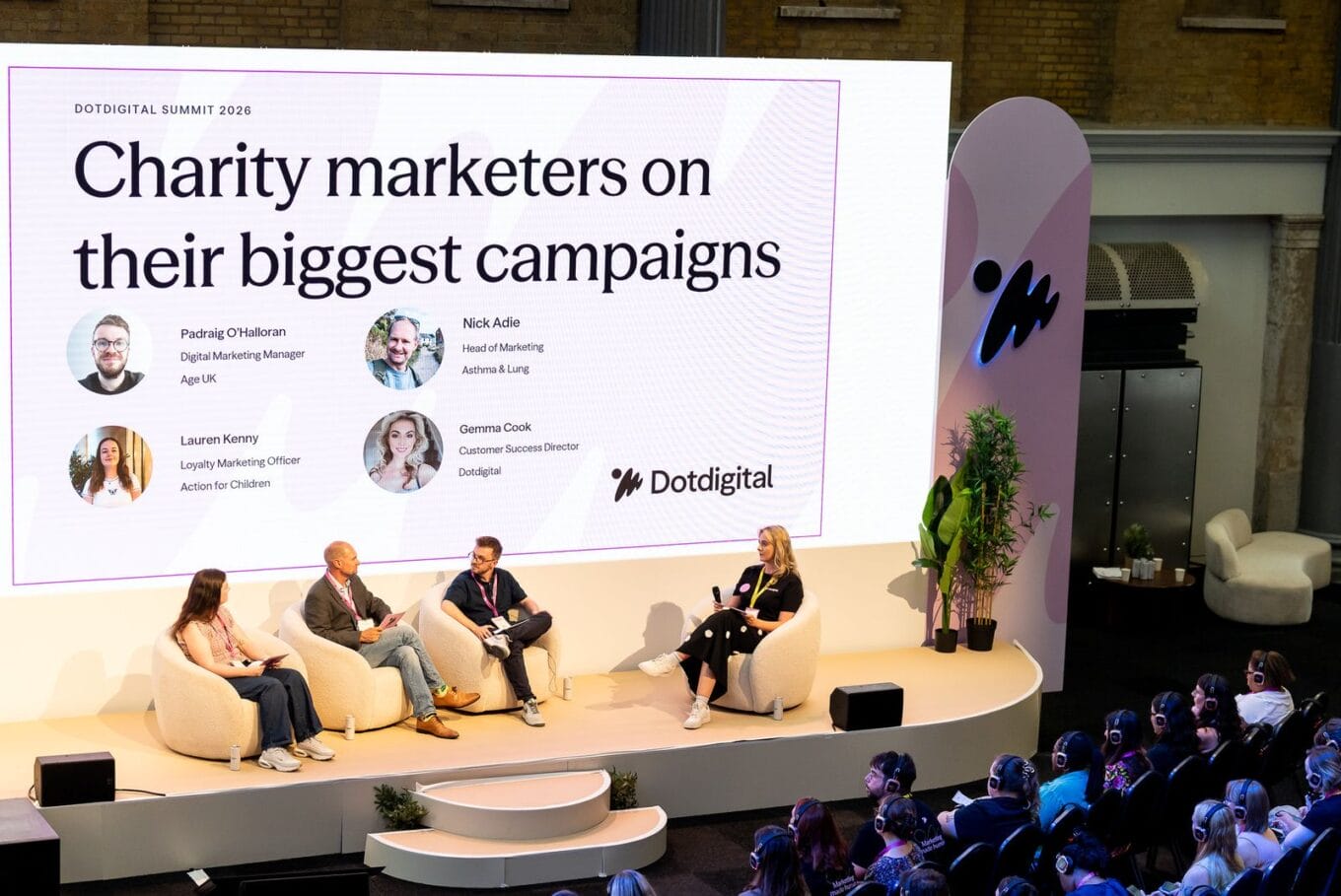
At the Dotdigital Summit, three marketers shared the charity marketing strategies that help them make every message count.
- Padraig O’Halloran, Digital Marketing Manager at Age UK, built a new automated journey for a national campaign that gets people in their 50s and 60s moving
- Nick Adie, Head of Marketing at Asthma + Lung UK, ran a winter campaign designed to keep people with lung conditions out of emergency departments
- Lauren Kenny, Loyalty Marketing Officer at Action for Children, works on the charity’s Secret Santa appeal, now in its sixth year
Whether you’re building your first automated journey or trying to get more from the supporter data you already hold, here’s what you can learn from them.
1. Build campaigns around what supporters need
All three charities fundraise, but their strongest campaigns started with something supporters wanted to do or needed to know.
Start with the problem supporters face
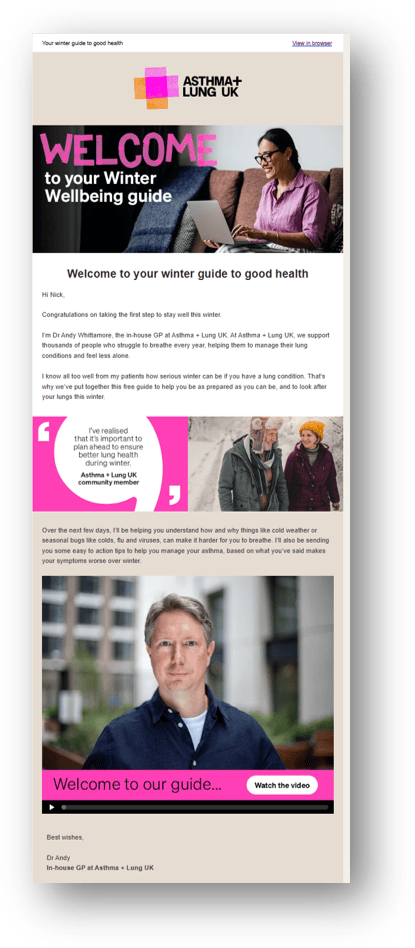
Asthma + Lung UK built its winter health campaign around keeping people with lung conditions out of accident and emergency (A&E) departments.
So instead of leading with fundraising, the team offered supporters a tailored winter health guide based on their specific lung condition.
The campaign ran for four months, and the team tracked results over a much longer window of up to 18 months.
“Ultimately, what we want to do is keep people out of A&E,” Nick says.
Use automation to keep supporters active after they sign up
Age UK’s Act Now, Age Better is a national campaign to get people in their 50s and 60s more active. It’s backed by the Football Association, British Rowing, and Sport England.
The team built a new automated email series to support it. When someone signs up through a lead form on the site, they get six emails over 12 weeks.
To keep the campaign relevant, the team links it to major sporting moments like the Commonwealth Games and the FIFA World Cup, giving people more reasons to keep moving.
Use automation to keep supporters active after they sign up
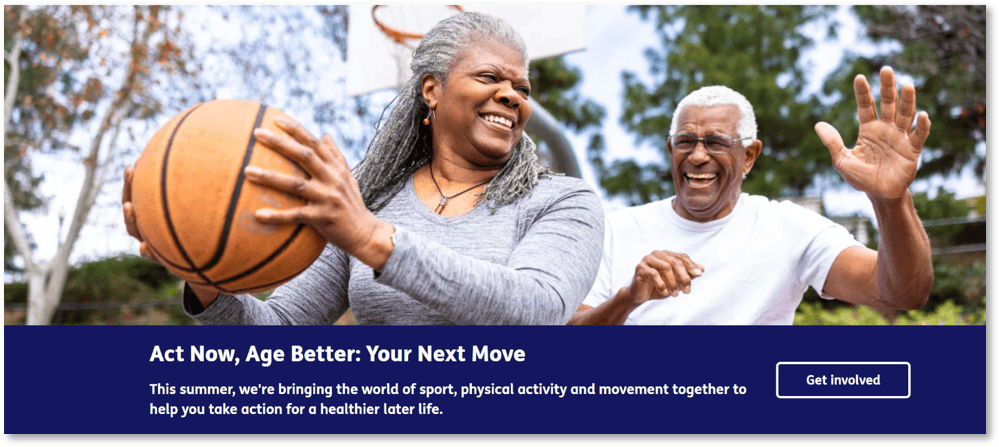
Age UK’s Act Now, Age Better is a national campaign to get people in their 50s and 60s more active. It’s backed by the Football Association, British Rowing, and Sport England.
The team built a new automated email series to support it. When someone signs up through a lead form on the site, they get six emails over 12 weeks.
To keep the campaign relevant, the team links it to major sporting moments like the Commonwealth Games and the FIFA World Cup, giving people more reasons to keep moving.
The takeaway for marketers:
Give people the advice, resources, or encouragement they need to take the next step. When a campaign helps people do something meaningful, it gives them a reason to stay engaged with your charity.
2. Personalize with the data supporters give you
All three charities hold a lot of supporter data. The hard part is using it so each message feels written for the person reading it.
Thank people for how they support you
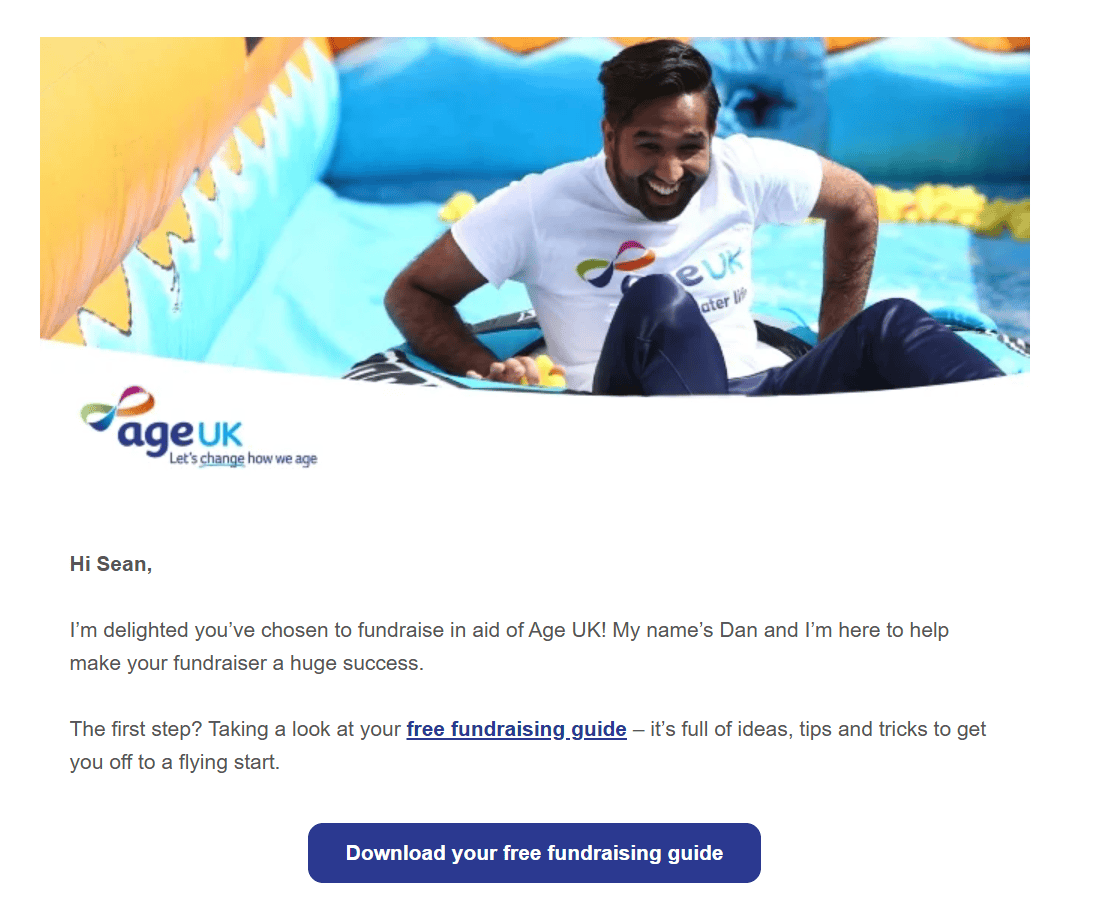
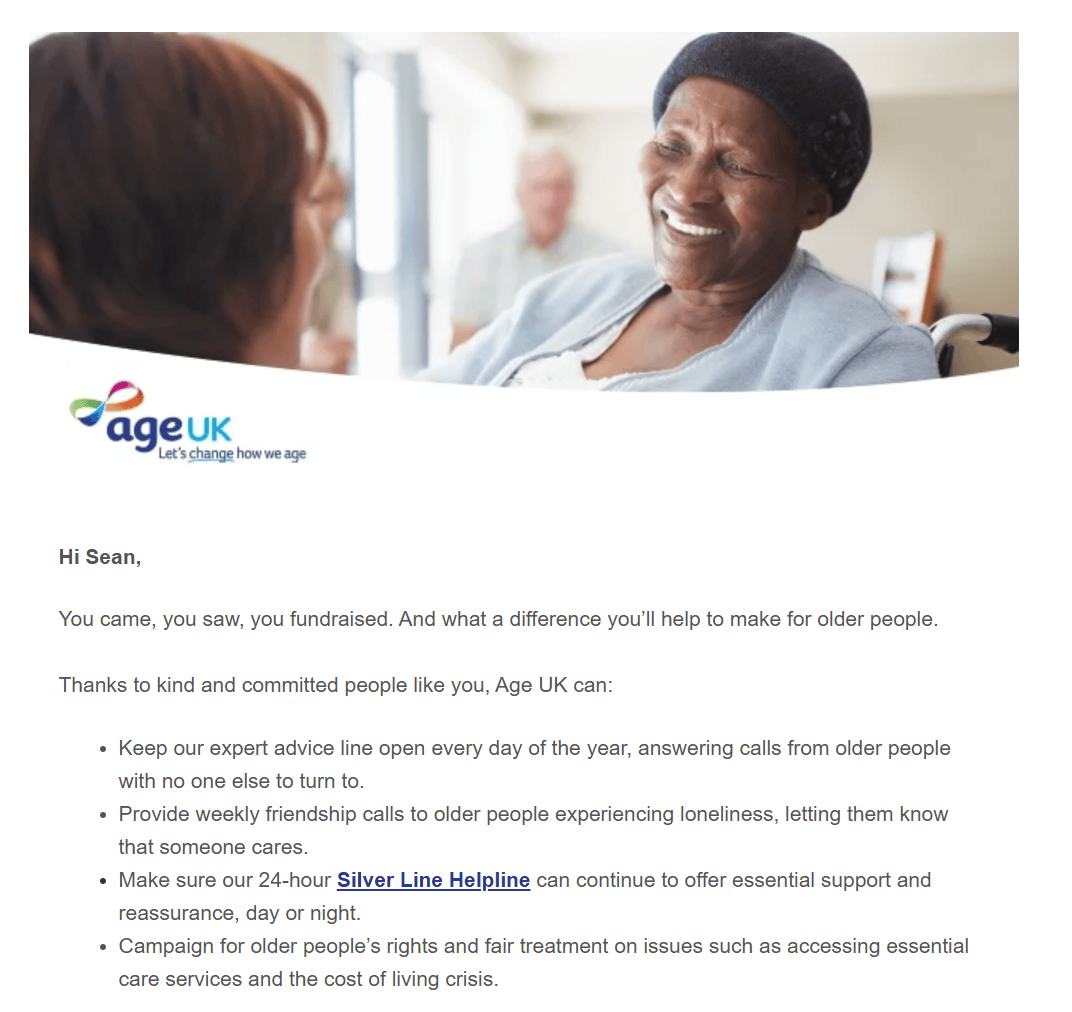
Supporters help in different ways, so Age UK thanks them for exactly that. The team uses dynamic content at the top of its monthly donor email to thank each person for how they support the charity, whether that’s campaigning, fundraising, or something else.
It’s a simple idea, but adding a personal touch to these regular check-in emails really shows supporters the impact they’re making. “It’s really, really helpful for us,” Padraig says.
Use the data you have
Action for Children keeps emails relevant throughout the supporter journey. It does this with two types of data:
- What supporters tell it directly (zero-party data)
- What it learns from how they give (first-party data)
It starts with one question. New supporters pick the cause that matters most to them, such as poverty or children in care. Their answer shapes which impact stories they receive.
Donation history does the rest. In Secret Santa emails, the ask changes based on what someone gave last time. Thank-you messages mention the exact amount they gave the year before, so supporters can see their gift was noticed.
Decide when not to send
Over the past two years, Asthma + Lung UK has moved away from one content calendar that sent everyone the same thing. Now the team uses data on lung condition, location, engagement, support type, and how recently someone donated to tailor what each person receives.
Nick describes it as a big shift from the way the team used to work.
A shared calendar can’t account for what’s going on in each supporter’s life. Someone who has just donated, or who is struggling with their health over winter, may not be ready for another ask. Your data can flag these moments, so you can give them a break from emails until the timing feels right.
The takeaway for marketers:
If you don’t have much supporter data yet, start by asking. Find out whether someone is a service user, fundraiser, or donor, and what they want from you. That might be information about services, fundraising opportunities, or ways to donate.
Then put those answers to use to build personalized, relevant messages that drive engagement, and to decide who doesn’t need to hear from you this time.
3. Listen, test, and use what you learn
Action for Children doesn’t leave supporter preferences to guesswork. The team asks people what they think, then tests what they respond to.
Test what supporters respond to
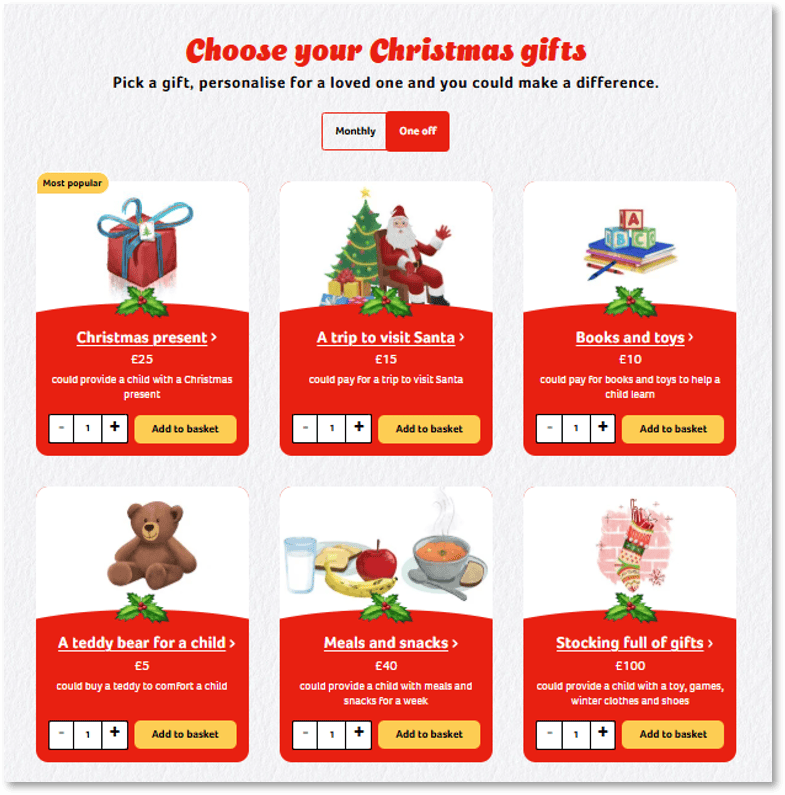
Secret Santa started as a single digital push. To grow its reach and impact for children, the team experimented with new channels and message formats. Six years on, it runs across TV, media, and direct mail alongside email and SMS.
The team also wanted to know whether different price points for virtual gifts would change how donors behave, so they started testing them. What they learn from each test helps shape their messages and their annual Secret Santa campaign.
Ask supporters what they think
A test can tell you which ask amount worked best, but not why. For that, you need to ask supporters directly. So, Action for Children built a simple rating block into its emails so supporters can rate the content they’ve just read. It’s a smiley face scale with an optional comment box underneath.
“We’ve had some really insightful comments,” Lauren says.
Some supporters explain why a story landed. Others flag when an ask felt like one too many. That feedback helps shape what goes out next.
The takeaway for marketers:
Test the things you’d otherwise guess, like ask amounts, and give supporters an easy way to tell you what’s working. Both give you real evidence to plan your next send with.
4. Lead with impact when budgets are tight
Every panelist named budget pressure as one of their biggest challenges. When you’re asking for new tools or a bigger budget, a list of features won’t win the case. You need to show leadership what the investment will achieve.
Talk about what the tools make possible
When Padraig makes the case to senior stakeholders at Age UK, he talks about the outcomes and impact. Marketers know what automated journeys and dynamic content can do, but those features mean less to leadership than the results they deliver.
“Sometimes senior stakeholders might not understand what all these features do, so you really have to talk more about the impact,” Padraig says.
Take the Act Now, Age Better journey. Instead of explaining how the email series works, focus on how many people signed up and started moving.
Measure success against your mission
For Asthma + Lung UK, the biggest return is charitable impact. Showing that tailored health advice helps keep people with lung conditions out of A&E over winter speaks to the charity’s goals in a way a click-through rate never could.
Show what other charities are already doing
Action for Children’s tech team tends to be cautious about new tools. So the marketing team builds formal business cases and points to what other charities are already doing. That’s how it won investment in WhatsApp as a channel for both fundraising and engagement.
Evidence from outside your organization can help your case too. In our report, The secret lives of marketers, 20% of marketers ranked email as the best channel for return on investment (ROI). Yet it came ninth on their list of priorities.
That gap is where your case for investment starts. If email is already delivering with limited time and budget, more support can help you build on those results. Share what you’re achieving now, then show what extra support would help you do next.
The takeaway for marketers:
- When you ask for budget, lead with the impact it’ll have, not the features you’ll get
- Measure results against the goals your leadership already cares about
- If you’re asking for something new, point to other charities already doing it, so the investment feels less risky
What makes charity marketing work
These three charities have different supporters, goals, and starting points, but the same thing came through in all three stories: every message has to earn its place.
- Age UK showed how an automated journey can keep a big campaign going after sign-up. Next, the team is planning deeper journeys around legacy giving and long-term retention, and cautiously exploring where AI fits in
- Asthma + Lung UK showed that leading with useful advice, and knowing when to stay quiet, delivers the kind of results leadership cares about. With its data, journeys, and personalization in place, the focus now turns to growth
- Action for Children showed how testing and feedback help an appeal keep growing year after year. It’s now working on deeper WhatsApp integration and a new tiered loyalty program
You don’t need a bigger budget to get started. Choose one thing you already know about your supporters, use it in your next send, and see what changes.
