



In immortal (and a little creepy) words from the movie Field of Dreams: “If you build it, they will come.” If only that were as true for loyalty programs as it is about a baseball field.
By the time you’re ready to launch your loyalty program, you’ve already done the hard part. You’ve set your goals, you know what you want your program to achieve. You’ve mapped out earning rules and used customer insights to design rewards that will make joining your program worth it for customers. All that’s left is to launch.
But what happens if you go live and no one signs up?
Even the best-designed loyalty program will fall short of delivering results if it’s not properly promoted. Customers can’t join a program they’ve never heard of, and they won’t join if the value isn’t clear.
Your active member rate, your redemption rate, your ROI — none of these are meaningful until you have enough members in the program to measure anything. A well-promoted loyalty program should enroll 30–50% of your customers within the first six months. Enrollment is the metric that everything else is built on.
This article covers everything you need to hit that number, including:
- How to build a sign-up page that actually converts
- How to make loyalty visible at every point in your customers’ on-site journey
- Which marketing channels to activate and in what order
- The metrics to track once the program is live
If you’re not sure if a loyalty program is right for your business, don’t worry, we’ve got you covered.
Step 1: Build your loyalty program sign-up page
Your loyalty sign-up page is the most important part of your entire enrollment strategy. Everything else, from your emails, on-site promotion, and social media posts, all exist to drive traffic to this page. If it doesn’t drive conversions, none of the rest matters.
Here are our recommendations for creating a great signup page and what to avoid.
What works
Lead with the benefit to the customer
“Earn rewards every time you shop” will outperform “Welcome to our Loyalty Program.” Your headline should answer the question “what’s in it for me?” before customers even ask.
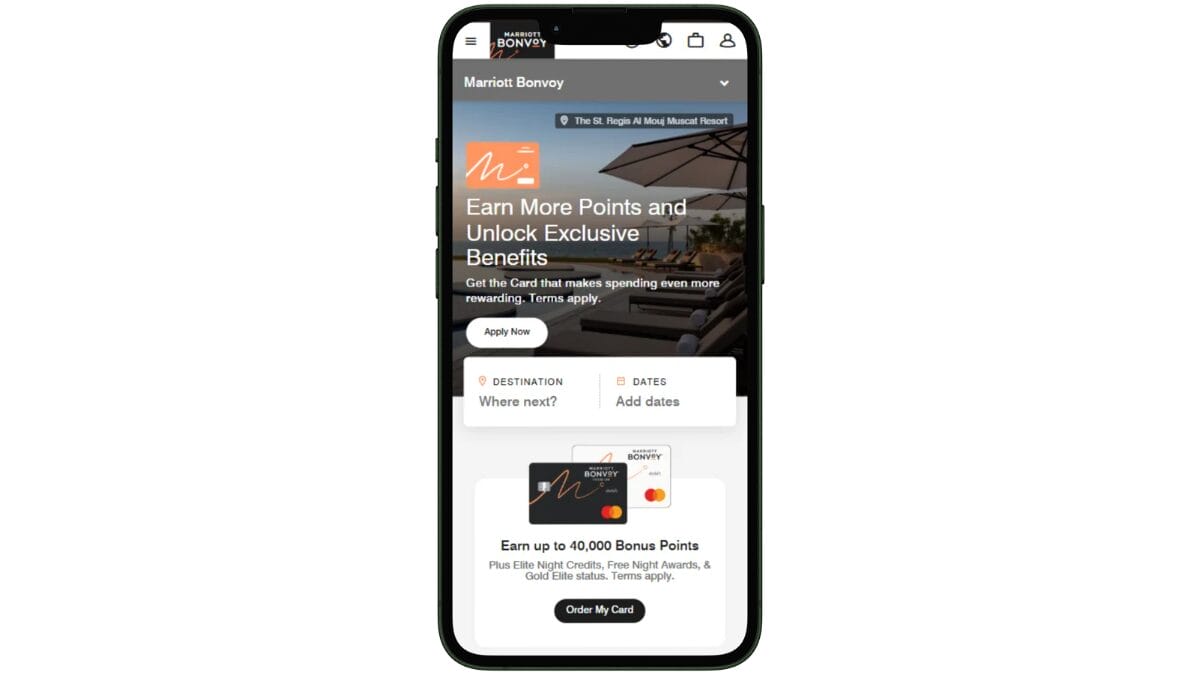
Put the welcome bonus front and center
Show customers what they get just for joining before they’ve done anything. That immediate value is what tips hesitation into action.
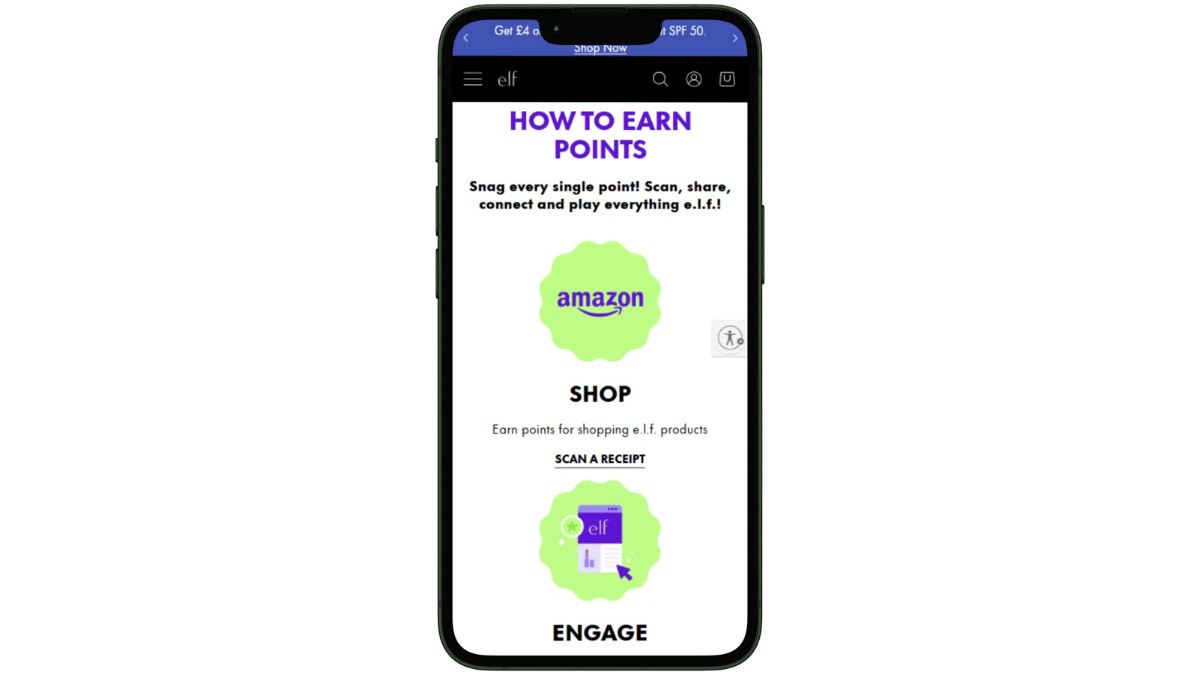
Show customers how it works
Customers shouldn’t have to read three paragraphs to understand how the program works. A simple visual flow removes the cognitive effort that kills conversion.
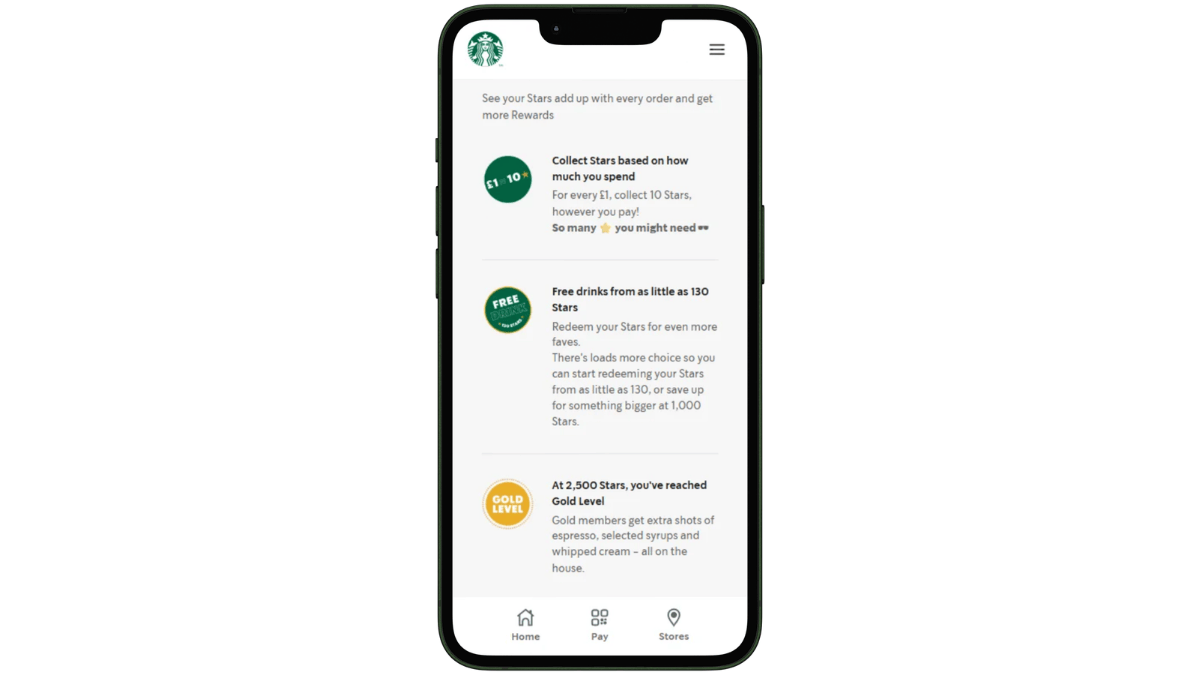
Make the rewards clear
Show customers what their points are worth. “500 points = free shipping, 1,000 points = $10 off, 2,000 points = free gift” converts. “Exclusive rewards” doesn’t. If customers have to guess what their points are worth, they’ll assume the answer is not very much.
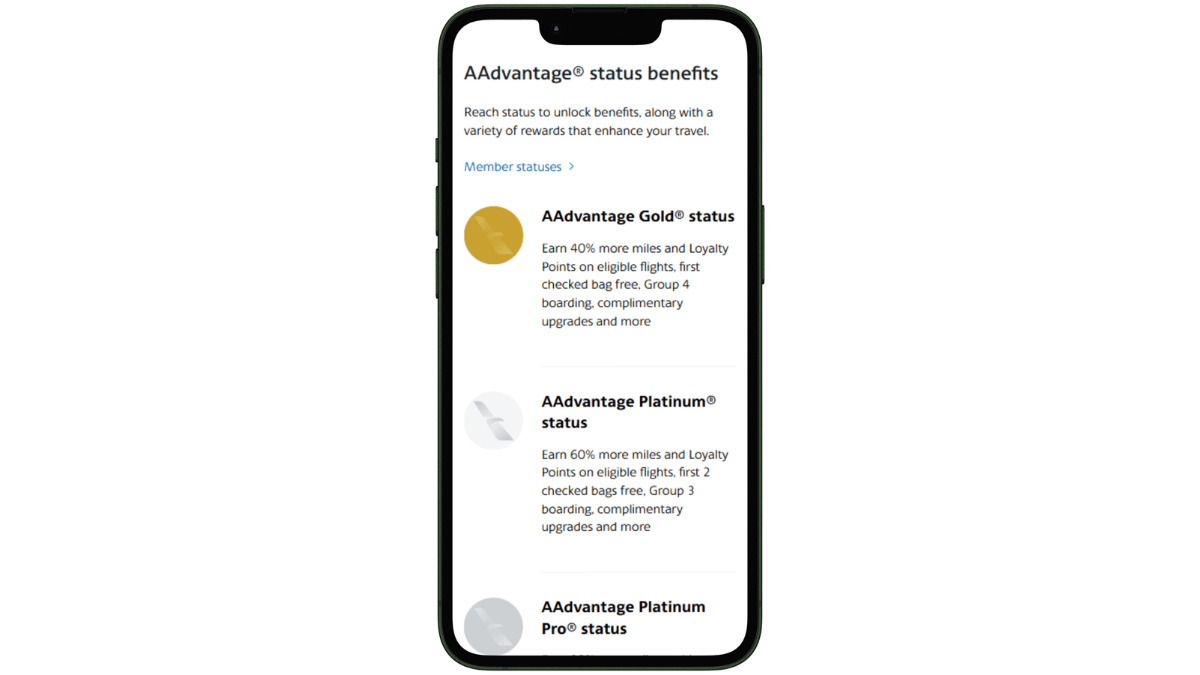
Talk about your tiers if your program has them
Show the thresholds and the benefits available at each level. The top tier should feel aspirational, while the first tier should be immediately within reach.
Use a single, prominent sign-up call-to-action (CTA)
One button, one action. ‘Join now’, ‘Start earning’, ‘Get 500 points’. Secondary CTA’s can sometimes dilute the customer’s decision and make it harder for them to act.
Add social proof
If you already have enrolled members, share it. “12,000 members already earning” adds credibility and reduces hesitation. It tells customers the program is worth joining before they’ve even read a word about it.
What to avoid
Walls of terms and conditions
Link to full terms and conditions, but don’t paste them on the page. Anything that looks like small print signals risk, and risk kills sign-ups.
Asking for too much information upfront
Loyalty should feel like a benefit, not an application process. The simpler the form, the higher the conversion.
Hiding what points are worth
Being transparent builds engagement and trust. Customers who understand the value of what they’re earning are far more likely to stay active in the program.
Assuming customers know they’re already enrolled
If customers are automatically enrolled, make that clear when they sign up for your marketing or make their first purchase. The focus of your loyalty program landing page is no longer to convince people to join; it’s to help them understand what they’ve already got and how to make the most of it.
Step 2: Build loyalty into your website
Your sign-up page can’t do all the work on its own. For enrollment to reach the numbers that make a loyalty program worth the investment, loyalty needs to be visible everywhere a customer might encounter your brand on-site.
Header or navigation link
A permanent link in your site navigation keeps the program in view on every page, for every visitor.
Top tip: Label it clearly, like a simple “Rewards” or “Loyalty”, and avoid burying it in dropdown menus where customers can’t find it.
Site banner or hero
A banner on your homepage or category pages drives awareness among visitors who aren’t actively thinking about loyalty yet.
Top tip: Lead with what they’ll earn, not what the program is called. “Earn 500 points on your next order” will outperform “Join our rewards program.”
Enrollment pop-up or slide-in
A pop-up or slide-in that appears at a defined trigger point (e.g., time on site, scroll depth, or exit intent) invites visitors to join the program.
Top tip: Trigger it on exit intent or after 45 seconds or more on the page, not the moment someone arrives. Lead with the incentive, keep the form simple, and make sure it’s not showing to customers who are already enrolled.
Product page loyalty widget
A small widget on product pages that shows how many points a customer would earn for the product they’re currently looking at.
Top tip: “You’d earn 47 points on this order. Join to start earning.” works well because it’s specific and contextual. The customer is already in purchase mode, so the prompt feels helpful rather than interruptive.
Checkout prompt
A message at checkout showing non-enrolled customers the points they’re about to miss, with a one-click option to join.
Top tip: Show non-enrolled customers the points they’ll miss out on. “You’re earning 0 points on this order. Join and earn 120 points” is more motivating than a positive framing of the same information. Customers who can see exactly what they’re leaving on the table are more likely to act.
Step 3: Promote your loyalty program on your marketing channels
Your website reaches the customers who are already there. Your marketing channels reach everyone else, including people who’ve bought from you before and have no idea a loyalty program now exists.
Launch announcement email
A dedicated email campaign to your entire customer base announcing your new loyalty program
Top tip: Customers who’ve already bought from you are your most likely early enrollees, as they already have a reason to come back. Lead by sharing a welcome bonus and keep the email to a single CTA.
Post-purchase sequence
An automated email is sent 24–48 hours after a purchase, inviting customers to join while their experience with your brand is fresh.
Top tip: Frame it as a natural next step: “You just earned your first points. Here’s what you can do with them” positions enrollment as activating something they’ve already started building up, which is far more exciting than asking them to sign up to something new.
Re-engagement series
An automated sequence that uses the loyalty program to encourage lapsed customers to come back.
Top tip: Lead with the points, waiting for them, rather than offering a discount. “You have 340 points about to expire” creates urgency without giving anything extra away, plus it’s personal in a way a voucher code never is.
Order confirmations
A loyalty mention in every order confirmation, showing non-enrolled customers the points they missed on that order.
Top tip: Order confirmations have the highest open rates of any email you send. Using them to promote loyalty enrollment costs nothing and is one of the easiest touchpoints you have.
SMS
A dedicated message to your opted-in customer list announcing the program or promoting a limited-time enrollment bonus.
Top tip: SMS works well when there’s a deadline attached. “Join our loyalty program by Sunday and get 500 bonus points” is short, specific, and urgent, which is exactly what SMS does best.
In-store or Point of Sale tech (POS)
Staff promote the loyalty program to customers at checkout, with support from till prompts and printed materials.
Top tip: Customers who buy in-store are often completely unaware that an online loyalty program exists. Give staff a simple script and make sure the point-of-sale screen prompts enrollment for anyone who isn’t already a member.

Packaging inserts
A card or flyer in every dispatched order, with a QR code linking directly to the loyalty sign-up page.
Top tip: Customers are at their most engaged when they open a package. They’ve just had a positive experience with your brand, so it’s the perfect time to introduce your loyalty program by including a flyer in their package.
Referral loop
Enrolled members share referral links or codes with friends, bringing new customers directly into the program.
Top tip: When a new customer uses a referral code, make sure they’re enrolled automatically. Redirecting them to a separate sign-up page can turn off referrals that would otherwise have converted.
Sequencing tip
Avoid the temptation to activate everything at once. At launch, start with your email database; they’re your fastest route to early numbers. Layer in on-site automation and post-purchase triggers in the first two weeks, then bring in SMS and any offline channels once the core flows are running smoothly.
Measuring loyalty and KPIs to track
Loyalty programs generate a lot of data, and once your program is live, the data will start to tell you what’s working and what isn’t, but only if you’re looking at the right things. These are the numbers that matter, so you can see how your program is performing and the impact it’s having on sales.

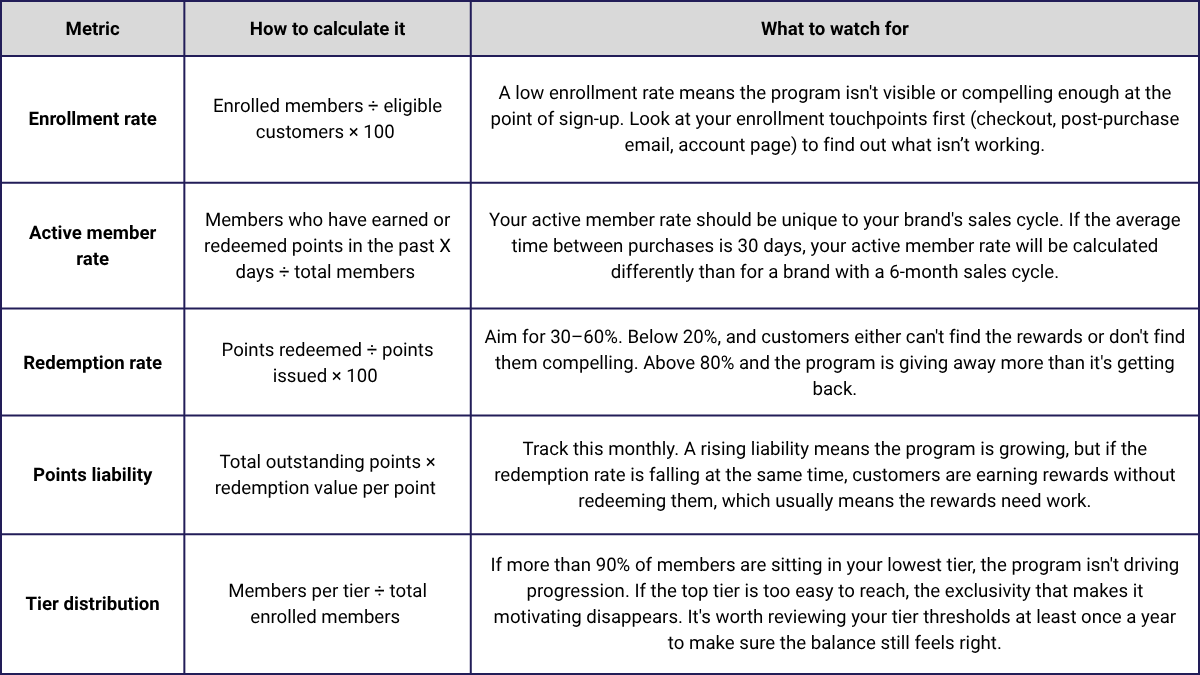
Loyalty program health metrics
These metrics tell you if the program is working, and whether customers are joining, staying active, and finding the rewards worth having.
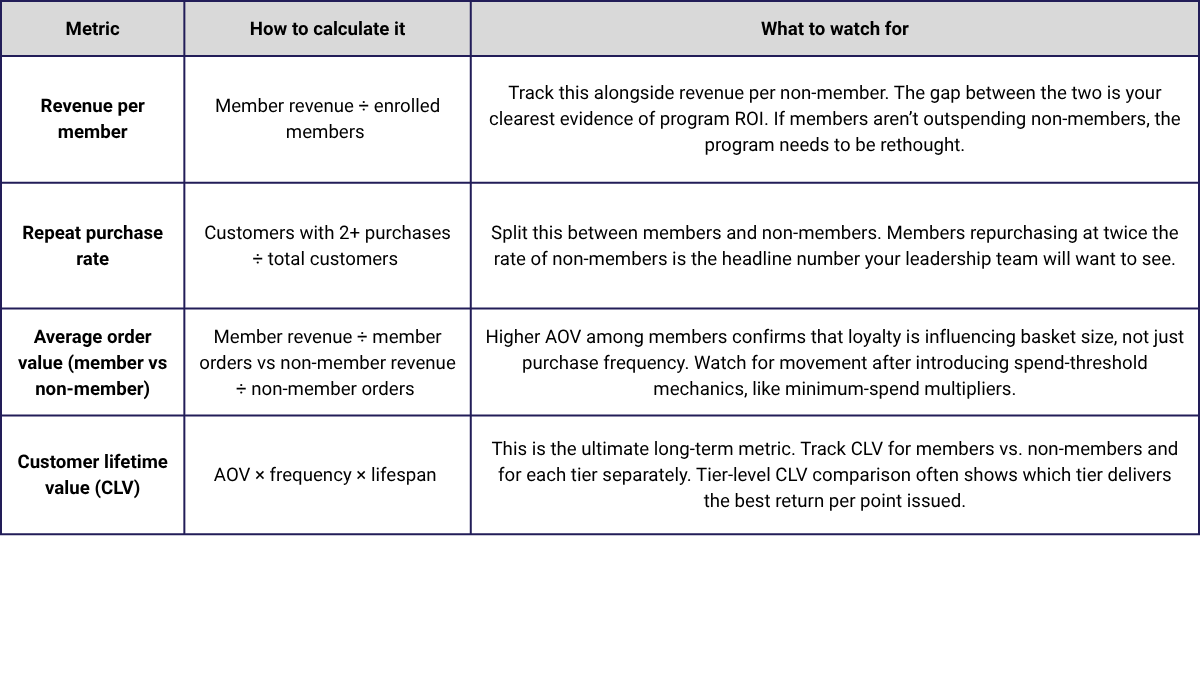
Commercial impact metrics
These tell you whether the program is generating a return. In other words, whether loyal members are more valuable than non-members, and by how much.
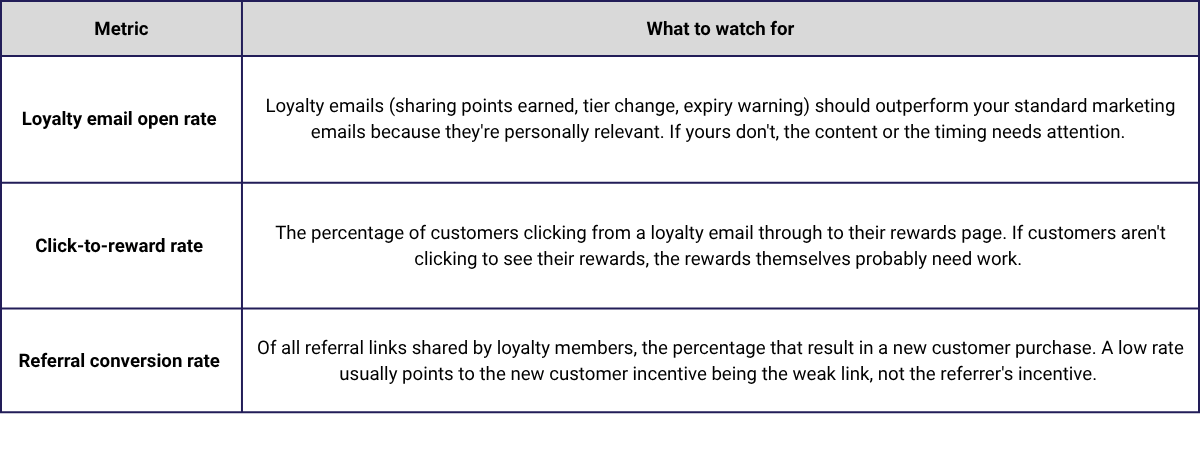
Engagement and communication metrics
These metrics tell you how well your loyalty marketing is performing, whether customers know what they’ve earned, what tier they’re in, and what rewards are available to them.
Dotdigital Loyalty: Loyalty that lives where your marketing does
Designing a great loyalty program and getting people to join it are two things most platforms make you solve separately. Dotdigital Loyalty is built differently.
Your loyalty data and your marketing automation live side-by-side, so the two work together from day one, rather than talking to each other through botched connectors that cause lags in experiences and gaps in data.
Most marketing platforms can tell you what emails a customer opened and what products they browsed. Dotdigital also knows:
- What tier they’re in
- How many points do they have
- When their points expire
- When they joined the loyalty program
- What rewards they’ve redeemed
That’s a richer picture of who a customer is and where they are in their relationship with your brand. It makes every campaign, automation, and personalized experience more relevant than anything a standalone loyalty platform could power on its own.
What’s the benefit for marketers?
Every reward lands at the right moment
When a customer earns points or hits a new tier, your automations respond immediately because the data that triggers them syncs smoothly with the tools that act on it.
You’re up and running fast
Just one click from the Shopify App Store, and 8+ ready-made storefront blocks mean your loyalty program can go live without developers, agencies, or a long implementation project.
Expert support from the start
Dotdigital loyalty experts work closely with you. From bespoke onboarding to personalizing your program, we’re with you every step of the way.
Everything is included from day one
Pricing is based on order volume, not which features you want to use. Every capability is available from the moment you start, and all on one invoice.
If you’re ready to build a loyalty program that works with your marketing rather than alongside it, Dotdigital Loyalty is coming very soon. Register your interest and be the first to know when it’s ready.
