



Back to school is one of the most valuable seasons in the ecommerce calendar. For some brands, it’s the biggest campaign of the year. For others, it’s an opportunity they haven’t fully tapped into yet. Either way, there’s more to it than stationery and school shoes.
This guide covers everything you need to plan a back-to-school campaign across every channel, every audience, and every region. Whether your customers are heading back to primary school in London, high school in Chicago, or university in Sydney, there’s something here for you.
The numbers behind the season
Back to school is big business. According to E-Marketer, US back-to-school retail sales are forecast to reach $85.42 billion in 2026, with ecommerce accounting for $32.36 billion of that. Both figures have grown consistently year on year since 2022, with online sales growing faster than physical retail.
More shoppers are researching and buying online, which means your emails, SMS campaigns, and retargeting ads have more influence over back-to-school purchasing decisions than ever before.
When should you start your back-to-school campaign?
Back-to-school starts in January in some parts of the world and doesn’t wrap up until September in others.
Here’s a rough planning guide based on when back-to-school happens in each region:
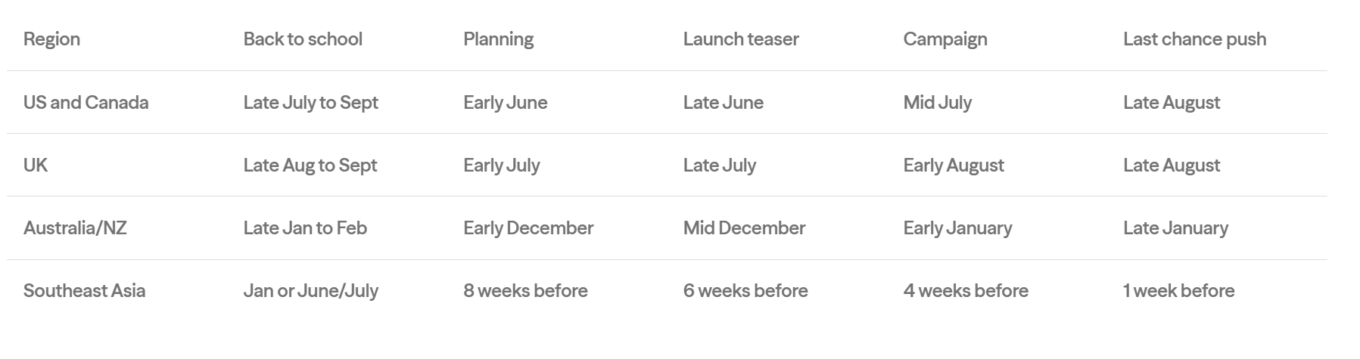
A few things worth keeping in mind as you plan:
Give yourself enough time to segment properly
It’s easy to jump straight into building campaigns without stopping to think about who you’re talking to. But taking a bit of time upfront to think through your audiences will make every campaign you send more relevant and more likely to convert.
Plan for cross-channel from the start
If you’re going to run campaigns across email, SMS, and retargeting ads, plan them together from the start. When your channels share the same message, timing, and creative direction, customers get a consistent experience wherever they come across your brand.
Don’t forget post-campaign
The relationship with a back-to-school shopper doesn’t end at checkout. A post-purchase follow-up that thanks them, suggests complementary products, or reminds them of their loyalty points gives you another touchpoint with a customer who’s already bought from you. That’s much easier than finding a new one.
Your back-to-school audience isn’t one person
Back-to-school looks very different depending on who you’re marketing to. The needs, budgets, and motivations of a parent buying supplies for a young child are completely different from those of a student moving into their first flat.
Here’s how to think about the different groups on your list:
Parents and guardians
This is the biggest group and the one most brands default to. They’re buying uniforms, stationery, lunchboxes, shoes, and bags, sometimes on a tight budget and under time pressure. They respond well to value messaging, convenience, and anything that makes the back-to-school shop feel less overwhelming.
Helpful tip:
Deals, checklists, and “everything in one place” campaigns tend to land well here.
Secondary or high school students
Secondary and high school students are a reachable audience too. Most have their own email addresses tied to social accounts or cloud services, which means you can market directly to them as well as their parents. Think technology, sports kit, clothing, and the kind of stuff teenagers want rather than just need. Parents are often still making the final purchasing decision, but teenagers have real influence over what ends up in the basket.
Helpful tip:
Campaigns that acknowledge both the parent and the teenager tend to work well.
College and university students
These are first-time independent shoppers, setting up their own space for the first time and making purchasing decisions without a parent (guardian) involved. They’re buying laptops, bedding, kitchen equipment, subscriptions, and anything that makes student life easier. They’re budget-conscious but not always cheap, so they’ll spend on the right things. They’re also online, peer-influenced, and respond well to authenticity over polish.
Helpful tip:
This group is also slightly later in the season than school shoppers. UK freshers move in from mid-September, US college students from August, and Australian university students from late February. So, it’s worth planning a separate campaign for them rather than folding them into the main back-to-school push.
Teachers and school staff
Teachers sometimes spend their own money on classroom supplies more than most people realize. They’re also making recommendations to parents and students, which means getting your brand in front of them has a multiplier effect. A campaign is a great time to acknowledge them, too.
Helpful tip:
A campaign that says “we see you” to a teacher will stand out in a sea of parent-focused marketing.
A quick note on segmentation
You don’t need to run four entirely separate campaigns. But you do need to think about which of these groups your brand is most relevant to, and make sure your messaging reflects that. A generic “back-to-school sale” email sent to your whole list is a missed opportunity.
9 back-to-school campaign ideas to try
Here are some of the best approaches we’ve seen work well and how you can put them into practice across your marketing channels.
1. The early bird offer
We mentioned earlier that a lot of back-to-school shoppers start buying long before term starts. An early access email campaign with a discount or free shipping gives them a reason to buy from you first. Follow it up with a retargeting ad for anyone who clicked through but didn’t complete their purchase, and you’ve got a campaign that catches people at both ends of the decision.

2. The checklist email
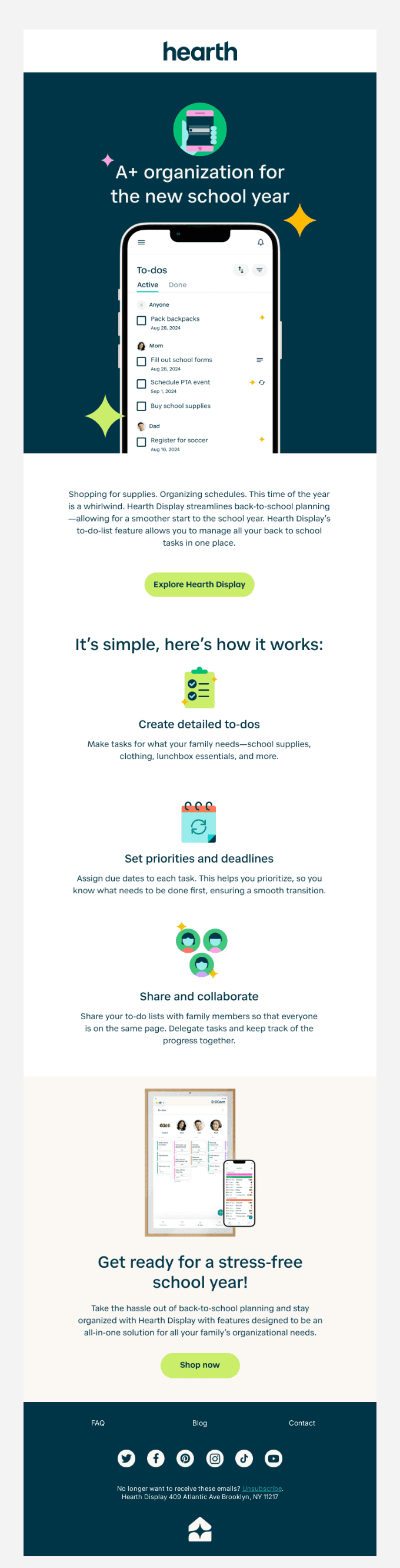
People love a checklist, especially parents (guardians). It reduces the mental load of figuring out what they need, and it gives you a reason to showcase a range of products in one email. Structure it by age group or school year for extra relevance. For example, a checklist for a five-year-old starting school looks very different from one for a fifteen-year-old heading into their exam years.

3. The countdown campaign
A time-limited offer paired with a live countdown timer in the email gives shoppers a clear reason to act before the deal runs out. Dotdigital’s personalization tools let you add countdown timers directly to your campaigns, so the clock starts ticking the moment the email is opened.
4. The “we know what students need” campaign
Rather than generic back-to-school messaging, go straight to the practical stuff. What does a fresher need in their first week? What do they always forget to buy until it’s too late? That kind of specific, helpful content is what gets clicked. You can build that into an email series, a WhatsApp message, or an SMS with a direct link to the products they need most.
5. The SMS flash sale
SMS works well for time-sensitive offers because it lands directly on the lock screen and gets read quickly. Use it for last-minute deals, stock alerts on popular items, or a push in the final days before term starts. Keep the message short, include a clear discount code, and give it a deadline so people know exactly when the offer runs out.
6. The personalized product recommendation email
Use what you already know about your customers to make back-to-school emails more relevant. A parent who bought school shoes last year is a good candidate for a reminder this year. A customer who browsed laptops gets a follow-up featuring your best back-to-school tech.

7. The WhatsApp update
WhatsApp works well because it feels personal rather than promotional. Send a message with a link to your back-to-school collection, a reminder about a limited offer, or a helpful tip like a packing list or a size guide. Keep it conversational and make sure there’s a clear next step for the reader to take.
8. The loyalty reward reminder
A double points event tied to the season gives customers a reason to shop with you over a competitor, and it’s straightforward to set up and communicate. You can keep the messaging simple too, like “earn double points on everything back to school” works across your whole list without needing complex segmentation. If you do want to get more targeted, reminding customers of their existing points balance and when they expire is another effective angle.
9. The post-purchase follow-up
A post-purchase email that suggests complementary products, shares helpful tips about what they’ve just bought, or simply thanks them for their order during a busy season is a small effort that makes a real difference to how customers feel about your brand.
Automation programs worth setting up
The best back-to-school campaigns are the ones you build now and refresh annually. Here are the automation programs worth having in place before the season starts.
Abandoned cart
This is a must-have for any ecommerce brand, especially around any sales season. Set it up before the season starts so it’s already running when traffic picks up. A two- or three-step sequence works well, like:
- An email within a couple of hours
- An SMS nudge the next day
- A final reminder with a small incentive if they still haven’t converted
Browse abandonment
Shoppers spend a lot of time browsing before they buy, especially when they’re planning a big purchase like a new laptop. A browse abandonment automation that triggers after someone views a product page without adding to their basket is a low-effort way to bring them back. Keep the message simple and relevant to what they were looking at.
Welcome program
If back-to-school drives new subscribers to your list, make sure your welcome program is doing its job. New subscribers who come in during the season are sometimes ready to buy, so a welcome series that gets to the point quickly and includes a relevant offer will convert better than a generic introduction to your brand.
Post-purchase journey
Once someone has made a purchase, the relationship shouldn’t go quiet. A post-purchase automation that thanks them, suggests complementary products, and checks in a few weeks later keeps the conversation going and increases the chances of a repeat purchase before the season is over.
Re-engagement campaign
This is a good time to try and win back customers who haven’t purchased in a while. A re-engagement automation with a back-to-school hook, like “it’s that time of year again”, gives you a good reason to get back in touch without it feeling out of nowhere.
Replenishment reminder
For products that get bought every year, like uniforms, stationery, and sports kit, a replenishment automation that triggers around the same time the following year is a simple way to stay front of mind without any manual effort.
Segment your way to better campaigns
Back-to-school is one of those seasons where sending the same message to your whole list is a real missed opportunity.
Here are some of the most useful ways to segment your audience during the back-to-school season:
By life stage
Parents of younger children, secondary or high school students, and college or university students all have different budgets, timelines, and motivations. Even a basic split between these groups will make your campaigns feel more relevant.
The challenge is that not everyone on your list will have told you whether they have children, how old they are, or whether they’re a student themselves. That’s where data collection can be helpful, including:
- A preference center
- A pop-up during the back-to-school season
- A simple “help us send you more relevant content”
The more you know about your audience, the more targeted your campaigns can be, and the less likely you are to send messaging to someone it has nothing to do with.
By purchase history
If someone bought school items from you last August, they’re a strong candidate for a back-to-school reminder this year. Use what you already know about your customers to identify who’s likely to be in buying mode and when.
By location
Back-to-school timing differs by region, and so do the weather, the curriculum, and the products people need. A customer in Sydney heading back to school in January needs different messaging from one in Manchester gearing up for September.
By engagement level
Not everyone on your list is ready to buy. Save your best offers and early access campaigns for your most engaged contacts. For less engaged contacts, a lighter touch, an inspirational lookbook, or a helpful checklist can warm them up before leading with a promotion.
By loyalty status
If you’re running a loyalty program, back-to-school is a great time to reward your best customers with early access, bonus points, or an exclusive offer. Segmenting by loyalty tier lets you make those customers feel genuinely valued rather than just sending everyone the same deal.
Back-to-school email subject lines
A good subject line is half the battle. Here are some tried-and-tested approaches across different audiences and tones. Feel free to adapt them to fit your brand.
For parents of younger children:
- 🎒 Everything they need for day one
- ✏️ The back-to-school checklist
- 🚌 Ready for September? We’ve got you covered
- Beat the back-to-school rush
- Don’t forget the [product]. Back to school starts soon
- 📦 Free shipping on everything they need this term
For parents of secondary and high school students:
- 📚 The kit list, sorted
- Back to school just got easier
- Everything for the new school year, in one place
- Get ahead of the September rush
For college and university students:
- Everything you need for freshers week
- Your student checklist is here
- 🏠 New city, new start. Here’s what you need.
- 💸 Student discount, just for you
For re-engagement:
- 📅 It’s that time of year again
- ⏰ Back-to-school is coming. Are you ready?
- Your back-to-school reminder is here
- We saved you a spot in our back-to-school sale
Urgency and scarcity:
- ⏳ Last chance for back-to-school savings
- Back-to-school sale ends midnight
- Only a few left. Back-to-school essentials going fast
- Don’t miss our back-to-school deals
Curiosity:
- What every parent forgets to buy before school starts
- The back-to-school item most people leave until last
- 👇 Is your back-to-school list missing this?
How AI can help your back-to-school campaigns
Back-to-school is a busy season with a lot of moving parts, and a relatively tight window to get it all out the door. AI can take a lot of the repetitive, time-consuming work off your plate.
But the decisions that make these campaigns good still come from you. Knowing your audience, choosing the right message, and understanding what your brand would and wouldn’t say are still very much a human job.
Here’s where AI can help with the rest:
Building your segments
Rather than spending an afternoon setting up filters, describe the audience you need in plain English and let Dotdigital’s Segment Agent do the work. Something like “customers who clicked [2025-back-to-school] campaigns but haven’t purchased in the last two months” or “contacts based in Australia who have purchased in January before” takes seconds to build.
Writing your campaigns
Brief the Content Agent on who you’re talking to and what you want to say, and it’ll give you a first draft to work from. You can get campaigns out faster without having to stare at a blank email every time.
Generating subject line variations
Rather than settling on one subject line, use AI to generate a handful of options across different tones and approaches. Test them against each other and let the data tell you what your audience responds to.
Personalizing product recommendations
AI can suggest the most relevant products for each customer based on their purchase history and browsing behavior, so your back-to-school emails show people what they’re most likely to buy rather than a generic selection from your catalog.
Adapting content across channels like SMS
Once you’ve got your email copy in good shape, Dotdigital lets you convert it into an SMS in one click, adjusting automatically for the character limit. It’s a small feature that saves a lot of time when you’re running campaigns across multiple channels during a busy season like this one.
Class dismissed
Back-to-school looks different depending on where your customers are in the world and what you’re selling. But the principles are the same wherever you are:
- Start with the audience most relevant to your brand
- Pick one or two campaign ideas from this guide that feel achievable
- Get something live
A well-timed campaign sent to the right segment will always do more for you than a perfectly planned one that never goes out.
And if this guide has given you ideas you’re not quite ready to use yet, then feel free to save it. When the season comes around, you’ll be glad you did.
