

6 ways AI improves your marketing campaigns (with proof)

AI is everywhere in marketing right now, and you’ve probably seen your fair share of it already. What’s less clear is how teams are using it day-to-day, and what kind of results it’s really driving.
So, we’ve pulled together six practical ways Dotdigital customers are using AI in their campaigns, along with the outcomes they’ve seen, to give you a clearer picture of what’s working in practice.
1. Subject lines that get opened
Coming up with fresh, compelling subject lines week after week isn’t easy. Over time, it’s natural to fall back on familiar patterns like reusing similar phrases or sticking to the same formats that have worked before. The challenge is, your audience notices when subject lines start to feel similar, which can influence how they respond.
AI helps you break out of that cycle by quickly generating multiple subject line variations you can test and refine. Instead of starting from a blank page, you’re working with a range of options that you can repeat and optimize.
What happened when brands made the switch
Mountain Warehouse was stuck in exactly that cycle. The team started using WinstonAI by Dotdigital to generate and test subject line options, and campaigns hit open rates of 50%, well above the usual baseline of around 35%.
Rodalink Bike Store saw a 54% increase in open rates bydoing the same thing. It’s not that AI writes better subject lines than you do; it just gives you more options to test, faster, without the blank-page problem.
2. Copy that sounds like you and not like everyone else
A lot of AI-generated content sounds the same right now; the same filler phrases and the same vague enthusiasm, like:
- In today’s fast-paced world
- Game-changing
- Unlock new possibilities
If you’ve spent time building a distinctive brand voice, that can be frustrating.
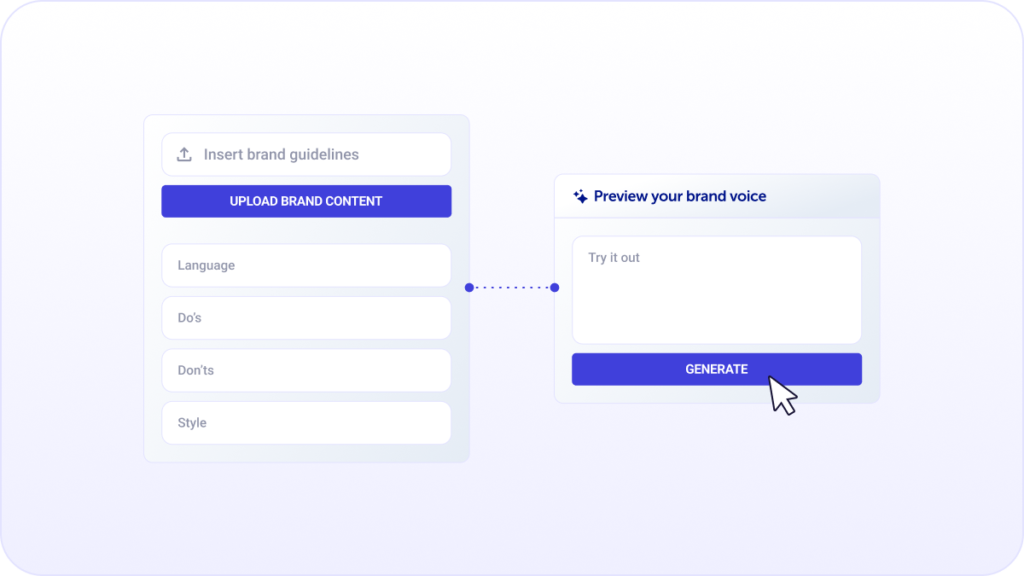
WinstonAI’s new brand voice feature is designed to fix that. Train it on your guidelines, share examples of your best work, flag the words you would never use, and it writes campaigns that sound like you rather than a generic AI output. The more context you give it, the better the results.
3. Adapting your message for every channel
Managing email, SMS, and WhatsApp alongside everything else means the challenge isn’t usually having the right message. It’s having the time to adapt it properly for each channel.
Goodwood’s race against the clock to lift ticket sales
Goodwood, one of England’s greatest sporting estates, needed to drive last-minute ticket sales for its August Bank Holiday race meeting. Since SMS marketing is well-suited to urgent, time-sensitive messages, they turned to it for this campaign. With 160 characters, a tight deadline, and no margin for error, they had to create four messages, each tailored to different audiences like families, regulars, and casual racegoers.
What happened when they let AI do the heavy lifting
The team used WinstonAI to write and A/B test these SMS messages. On the day the campaign went out, Goodwood sold twice as many tickets as the previous week. They also replaced a general post-event email survey with targeted SMS feedback requests, and survey completion jumped from 10% to nearly 25%.
4. Product recommendations that convert
Most marketing newsletters are sent to broad audiences, which means the content won’t always resonate with every recipient.
Adding tailored product or content recommendations helps make those messages more relevant and engaging, and AI can support this by helping you generate and deliver those recommendations.
Making newsletters more personal
4Cabling, an Australian D2C (direct-to-consumer) manufacturer of cabling and electrical accessories, added AI-powered “best next” product recommendations to its newsletter. Rather than having the same product lineup for everyone, each contact now sees a personalized section based on their purchase history and browsing behavior.
What happened when 4Cabling made the switch
The result was a 20% increase in revenue and a 53.6% jump in newsletter conversion rate. 4Cabling applied the same personalization logic to its abandoned cart program, which went on to drive 54% of total email revenue. It was a relatively small change to an existing program, but the numbers speak for themselves.
5. Smarter A/B testing beyond just subject lines
Most marketers test their subject lines, but few go further than that, mainly because running more tests manually just adds to the workload.
What happened when AI makes campaign testing easier
Mountain Warehouse used WinstonAI to test more than just its subject lines. The team experimented with lifestyle imagery and the order of content in emails. It’s the kind of testing that’s easy to push down the list when you’re doing everything manually, but becomes much more manageable when AI helps handle the heavy lifting.
Rodalink took a similar approach with CTAs. Based on WinstonAI’s suggestions, the team tested “Check Service Fee” against other options and found it drove a 60% click-through rate, well above industry benchmarks.
6. Asking your data questions in plain English
This one is less about campaigns and more about how you interact with your data day-to-day.
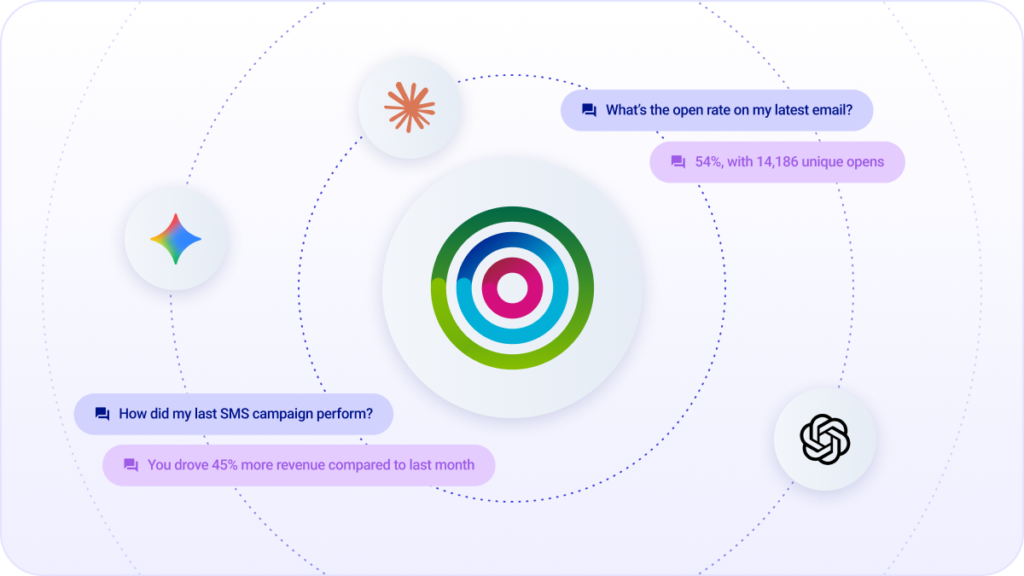
Dotdigital’s MCP (Model Context Protocol) Server lets you connect external AI tools like ChatGPT or Claude directly to your account. From there, you can ask plain-language questions about your marketing data and get real answers without building reports or digging through dashboards.
For example, you might ask:
- Show me our email open rates for the past three months, broken down by week
- How does our open rate compare to the industry average in retail?
Questions like these become straightforward to answer, which frees up time to actually act on the insights.
Build your business case for AI marketing
When you’re evaluating AI, it helps to think in terms of the outcomes it can support your marketing. From saving time to improving performance, AI can play a role across different parts of your workflow.
Save time on repetitive work
AI can help handle tasks like audience segmentation, tagging, scheduling, and reporting. This can reduce manual effort and free up time for more strategic work.
Deliver more relevant customer experiences
By analysing behavior and preferences, AI can help tailor messaging across channels like email, SMS, WhatsApp, and web. This supports more relevant recommendations and more personalized journeys.
Improve campaign performance
AI can support audience targeting, suggest optimizations, and help you test and refine campaigns over time, giving you more visibility into what’s working and where to adjust.
Make sense of your customer data
AI can highlight patterns and trends in your data, helping you understand behavior, identify opportunities, and inform future campaigns.
Support consistent cross-channel execution
AI can help align messaging and timing across channels, making it easier to keep campaigns coordinated without adding extra manual effort.
Where to start
The marketers seeing the most value from AI are using it in a few specific areas where it can make a real difference. Things like speeding up repetitive work, generating ideas they wouldn’t have time to explore manually, and testing more variations without adding extra pressure on their team.
If you’re deciding where to begin, pick one area from this list that feels most relevant to your current challenges. It could be subject lines, testing, or something like product recommendations. Start small, see what works, and build from there.