


The importance of getting your marketing right in the travel sector is at an all-time high. Social media and influencers have helped make the world more visible than ever before. Consumers are turning to social channels as a source of inspiration. They’re hunting for the next trending destination and best travel deals.
But the competition keeps growing. Standing out from the crowd is becoming increasingly difficult, and keeping travelers engaged enough to complete the checkout process is a challenge.
At the same time, there are question marks over how long this travel boom will last. Staffing issues, the cost of fuel and energy, and uncertainty around the cost of living are causing concern for travelers and travel marketers alike.
In this ultimate guide, we will have a look at the current state of travel marketing and break down all the channels and tactics you need to succeed in the highly competitive sector.
What is travel marketing and why is it important?
People are always dreaming of their next vacation, surely that means travel brands basically sell themselves, right?
Unfortunately, not. How brands market themselves is what makes travelers choose one resort and airline over another. Travel brands must promote and sell their products, services, and experiences to customers. You need to showcase the distinctive features of your destination, accommodation, leisure activities, and travel packages to spark interest and motivate bookings.
The travel industry is always changing. Some of the primary types of businesses that make up the industry include:
Transportation providers
- Airlines
- Train operators
- Cruise liners
- Bus companies
- Car rental agencies
Accommodations
- Hotels and resorts
- Hostels
- Bed & breakfasts (B&B)
- Vacation rentals (e.g., Airbnb, VRBO)
- Camping and glamping sites
Travel services
- Travel agencies (online and offline)
- Tour operators
- Online travel agencies (OTAs)
- Travel management companies (TMCs)
- Travel insurance providers
Leisure activities and attractions
- Guided tours and sightseeing excursions
- Adventure activities and sports (e.g., skiing, scuba diving)
- Museums, galleries, and cultural centers
- Theme parks and amusement parks
- Restaurants, bars, and cafes
Destination marketing organizations (DMOs)
- National tourism boards
- Regional and state tourism offices
- City visitor bureaus
Travel technology and platforms
- Travel booking and comparison sites
- Mobile applications for travel planning and navigation
- Travel review and recommendation sites (e.g., TripAdvisor)
- Metasearch engines for flights, hotels, and car rentals (e.g., Kayak, Skyscanner)
What are the benefits of travel marketing?
- Marketing helps potential customers become aware of the travel services and experiences you offer and boosts overall visibility in the crowded marketplace
- A well-executed marketing campaign attracts new customers by showcasing the value and unique aspects of your travel business, ultimately driving revenue growth
- Marketing helps your travel brand to maintain long-term relationships with your existing customers by offering personalized and contextually relevant content and engaging with them consistently across channels
- Including loyalty programs, exclusive offers, and personalized promotions in your marketing can build customer loyalty, leading to repeat business and higher customer lifetime value (CLV)
- New and targeted marketing strategies can help your travel brand stand out from the competition, positioning you as a leader and providing an advantage in a highly competitive market
- Marketing can be used to generate upselling and cross-selling opportunities, increasing the average transaction value and ultimately resulting in higher revenue
- Using marketing, you can manage your online presence, customer reviews, and social media engagement. This positively influences your brand reputation, driving more business from potential customers who trust and value your brand
- Using data collected through your marketing activities for analysis and insights can help your business make informed decisions about product and service offerings and marketing strategies, letting you improve your performance
- Marketing can play a key role in identifying new potential markets, demographics, and customer segments to target, helping you to expand your reach and tap into new growth opportunities
- Marketing lets you react quickly to unpredictable events, market trends, and competitive moves, adapting your strategies to maintain customer engagement and drive bookings while ensuring resilience in the face of challenges
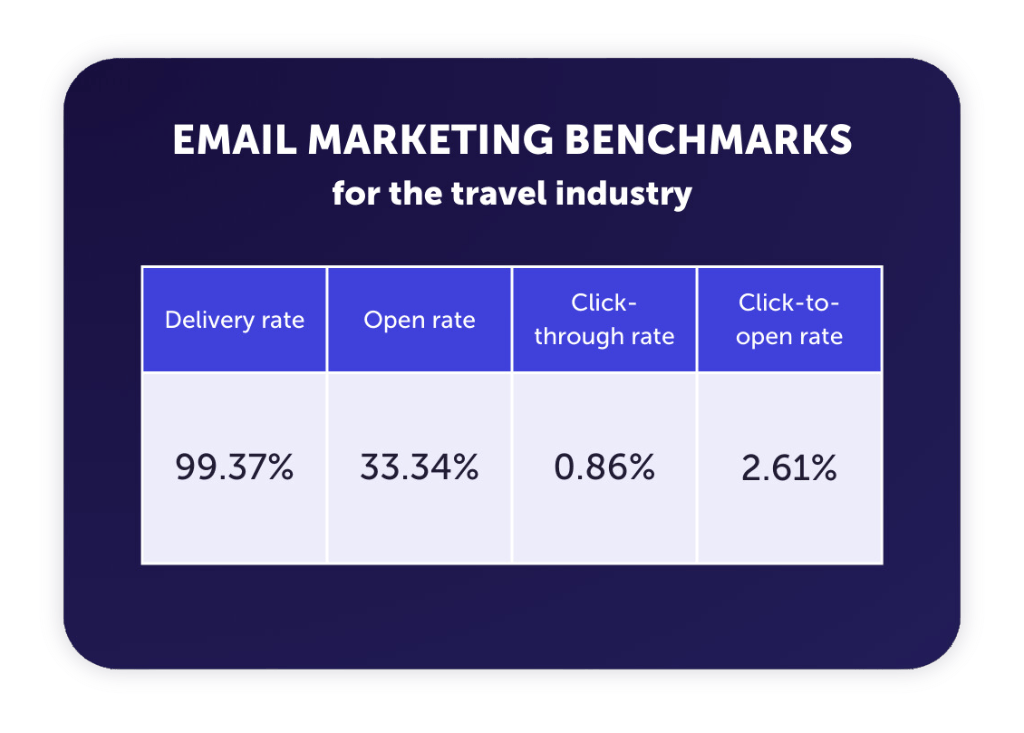
Need to know marketing statistics for the travel industry
Using these statistics, you will be able to get a bird’s eye view of global trends, customer behavior trends, and forces that are set to drive the multibillion-dollar industry forward in the years to come.
What are the challenges of travel marketing?
Despite economic uncertainty, the travel industry is returning to pre-pandemic levels and enjoying steady growth.
Still, airlines, hotels, travel agencies, and other travel brands across the world are facing unique challenges that set you apart from typical marketing teams. You have your hands full keeping up with the latest trends and technological advancements. Below are just a few of the top challenges you’re facing on an almost daily basis and how to overcome them.
1. Price is top-of-mind
With inflation in flux and travel expenses rising, travelers now consider price to be their top priority. To connect with your audience, you should emphasize low rates and demonstrate high value. Promoting discounts, bundles, and loyalty programs will appeal to budget-conscious consumers.
2. Traveler habits are changing
As remote work, digital engagement, and eco-consciousness continue to impact customer behaviors, you need to stay on top of trends to cater to emerging segments like bleisure (business and leisure) travelers. Data-centric platforms like Dotdigital plug into CRM systems and use machine learning can help brands understand these new customer groups.
3. Personalization will take center stage
With 86% of travelers seeking personalized experiences, you need to create tailored campaigns that resonate with your audience. Data collection and integration with CRM platforms are essential for delivering enjoyable, relevant, and personalized marketing experiences.
4. Engage travelers throughout their journey
By understanding and following emerging travel trends, you can engage with audiences throughout the whole customer journey. You need to approach the journey holistically and create a cohesive experience across channels. Tools like single customer view (SCV) and eRFM will help you get a clearer view of travelers’ behavior.
5. Try new technologies
To maintain your competitive edge, you need to give customers a great experience, from booking to post-break feedback. You should tap into technology to adapt to market changes. Ensuring data quality and consolidation will help you reap the full benefits of new tech advancements.
6. Sustainability is increasingly important to travelers
To cater to your more environmentally-conscious travelers, you need to demonstrate a genuine commitment to sustainable practices. Avoiding greenwashing and taking on eco-friendly practices helps you align your campaigns with customer values and support a greener future.
How to build a successful travel marketing strategy
Building a successful travel marketing strategy involves careful planning, targeting the right audience, and effectively using your various marketing channels. Here’s a step-by-step guide to creating a winning travel marketing strategy:
Step 1: Define your target audience
Start by clearly defining your target audience. Conduct market research to determine their demographics, preferences, and behaviors. This will help you tailor your marketing materials to resonate with this specific group and achieve better results.
Step 2: Develop a strong brand identity
Create a memorable and eye-catching brand identity that encapsulates your company’s ethos and values. This includes your company name, logo, tagline, color scheme, and visual style. Consistency across all marketing channels reinforces brand recognition and establishes trust.
Step 3: Grow your online presence
Create a user-friendly website that provides relevant information, showcases your offerings, and guides visitors to conversions (i.e. bookings or inquiries). Make sure your website has strong SEO to improve search engine ranking. Use social media platforms to engage with your audience and share valuable content.
Step 4: Get more from your content marketing
Produce high-quality, informative, and engaging content that inspires travelers and provides value. This could include blog articles, videos, or destination guides. Diversifying your content not only keeps your audience interested but also addresses different stages of their customer journey.
Step 5: Monitor, analyze, and adapt
Implement analytics tools to track your marketing efforts and identify what works best. Monitor key performance indicators (KPIs) and adjust your strategy to improve results. By continually learning from your data, you can make better marketing decisions.
Boost growth with modern marketing technology
To grow your visibility, captivate travelers, and boost bookings and inquiries, it’s essential to tap into the technology you have available. For peak success in the travel sector, you need technology that collaborates seamlessly with your existing tech solutions.
Dotdigital’s customer experience and data platform (CXDP) delivers an array of travel marketing tools and channels through a unified, all-encompassing platform. Getting more from your tech stack can improve traveler engagement, increase bookings, and improve your travel marketing initiatives.
Email marketing for travel marketers
Email marketing is a great tool for the travel industry, as it helps you to reach your target audience, build lasting relationships, and drive conversions.
In this section, we’ll explore the benefits of email marketing and the essential elements of successful email marketing for travel businesses, including creating targeted campaigns, using data to send personalized content, and ensuring that emails are engaging and mobile-friendly.
The benefits of email marketing for travel brands
Email marketing is an essential tool for marketers in the travel industry for several reasons:
1. Direct communication channel
Email marketing is a direct line of communication with your target audience, letting you share news, updates, offers, and content straight to subscribers’ inboxes, enhancing engagement and nurturing long-term relationships.
2. Strong ROI
Compared to other forms of marketing in the travel sector, email marketing is relatively inexpensive while maintaining a high return on investment (ROI). This makes it one of the best options for travel brands looking to reach large audiences or target specific segments without breaking the bank.
3. Personalization capabilities
Email marketing lets you create perfectly personalized content and offers based on your subscriber’s demographics, preferences, and travel or engagement history. Ultimately, personalization leads to increased customer satisfaction and loyalty, as your audience feels catered to and valued by your brand.
4. Behavioral targeting
With email marketing campaigns, you can track various metrics such as open rates, click-through rates, and conversions, giving you a better understanding of travelers’ behaviors and preferences. This valuable information can be used to improve future campaigns, ensuring better audience targeting and building long-term customer relationships.
5. Urgency and exclusivity
You can use email marketing to create a sense of urgency through time-sensitive offers, limited promotions, and exclusive deals, encouraging customers to book their travel or upgrade reservations.
6. Increased customer retention
By regularly sending informative content, helpful resources, and engaging promotions through email marketing campaigns, you will nurture customer loyalty and increase repeat bookings over time.
7. Relevance and timeliness
Email campaigns can be triggered based on specific events or customer actions, ensuring that the content is relevant and timely as per each individual’s needs. This could include sending reminder emails about upcoming trips or limited-time promotions resulting in better engagements and more conversions.
Email marketing best practices for travel marketers
Travel marketers can employ these best practices to create effective and engaging email campaigns:
Craft compelling subject lines
Write catchy and enticing subject lines to increase open rates. Make your subject line relevant to the email’s content, and make sure it resonates with your target audience. Tap into generative AI to really save time and improve results.
Personalize your emails
Personalize your email campaigns by using the recipient’s first name and providing recommendations, content, or offers based on their preferences, travel history, or demographics.
Segment your audience
Divide your subscribers into targeted segments based on factors such as geographical location, interests, booking history, or language, and send tailored content that appeals to each segment’s unique attributes.
Use dynamic and engaging visuals
Embed high-quality images and videos of destinations, accommodations, or activities to inspire and evoke emotions, leading to higher engagement levels.
Include clear calls-to-action (CTAs)
Make your CTAs clear, concise, and visually emphasized, directing subscribers toward the desired action, such as visiting a web page, booking a travel package, or redeeming special offers.
Make sure designs are responsive and mobile-ready
Check that your email template is mobile-friendly, with easy-to-read text and a clean layout, as a large portion of your audience will likely read your emails on mobile devices.
Check if the content is always relevant
Aim to provide valuable, informative, and engaging content that relates to the interests and needs of your subscribers, building trust and creating lasting customer relationships.
Test and improve
A/B test various elements of your emails, such as subject lines, send times, layout, or content, to determine what generates higher engagement and conversions. Continuously fine-tune your campaigns based on the insights gained from these tests.
Monitor important metrics
Keep track of key email marketing metrics such as open rates, click-through rates, conversion rates, and unsubscribe rates to measure the effectiveness of your campaigns and identify areas for improvement.
Maintain email list hygiene
Regularly review and clean your email list, removing inactive subscribers or outdated addresses to improve deliverability and maintain a high-quality mailing list.
Segmentation strategies for travel marketers
Segmentation is a key tactic for all marketers, but none more so than marketers in the travel sector. It involves dividing your target audience into distinct groups based on their preferences, demographics, or behaviors.
Implementing a segmentation strategy helps you to create highly targeted marketing campaigns that resonate better with each group, ultimately driving higher customer engagement and conversions.
Top five benefits of segmentation
1. Targeted marketing messages
Segmentation lets you tailor your marketing messages and content to specific segments, resulting in greater relevance, customer engagement, and conversion rates.
2. Improved customer experience
Offering personalized content, recommendations, and offers based on segmentation develops a better customer experience, deepening brand loyalty, and strengthening long-term relationships.
3. Resource allocation
By focusing marketing resources on specific customer segments, you can effectively allocate your budget, time, and efforts, ensuring maximum impact for your marketing activities. eRFM customer modeling will help you identify highly engaged, high-value customers to prioritize.
4. Increased ROI
Using segmentation, you can build tailored campaigns designed to appeal to different groups, resulting in higher response rates and, ultimately, an increased return on marketing investment.
5. Market insights
Segmentation provides insights into your customer preferences and behaviors, helping you identify new market opportunities, improvement areas, or trends that can inform marketing strategy.
Top tips for implementing a segmentation strategy
Gather customer data
Collect customer data from various sources, such as website behavior, booking history, survey responses, third-party travel partners, and CRM systems, and unify them to build a comprehensive understanding of your audience.
Use eRFM and SCV
Use advanced segmentation tools, including eRFM (engagement, recency, frequency, monetary) modeling and single customer view (SCV) data. These features helps you achieve more precise targeting and improved insights into customer behavior.
Create tailored content and offers
Develop content and promotional offers that resonate with the specific needs, desires, and pain points of each segment. Personalized marketing messages have a higher chance of engaging and converting customers. Use the data collected from Dotdigital’s eRFM and SCV features to inform these strategies.Align channels and campaigns
Align channels and campaigns
Make sure that appropriate marketing channels are used for each segment. Different customer groups may prefer email, SMS, or other channels, so align your strategy accordingly. Dotdigital’s customer insights will help you build a seamless cross-channel marketing plan.
Test and refine
Continuously test and analyze the performance of segmented campaigns. Monitor key metrics such as open rates, click-through rates, conversion rates, and CLV to identify areas for improvement. Adjust your segmentation approach and marketing strategies based on these data-driven insights.
Regularly update segments
Customer preferences and behaviors change over time. Periodically reassess your segments, refresh your data, and use updated customer insights to make sure your marketing efforts remain relevant and effective.
Icelolly wanted to convert more browsers into bookers. Here’s how personalized retargeting helped them do it.
SMS marketing in the travel industry
SMS marketing can sometimes be an underused marketing channel, but it’s a tool that can boost engagement and provide exceptional value for travel businesses like yours. As a direct and immediate form of communication, SMS marketing can help you reach customers in ways other channels might not.
Benefits of SMS marketing for travel marketers
1. High open rates
SMS messages have an exceptional open rate, with most recipients reading the message within minutes of receiving it. This makes sure that promotional offers, updates, or reminders are seen by the majority of your target audience.
2. Real-time communication
SMS provides real-time, immediate communication that lets you send time-sensitive offers, last-minute deals, or important travel updates to your customers.
3. Mobile accessibility
With the majority of the population carrying mobile devices, SMS marketing is a great way to reach your customers regardless of their location or internet access.
4. Cost-effective
SMS marketing campaigns are easy to set up and cheaper than most other marketing channels. This means you can effectively reach your target audience, even on a budget.
5. Personalized experiences
SMS campaigns can be tailored to individual users based on their preferences, interests, or travel history, creating a more personalized and engaging experience for your customers.
6. Easy integration with other marketing channels
SMS marketing can be easily combined with other channels such as email, app, or social media to create a comprehensive and cohesive marketing campaign for your travel brand.
How to integrate SMS into your travel marketing
By using SMS marketing, your travel business can open up new avenues of customer engagement and diversify your overall marketing efforts, ultimately boosting bookings and customer satisfaction. Here are some campaign ideas that can be implemented through SMS marketing:
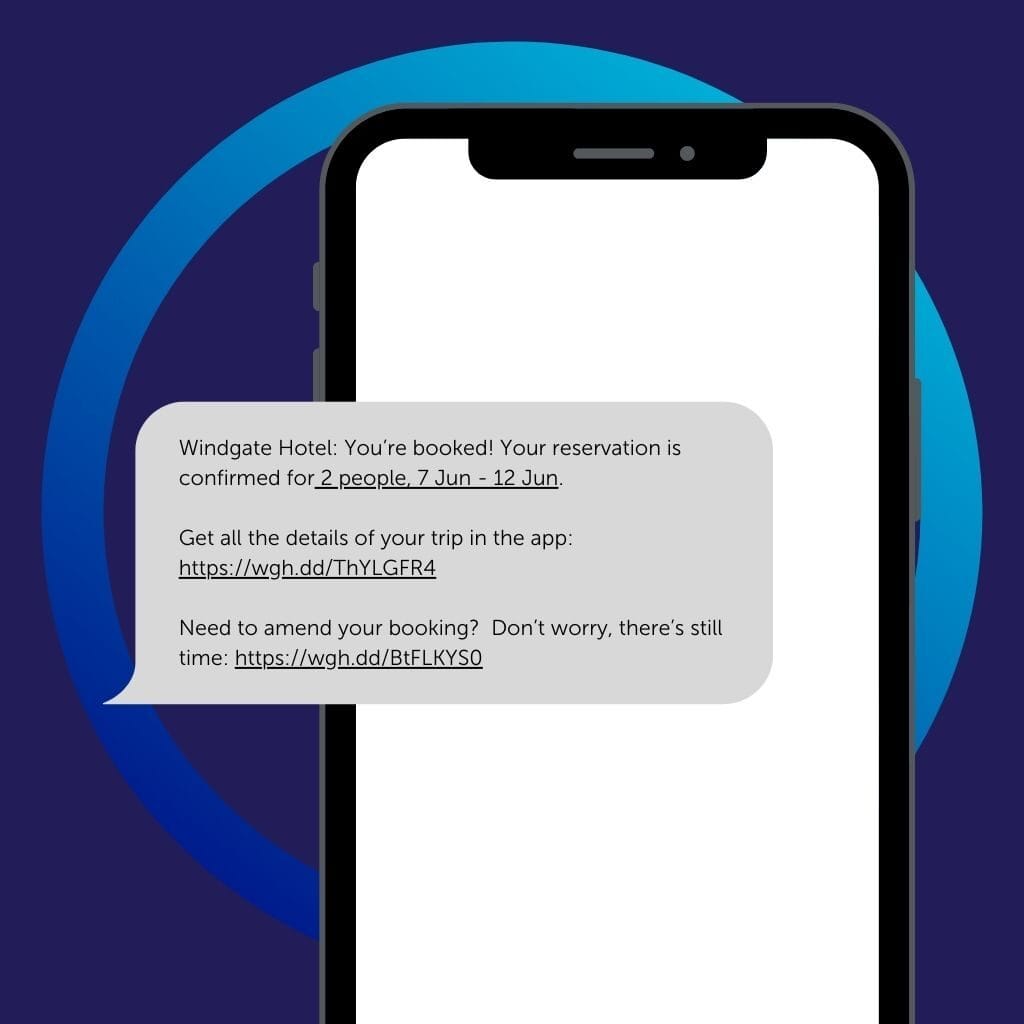
Booking confirmations
Provide instant booking confirmations, reservation details, and reference numbers to customers who have made a reservation or purchased a travel package.
Reminders
Send helpful reminders for upcoming trips, pre-travel checklists, departure times, locations, or travel document requirements.
Flight and travel updates
Share essential real-time updates like flight delays, gate changes, or itinerary adjustments, ensuring customers are well-informed and prepared. Ultimately, this will lead to higher satisfaction and experience overall.
Promotional campaigns
Send exclusive deals, discounts, limited-time offers, or last-minute specials to encourage customers to book travel or secure a service through your business.
Abandoned cart recovery
Remind customers about travel packages, accommodation options, or services they were considering but have not completed the booking process.
Cross-selling and upselling
Suggest relevant add-ons or upgrades to customers based on their travel plans, such as excursions, activity bookings, premium seating, or transportation options.
Customer feedback
Request post-trip feedback, ratings, or reviews through an SMS message, using the insights to improve your services and customer satisfaction. SMS is a great channel for this because it needs little lift from your team and has a high completion rate.
Loyalty programs
Notify customers of their rewards or loyalty points balance and inform them of any opportunities to earn additional points or redeem special offers.
Destination tips and recommendations
Share useful destination-based information, such as local attractions, events, dining options, or safety tips, to improve your customers’ travel experiences.
Discover how British Airways used Dotdigital’s two-way SMS functionality to encourage travelers to complete monthly customer satisfaction surveys.
Top tips for successfully incorporating SMS into your travel marketing campaigns
- Combine SMS with email marketing to your existing email marketing strategy, sending important alerts, reminders, or limited-time offers through SMS to complement your email marketing activity.
- Segment your audience based on demographics, geographic location, or travel preferences, ensuring that your messages resonate with subscribers and are relevant to their needs in the moment.
- Personalize messages based on customers’ booking history, travel destinations, or preferences, creating a sense of exclusivity and personal connection.
- Use automation to trigger SMS marketing campaigns, such as booking confirmation, travel reminders, or payment due notices. This will make sure your text messages are landing at the best time to drive customer conversions.
- Deliver the key message or the call-to-action within the constraints of the character limit. Stay concise and focused, and your message is easy to understand. Tap into AI tools to help.
MMS for travel marketing campaigns
MMS (multimedia messaging service) is a bit like SMS marketing, the difference being you’re able to send content, such as images, videos, and audio files, alongside text messages. It offers new and exciting opportunities to engage customers in a more dynamic and visually appealing way.
Rich visual content
MMS lets you send rich visual content, including high-quality images and videos that showcase destinations, accommodations, or activities. This helps customers to get a better sense of the travel experience being offered and will inspire them to book.
Higher engagement rates
Multimedia messages, including images and videos, have higher engagement rates compared to simple text messages. By using MMS, you can evoke stronger emotional responses and drive customer interest, resulting in increased conversions and bookings.
Improved storytelling and immersion
MMS helps you to create immersive narratives by sharing pictures, videos, or audio clips of real travel experiences. This storytelling approach can help build a connection with potential travelers, increasing the likelihood of them engaging with your brand.
Greater personalization
MMS can be customized based on individual preferences, interests, or travel history. By sending personalized multimedia content to customers, you can create a more relevant and memorable connection, creatingy brand loyalty.
Competitive advantage
Although MMS is growing, many businesses still primarily rely on text-based marketing. Using MMS can differentiate yourself from competitors and establish a unique brand identity in the minds of consumers.
Integration with other channels
MMS works well in conjunction with SMS, email, and social media campaigns. Integrating MMS into your overall marketing strategy can help create a comprehensive and cohesive approach that covers different stages of the customer journey.
Marketing automation for travel marketers
Marketing automation speeds up repetitive marketing tasks, reduces manual efforts, and improves results. Intelligent marketing automation tools like Dotdigital create conversion-driving, loyalty-inspiring experiences by tapping into customer data and turning it into real-time marketing campaigns.
Benefits of marketing automation for travel brands
1. Time-saving and cost-efficiency
Marketing automation significantly reduces manual tasks associated with campaign management and customer segmentation, freeing up time for you and your teams to focus on strategic tasks, such as content creation and performance analysis.
2. Seamless communication
Marketing automation keeps your communication consistent across every channel, without you having to manage it manually, which is important for maintaining customer engagement and building long-term brand loyalty.
3. Personalization
By tracking customers’ actions, preferences, and booking history, marketing automation tools help you deliver personalized and relevant content that resonates with your target audience. This moments-based approach to marketing improves the overall customer experience, improving ROI, average order value (AOV), and customer lifetime value (CLV).
4. Cross-channel campaign management
Marketing automation platforms help you manage and coordinate campaigns across various channels, such as email, SMS, social media, and web push notifications, ensuring a seamless and cohesive marketing strategy.
5. Data-driven insights
With the help of detailed analytics provided by Dotdigital, you can make data-driven decisions, monitor campaign performance, and develop your strategies for maximum results.
Essential automation programs for travel brands
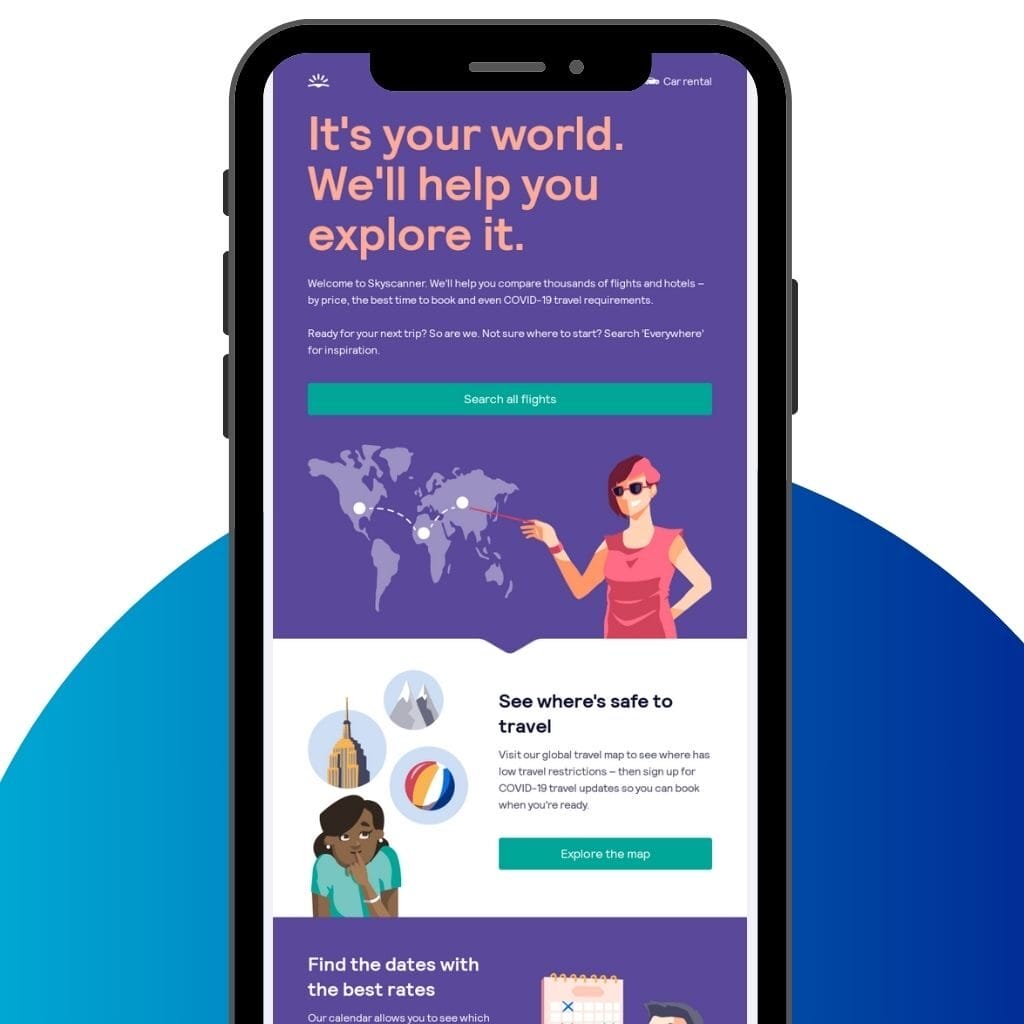
Welcome programs
Set up automated welcome emails or messages for new subscribers, providing an initial introduction to your brand, exclusive offers, and personalized travel recommendations based on their preferences.
Automate booking confirmations, reservation details, and pre-travel reminders, ensuring all necessary information reaches the customer on time. This can include flight check-in reminders, pre-trip preparation tips, and travel documentation.
Abandoned cart recovery
Implement automated messages for customers who added travel packages or services to their cart but didn’t complete the booking process. These messages can include personalized incentives or offers to encourage conversion, AI-driven recommendations, or exclusive discounts for high-value customers.
Re-engagement campaigns
Build automated re-engagement or nurture campaigns to connect with inactive or lapsed customers, offering relevant travel deals or content that sparks renewed interest in your brand. Use eRFM to identify these customers and SCV to gain insight into the channels and content that will drive them toward conversions.
Loyalty programs
Loyalty programs are a big motivating factor in the decision-making process of modern travelers. Automate loyalty program updates, notifications, or special offers to reward repeat customers and builds long-term brand loyalty.
Customer feedback
Automate post-trip feedback requests, analyze customer experiences, and collect valuable insights to inform improvements in your offerings and services. Positive reviews also make great marketing collateral so the importance of this program must not be underestimated.
Seasonal and promotional campaigns
Schedule automated campaigns centered around holidays, seasonal offers, or special events, targeting customers with relevant deals and packages. Use customer insights to see when customers are most engaged or typically looking at your website to identify essential times to launch annual offers.
By understanding the benefits of marketing automation and implementing these recommended automation programs, you can simplify your marketing efforts, engage customers across multiple touchpoints, and improves the overall customer experience while driving revenue and brand loyalty.
Web personalization
Web personalization involves tailoring website content to individual visitors based on their preferences, behavior, and demographic data.
In the travel industry, web personalization offers significant benefits and opportunities for enhancing customer engagement and boosting conversion rates. In this section, we’ll discuss the advantages of web personalization for travel marketers and provide strategies to create personalized online experiences.
Benefits of web personalization for travel marketers
1. Better customer engagement
Personalized content and offers on your website can capture users’ attention and create a positive, engaging experience, increasing the likelihood of bookings and purchases.
2. Improved relevance
By addressing customers’ preferences and needs, web personalization makes sure that your website’s content remains relevant and tailored to each user, making your brand more appealing to potential customers.
3. Increased conversion rates
Personalized content, offers, and recommendations can lead to an increase in customers taking action, whether booking a trip, subscribing to newsletters, or requesting more information.
4. Reduced bounce rates
An engaging and personalized website encourages visitors to spend more time exploring your offerings, reducing bounce rates and increasing the chances of customer conversions.
5. Improved ROI
By delivering personalized content and experiences to specific segments, web personalization can result in better use of marketing resources and a higher return on investment.
Strategies for personalizing web experiences
Geolocation targeting
Show customers recommended travel destinations, offers, or services based on their current location, accounting for local events or geographic preferences.
Behavioral data
Use customer behavior, such as browsing habits, pages visited, or previous booking history, to deliver personalized content, deals, or recommendations.
Customer segmentation
Divide your website visitors into specific segments based on demographics, interests, or travel preferences, and tailor website content to cater to these segments.
Exit intent pop-overs
Implement exit intent pop-overs with tailored, last-minute offers or incentives that persuade visitors to book, subscribe, or engage further with your brand before leaving the website.
Dynamic content
Use dynamic content that adapts based on user interactions, website behavior, or previous travel bookings, recommending related destinations, accommodations, or activities.
Personalized remarketing
Employ remarketing campaigns that display personalized ads to users who have previously visited your website, featuring customized offers, messages, or promotions.
Recommendations backed by AI
Integrate AI-driven recommendations into your website, providing visitors with personalized travel options across your homepage, product, and service pages.
Landing pages for promotions
Create dedicated, personalized landing pages for various promotions or travel offers based on customer segments, increasing the chances of conversions and bookings.
Push notification marketing
Push notification marketing is a helpful tool for brands operating in the travel industry. It lets you engage with customers directly through real-time, targeted, moment-based messages delivered directly to users’ mobile devices or web browsers.
Benefits of using push notifications in your travel marketing
1. Increased engagement
Push notifications give you new opportunities to re-engage customers by sending personalized promotions, announcements, and reminders. Ultimately, this imrpoves customer interactions and brand connection.
2. Real-time communication
Timely and relevant notifications help you to communicate instantly with users, facilitating real-time updates on special deals, flight status, itinerary changes, or exclusive offers.
3. Higher conversion rates
By delivering tailored offers and targeted content, push notifications can increase conversion rates, driving bookings and encouraging customers to take action.
4. Improved user experience
Push notifications can improve the user experience by offering personalized recommendations, location-based offers, and immediate assistance, building a stronger bond between customers and your brand.
5. Trackable performance metrics
Push notifications offer valuable performance insights, such as open rates, click-through rates, and conversion rates.
Reporting and analytics
For marketers in the travel industry, using your budget and resources effectively is important. Here’s some of the ways you can do this:
Email reporting and analytics
Email reporting and analytics provide insights into the performance of your email marketing campaigns. This information helps you to:
- Identify trends in your email marketing campaigns
- Check your campaigns are meeting their objectives
- Pinpoint areas that need to be improved to build on your campaign performance
Email dashboards
Email dashboards provide you with an overview of all your email marketing campaigns, while email reports focus on a single campaign, outlining key performance metrics. By getting a full picture look at your email marketing campaigns, you can discover:
- Statistics about your delivered, bounced, and skipped emails.
- Data about opens, unique opens, non-opens, and social shares.
- A heat map showing the areas of the world where your email campaign was most opened.
- The most popular links in your campaign, clicks, unique clicks, and click-to-open rates.
- Details about your winning and losing split tests.
SMS reporting
SMS campaign reports monitor channel performance, helping you to continuously improve your marketing results. These reports showcase:
Last sent
Helps track the frequency of SMS campaigns and analyze performance metrics over time.
Click-to-delivered rate
Measures the effectiveness of your campaign, comparing the number of clicks to successfully delivered messages, which can inform improvements in content or targeting.
Conversion rate
Indicates the percentage of recipients who completed a desired action, such as booking a trip or signing up for a newsletter, helping to evaluate the success of promotional efforts.
Revenue
Evaluates the total revenue generated by a specific SMS campaign, determining ROI and guiding budgeting decisions.
Assisted revenue
Provides insight into the revenue generated from bookings or purchases influenced by an SMS campaign, even if completed through different channels.
Total segments
Informs segmentation strategy by showing the number of segment groups targeted in the campaign, helping you assess the depth and breadth of your reach.
Total clicks
Indicates engagement with SMS content by revealing the number of clicks on embedded links, helping you to better analyze which messages resonate best with your target audience.
Total delivered
Measures the reach of an SMS campaign by tallying messages successfully received, helping to gauge overall marketing effectiveness.
Total sent
Provides an overview of SMS campaign volume, letting you see the relationship between quantity and campaign success.
Program analytics
Dotdigital’s program analytics tools offer several benefits to travel marketers, especially by helping you improve your marketing automation programs. Key benefits include:
Data-driven decisions
Program analytics provide a comprehensive and data-driven overview of your marketing automation programs, helping you to make informed decisions about marketing strategies and tactics.
Visual representation of performance
The visual representation of the different nodes in your marketing automation workflow helps you to gain a deeper understanding of your programs and quickly identify areas that need improvement.
Real-time monitoring
Dotdigital’s program analytics tools help you to monitor the performance of your marketing automation programs in real-time, helping you to quickly adapt to changing trends and make necessary adjustments.
Customizable views
The detailed view feature lets you choose between different chart views (trend and cumulative) to get a granular analysis of key program metrics, providing insights tailored to your specific needs.
Increased automation effectiveness
By evaluating the performance of start nodes, decision nodes, and action nodes, you can better understand customer interactions and improve your marketing automation programs to increase effectiveness.
Better targeting
Program analytics tools can help you identify the success of different segments and decision paths in your automation workflows. This helps you to refine your targeting strategies and drive better results.
Simplify your marketing
The ability to analyze the detailed data and insights provided by program analytics tools helps you to remove inefficiencies and allocate resources more effectively.
Improved ROI
By providing in-depth data and insights on marketing automation programs’ performance, program analytics tools can help you improve your campaigns to increase ROI. Through continuous improvement, marketers can generate better results and higher revenue, ultimately improving the overall ROI of their marketing efforts.
Advanced revenue attribution
Advanced revenue attribution is a method used to calculate the revenue generated by email and SMS marketing campaigns, based on clicks that lead to a purchase within a specified conversion window. Unlike direct tracking, which attributes revenue to clicks within a single window, advanced revenue attribution provides a more accurate and comprehensive assessment of how a campaign may have influenced the customer’s purchasing decision.
The benefits of using advanced revenue attribution include:
Better understanding of campaign value
By tracing revenue to specific email and SMS campaigns, you can better assess the true influence of your marketing efforts on customers’ purchases, even if the purchase occurs outside the one-hour window of direct tracking.
A holistic view of the customer journey
Advanced revenue attribution offers a more complete picture of how different touchpoints contribute to your customer’s decision-making process, helping you to make improvements to your campaigns for higher engagement and conversion rates.
Better resource allocation
Visibility into campaign performance through revenue attribution helps you to allocate budget and resources more effectively, focusing on campaigns that deliver the most significant ROI.
Getting more from your marketing channels
You can analyze the performance of email and SMS campaigns side by side, determining which channel is more effective at driving revenue and adjusting your marketing strategies accordingly.
Improved targeting and segmentation
By understanding which campaigns generate higher revenue, you can refine your targeting and segmentation strategies to engage the right audience with relevant and persuasive messaging, resulting in higher conversion rates.
Long-term relationship building
Advanced revenue attribution can reveal patterns in customers’ behavior over extended periods, helping you identify important touchpoints for nurturing long-term relationships and customer loyalty.
AI marketing
Designing a successful marketing campaign is far from easy but using artificial intelligence (AI) in your day-to-day marketing will improve the efficiency and effectiveness of your marketing efforts.
Benefits of using AI
1. Perfect personalization
AI helps you to offer highly tailored experiences to your customers. By analyzing large amounts of customer data, AI can identify patterns and preferences that are important for the creation of personalized marketing campaigns. As a result, your customers are more likely to be engaged and satisfied with their overall experience.
2. Data-driven decision making
AI-driven analytics provides you with actionable insights and data that help you make informed decisions. Early users of AI can use tools that analyze customer behavior, identify trends, and provide valuable recommendations. This makes sure that your marketing resources are optimally allocated and drives higher ROI.
3. Time and cost efficiency
AI early helps to speed up and automate your routine tasks. As AI can process a lot of data quickly, it saves time, increases productivity, and greatly reduces human errors. This frees up your time to focus on higher-value strategic and creative tasks.
4. Real-time optimization
AI provides real-time performance tracking and ideas to better your marketing campaigns. By continually monitoring and adjusting, you can increase your outreach methods, ultimately enhancing customer engagement, conversions, and revenue.
5. Competitive edge
Marketers who use AI in the travel marketing sector will stay ahead of the competition by using technologies that many competitors may not even be aware of. This provides a unique opportunity to gain market share and establish a brand reputation as a forward-thinking business.
What Dotdigital can do
Generative AI content creation
- The subject line assistant helps create your subject lines by analyzing past engagement rates and generating inspiring suggestions for your next travel campaign
- The email campaign assistant not only offers alternative subject lines but also provides valuable feedback to refine your content. Get insights on tone evaluation and creative suggestions for your upcoming email campaigns
- Grammar and spell check assistant helps eliminate time-consuming manual proofreading by using WinstonAI’s grammar check for emails, SMS, landing pages, and forms
- One-click email to SMS generator saves time by repurposing valuable email content into SMS messages for subscribers who prefer text messages. WinstonAI achieves this with just one click
AI-driven insights and analytics
- Predictive analytics helps you anticipate your customers’ behavior and adapt your marketing strategies accordingly, ensuring continuous engagement throughout their journey
- Develop a deeper understanding of your customer base by integrating engagement scores with RFM (recency, frequency, monetary) ratings to create distinct personas
- Engage deeply with individual customer profiles using a single customer view and generate segments with similar traits to your ideal customers
AI marketing campaign
- Increase your outreach potential and check your messages land at just the right moment
- Increase engagement levels by using AI-driven send time optimization (STO) to deliver emails at the most opportune moment for the recipients.
- Improve campaign performance and sender reputation by employing top-quality data that WinstonAI continuously monitors and evaluates.
- Our data watchdog acts as a vigilant guardian of your sender reputation by safeguarding your delivery rates and thoroughly analyzing incoming email addresses.
- Filter out activity from security tools or bots that can skew marketing results, providing you with a more accurate assessment of your campaigns’ performance.
Integrations and data management
From your booking systems and CRM to ticketing and customer service software, tech stacks for travel brands are growingg. The only solution is to have a customer experience and data platform that connects and unifies all your systems into a single source of truth. This will help you provide seamless and personalized customer experiences, improve operations, and support relevant and timely marketing activity.
Customer relationship management (CRM) and customer data platforms (CDP)
CRM systems help you manage and analyze interactions with potential and existing customers. This helps to maintain and improve customer retention, satisfaction, and revenue generation. Integrating your CRM and marketing channel providers helps you to have all the data you need to provide data-driven marketing campaigns.
Booking and reservation management
Integrations with booking platforms and reservation systems are important for managing traveler information, letting you personalize offers and communications based on booking history and preferences.
Ticketing and customer service systems
Ticketing systems are vital for travel brands as they help manage customer support inquiries, leading to better customer experiences. Integrating these into your marketing platform helps with cross-team collaboration, timely communication, and improves customer retention as every interaction is accessible for marketers and customer service teams alike.
Loyalty programs
Loyalty programs play a significant role in retaining customers and enhancing brand loyalty for travel brands. Integrating these systems into your marketing platform helps you tailor rewards and offers to customers based on their preferences, purchase history, loyalty points, and other relevant data. Personalized rewards lead to higher customer satisfaction and engagement, strengthening brand loyalty.
Review platforms
Integrations with review platforms such as TripAdvisor, Feefo, and Trustpilot help you to monitor customer feedback, identify areas for improvement, and showcase highlighted reviews to increase credibility and trust.
Key takeaways
Travel businesses need to understand the different types of marketing channels and tactics available to them to effectively promote their products, services, and experiences. By using fresh strategies, personalized promotions, and data-driven insights, travel businesses can stand out from the competition, attract new customers, and retain existing ones.
The travel industry is constantly changing, and you need to keep up with the latest trends and technologies to succeed in the highly competitive market. With the right marketing strategy in place, travel businesses can take advantage of the many opportunities available in the industry.