



With many people planning to celebrate Father’s day across the world, it’s a great opportunity for marketers to drive engagement and conversions.
However, Father’s day is also a sensitive time for many people, and mindful marketing is essential at this time of year. Building in things like flexibility, thoughtful segmentation, and clear opt-out options or preference centers can help you stay relevant without alienating parts of your audience.
In this guide, we’ll explore practical Father’s Day email markeklting ideas and real examples to help inspire your campaigns.
When is Father’s Day? (Plan your send schedule)
Father’s Day falls on different dates depending on the region (and changes every year too), so it’s important to know your audience when planning your email campaigns:
- United States & United Kingdom: Sunday, June 21st 2026
- Japan, Malaysia, Philippines & Singapore: Sunday, June 21st 2026
- Australia & New Zealand: Sunday, September 6th 2026
- Other regions: Dates vary, so it’s worth checking local calendars before planning your campaign
Father’s Day campaign calendar
A timeline can help you stay organized and build momentum without rushing your creative or segmentation. Here’s what that might look like:
- 6-8 weeks before: Most marketers start planning their overall approach and campaign direction
- 4-6 weeks before: Start planning offers, messaging, and creative direction
- 3-4 weeks before: Build email assets, landing pages, and segmentation strategy
- 2 weeks before: Launch early teasers or gift inspiration content
- 1 week before: Send main campaign email with core offers or gift guides
- 2-3 days before: Send reminder or “last chance” messaging
Father’s Day is part of a bigger trend in seasonal spending
Recent holiday shopping insights show total consumer spending rose from $241.1 billion in 2024 to $257.8 billion in 2025. These stats prove that people are still willing to spend on seasonal occasions, like Father’s Day and Mother’s Day, especially when brands make the decision easier.
For many brands, this is a key moment in the marketing calendar where intent is already high. People are actively looking for ideas, inspiration, and last-minute gifts. The most effective campaigns are the ones that feel timely, helpful, and easy to act on, rather than being overly promotional or generic.
Father’s Day email marketing examples
1. Showcase your collection this Father’s Day
Father’s Day is a great way to highlight personalized gift recommendations that help customers find something meaningful without any guesswork.
A good example of this comes from Sock Fancy, who showcase a selection of socks with bold designs and gives customers the option to personalize their gift that’s also paired with a clear Father’s Day offer.
The email is simple, visual, and easy to act on, that helps customers quickly narrow down a gift that feels right for the person they’re buying for.
How to apply this to your campaign:
- Highlight personalization in your subject line or hero banner
- Show a real example of a customized product
- Reassure shoppers with clear delivery timelines
- Promote value-adds like gift wrap or free shipping
This approach works well for both early planners and last-minute shoppers. It helps people choose something that fits what they’re looking for, without making the buying process feel complicated or time-consuming.

2. Respect your audience while sending seasonal emails
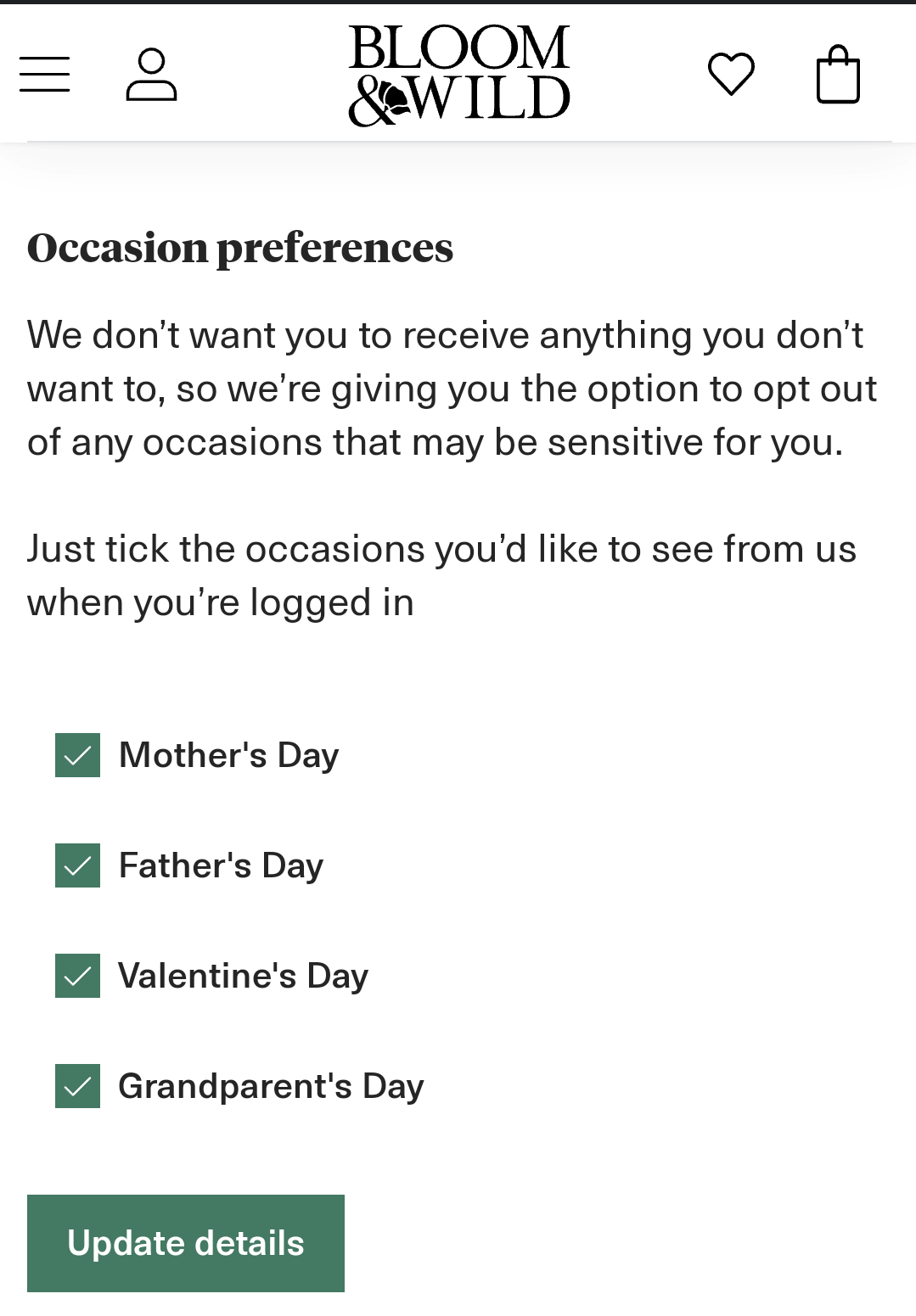
As mentioned earlier, not everyone will be celebrating Father’s Day, and for some, it may be a difficult or a sensitive time of year. That’s why your messaging should be thoughtful, and why opt-out campaigns shouldn’t always be the default solution.
If you’re planning more than one Father’s Day send, it makes sense to give subscribers some control over what shows up in their inbox, rather than relying on a separate opt-out email each time.
But before adding anything like that, think about the overall volume of emails you’re planning. If it’s a single message, then something like an opt-out flow might be unnecessary. These controls are more useful when subscribers are likely to receive a small series of messages in a short time frame.
A more balanced approach is to use your existing preference center alongside segmentation. Giving your audience control helps avoid unnecessary reminders for people who don’t want them, while also reducing unsubscribes and improving the chances your messages reach the right people at the right time.
Tips for thoughtful and inclusive campaigns
- Understand that Father’s Day won’t mean the same thing for everyone, so keep your messaging mindful and inclusive
- Make it easy for subscribers to manage or opt out of seasonal content through your preference center in one place
- Use inclusive language that reflects different relationships, such as “dads, step-dads, father figures, and anyone you’re celebrating”
- You can offer options like: “Only receive gift guides or promotional emails”, “Skip Father’s Day content altogether” or “Stay opted in for other seasonal campaigns”
3. Give your campaign a purpose-led angle
Father’s Day doesn’t always have to be focused on products or promotions. For some brands, it’s an opportunity to highlight stories, people, or values that sit behind the business.
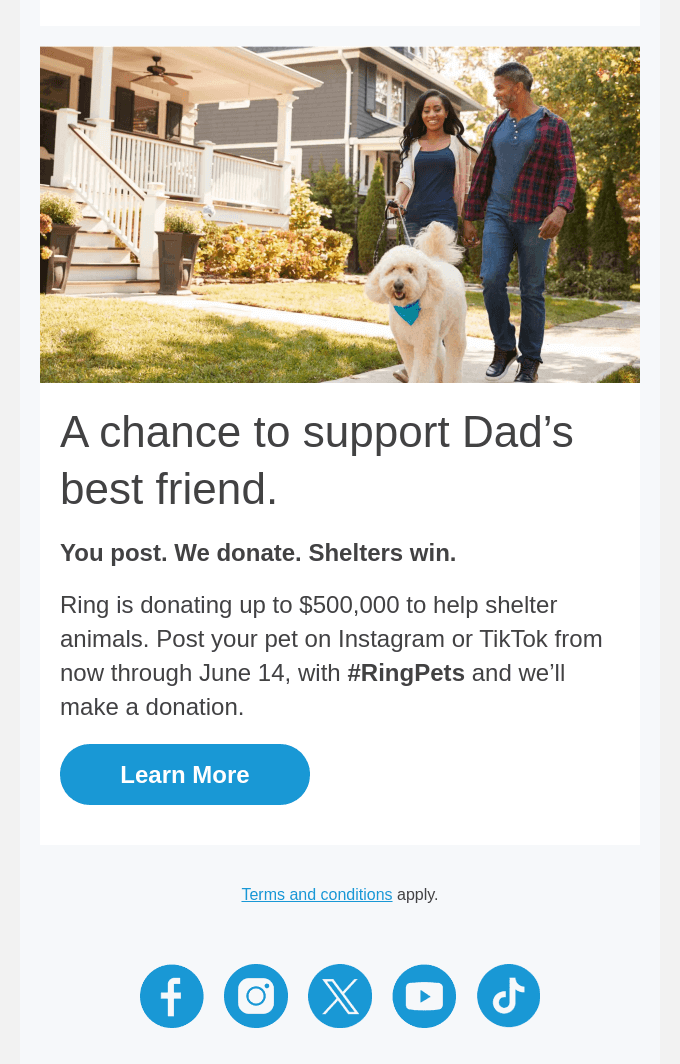
One way to do this is to include a donation or give-back element within your campaign. For example, Ring highlights that a portion of proceeds from Father’s Day sales will go towards a chosen charity or cause, which adds a sense of purpose without taking away from the product focus.
It’s a simple way to make the campaign feel more thoughtful, while still keeping the buying experience clear and straightforward.
How to apply this:
- Link your Father’s Day campaign to a relevant cause or donation initiative
- Make the impact of the purchase easy to understand (what’s being given back and why)
- Keep the messaging light and integrated into the offer, rather than separate from it
- Use clear CTAs that still focus on shopping
4. Create a gift guide that makes buying easy
People are looking for quick inspiration and a well-structured gift guide can help simplify their decision.
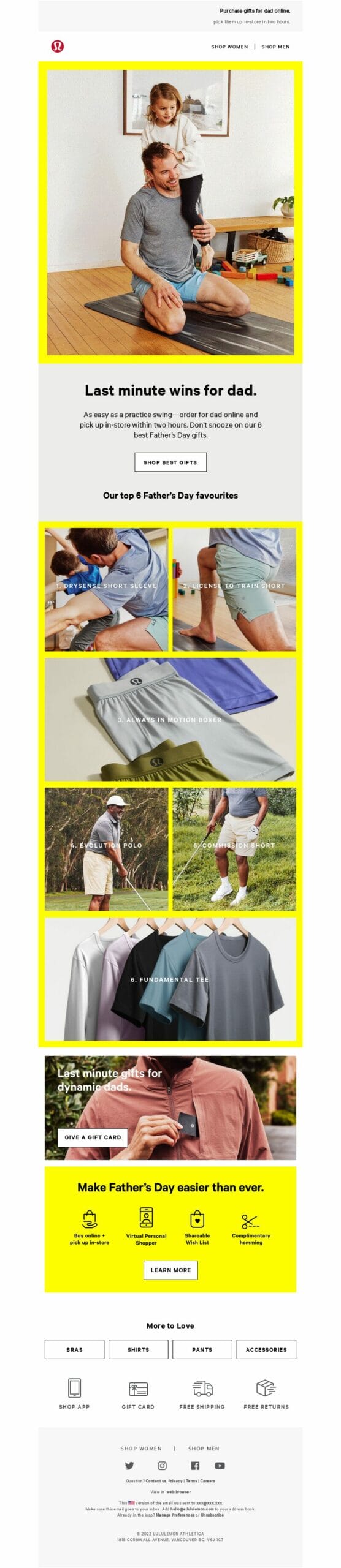
A good example of this comes from Lululemon. Alongside product recommendations, it also includes flexible options like gift cards, which helps appeal to different types of shoppers too.
The result is a simple, helpful experience that reduces friction and makes it easier for people to act quickly.
How to strengthen your gift guide email:
- Keep the selection focused so it’s easy to scan and doesn’t overwhelm people
- Group products in a way that helps people quickly find what’s relevant to them
- Include a mix of price points so more customers feel catered for
- Add flexibility where possible, such as gift cards or last-minute options
5. Help customers decide faster with timely offers
Father’s Day can be a fast-moving purchase moment, where people make quicker decisions. That’s why interactive or time-sensitive campaigns can be effective.
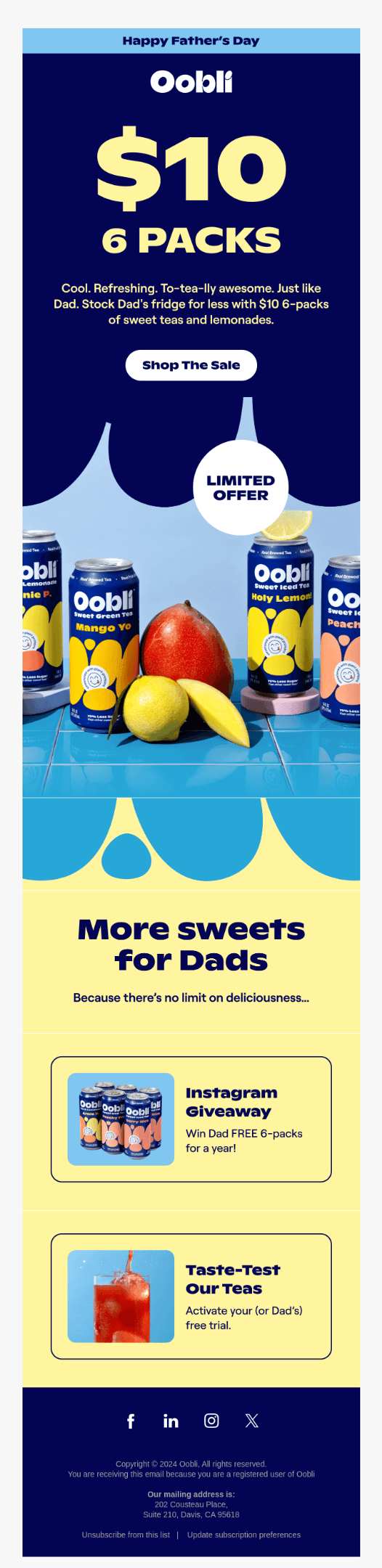
The example from Oobli shows this well, using a clear promotional message that is direct, easy to understand, and focused on helping people make a decision quickly.
How to apply this:
- Use time-limited offers to encourage quicker decision-making
- Keep interactive elements simple so they don’t distract from the main offer
- Make your CTA clear, direct, and focused on action
- Reinforce urgency without over complicating the message
Father’s Day email subject line examples
Your subject line is the first thing people see, and it can sometimes decide whether your email gets opened or ignored. For Father’s Day, a well-thought-out subject line can make a real difference to engagement and conversions. Here’s some examples to help inspire your campaign:
Urgency
- Almost gone! Father’s Day special Ends soon!
- Last chance to make dad happy! Gift guide inside!
- Celebrate your #1 dad: enjoy 20% off this Father’s Day
- Happy Father’s Day deals – 20% off site-wide!
- Exclusive Father’s Day deals
- Father’s Day flash sale – 24 hours to go!
- Get your digital Father’s Day gift card in one minute!
Personalization
- [First Name], your dad’s favorite gift awaits
- [First Name], spoil Dad with our super-sized Father’s Day gift packs
- [First Name], make Dad smile with our Father’s Day gift guide
- [First Name], a Father’s Day treat, just for you
Emoji variants
- Dress to impress: Stylish Father’s Day wardrobe
- Win big: Father’s Day giveaway
- Mouthwatering Father’s Day recipes ️
- Father’s Day: Find the perfect gift for your superhero ️
- Go above and beyond for dad this Father’s Day
Mixed approaches
- Meaningful gifts for Dad, step-dads, and father figures
- A Father’s Day gift that makes a difference
- Celebrate Dad, step-dad, or father figure this Father’s Day
- Gifts with purpose for dads and father figures
If you need more help with creating catchy email subject lines, you can use our AI marketing tool, which can help with things like:
- New subject lines
- Adjust the tone of your email copy
- Shorten or expand text
- Rephrase your content
- Add emojis to your emails
How to write your Father’s Day email copy
Father’s Day email copy works best when it strikes the right balance between feeling something and doing something. You want your reader to connect emotionally and then feel motivated to act.
Setting the right tone
- Emotional: Tap into themes of gratitude, celebration, and making someone feel truly seen. Think about what your reader wants to feel or be inspired by
- Promotional: Be upfront about your offer, but frame it as helpful rather than salesy.
Example email copy you can use:
Gift guide:
“Finding the right gift for dad doesn’t have to be hard. Browse our Father’s Day gift guide and find something he’ll genuinely love.”
Last-chance:
“Running out of time? Order before [date] and we’ll make sure it arrives before Father’s Day.”
Story-led:
“Last year, Mark surprised his dad with something completely unexpected. Here’s how he pulled it off.”
Writing CTAs that drive clicks
- Lead with action: “Shop Father’s Day gifts,”“Find his perfect gift,”“Explore the gift guide”
- Match the CTA to what the email is asking the reader to do
- Make it easy to spot so your readers don’t have to search for the next step
Father’s Day email design tips
Design is what gets your email noticed before a single word is read. For Father’s Day, the goal is to feel intentional and on-brand rather than something that is templated and generic.
Ditch the clichés in your visuals
It’s easy to default to predictable Father’s Day imagery. Instead, think about what resonates with your audience. Things like lifestyle shots, products in context, and real-feeling moments will always outperform staged stock photography.
Design for the small screen first
- More emails are opened on mobile than desktop, so design your email with that in mind from the start
- Single-column layouts keep things clean and easy to scroll through
- Buttons need to be big enough to tap comfortably
Make your imagery work harder
- Use visuals that add to your message and not just to fill space
- Show your product being used, gifted, or enjoyed rather than just sitting on a white background
- Images that are real and relatable helps you tell the story you want
Accessible email design checklist
- Write alt text for every image so your message comes through even when images don’t load
- Check your text-to-background contrast. If it’s hard to read, people won’t bother
- Avoid using“click here” as link text. Links should explain where they go
- Structure your headings logically. H1, H2, H3 in the right order
- Don’t rely on color alone to communicate meaning. It’s best to back it up with text or iconography
Building your Father’s Day email campaign
A well-planned email journey keeps you front of mind and guides people toward action without flooding their inbox. Here’s an easy structure you can use:
Email 1: The early bird (2-3 weeks before)
- Purpose: Plant the seed early and get your audience thinking about gifting
- Content ideas: Gift inspiration, a preview of your guide, or early access to your best offers
- Tone: Light-touch and helpful
Email 2: The main event (1 week before)
- Purpose: Put your best offer front and center and make it easy to buy
- Content ideas: Your full gift guide, hero products, or curated bundles for different types of dads
- Tone: Confident and action-oriented
Email 3: The last-chance reminder (2-3 days before)
- Purpose: Give procrastinators the nudge they need
- Content ideas: Delivery deadlines, remaining stock, or a simple “still time to order” message
- Tone: Friendly but time-aware. You want to encourage action in a supportive way without making it feel pushy
Email 4: The follow-up(day-of or shortly after)
- Purpose: Close the loop and keep the relationship going beyond the holiday
- Content ideas: A thank-you message, a post-Father’s Day offer, or a moment to celebrate
- Tone: Genuine and relaxed, and brand-aligned
When to send
- Early bird: 2-3 weeks out
- Main campaign: 1 week before Father’s Day
- Last-chance: 2-3 days before
- Follow-up: on the day or shortly after
Measuring and tracking your campaigns
Measuring results shows you what resonated, what needs refining, and how to make next year’s campaign stronger.
Benchmarks to aim for
Results will vary depending on your industry and audience, but here are some general numbers to measure yourself against:
- Open rate: 55.4%
- Click-through rate(CTR): 3.7%
- Unique open rate: 37.3%
- Unique click-through rate: 1.4%
Treat these as a starting point. Your own historical data will always be the most useful benchmark you have.
What to keep an eye on
- Engagement: Opens, clicks, and CTR across each send
- Conversions: How many readers completed a purchase or took the desired action
- Revenue impact: Total sales driven and average order value
- List health: Keep tabs on unsubscribes and bounces
Turn your data into action
- Which subject lines got the most opens? You can double down on what worked
- Did certain segments, like loyal customers, lapsed buyers, last-minute shoppers, respond differently?
- Was your timing right, or did early-bird and last-chance emails tell a different story?
Take those learnings and feed them straight back into your next seasonal campaign
Create a Father’s Day campaign your audience will love
Father’s Day emails work best when they feel relevant, timely, and easy to engage with. Whether you’re showcasing gift ideas, spotlighting different father figures, or building in simple ways to act, the goal is to make celebrating feel effortless for your audience.
Use these ideas to shape campaigns that feel thoughtful, connect with your subscribers, and support your goals without adding unnecessary complexity. A clear, human approach goes a long way in creating emails people actually want to open and act on.
